

Sambaram Recipe
Malayalam സംഭാരംTamil சம்பாரம்Kannada ಸಂಭಾರಂTelugu సంభారం
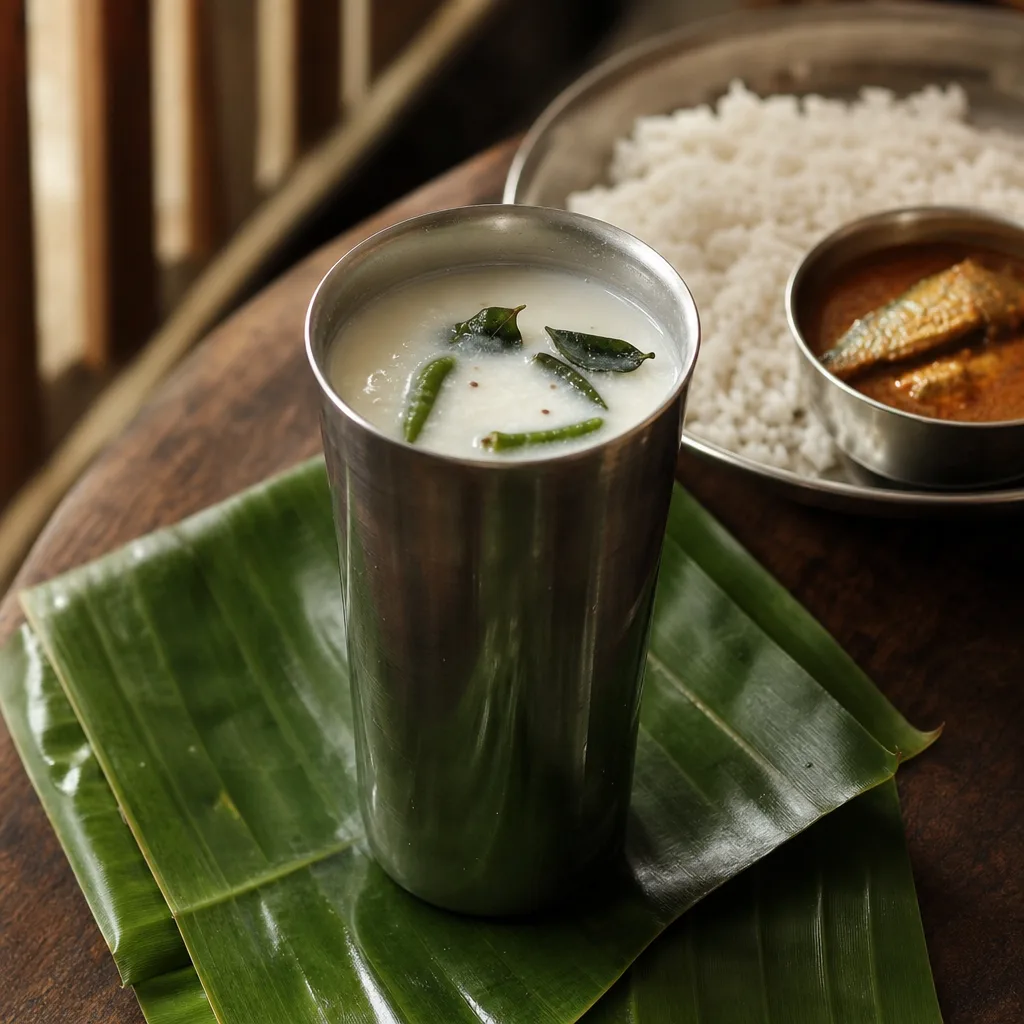
- Prep10 min
- Serves4
- DifficultyEasy
- DietVegetarian
Sambaram is the everyday drink of Kerala kitchens, made from well-soured curd thinned with water and sharpened with green chilli, ginger, curry leaves and a little salt. It is not a recipe that requires cooking. It is something a household makes in five minutes when the afternoon heat is high or when a meal needs something cooling alongside it.
Every family has its own ratio of curd to water and its own opinion on how much ginger is too much. Some add a small piece of shallot, some do not. What does not change is the sourness: the curd must be properly sour, not fresh, or the drink tastes flat and sweet. In most Kerala homes the curd left over from the previous evening, which has continued to sour overnight, is exactly right.
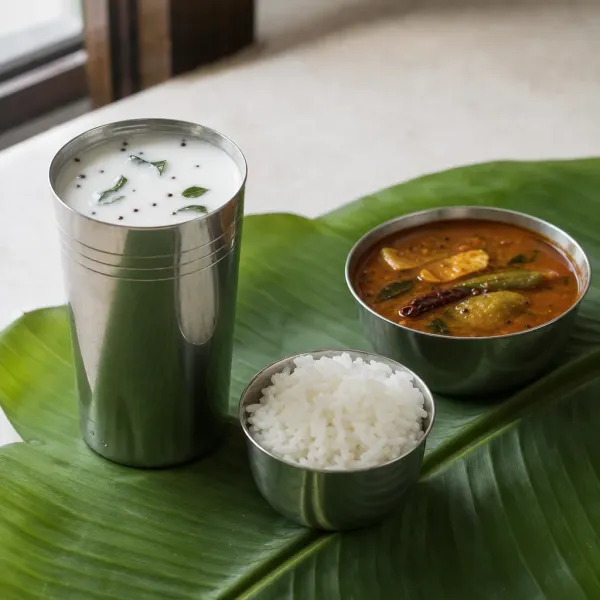
Sambaram is served ice-cold or at room temperature depending on the household. In older homes it was kept in a clay pot which cooled it naturally. It is drunk with the midday meal, particularly with rice and fish curry, and it is the drink most likely to be pressed into the hand of a guest who has arrived in the heat of the day.
Ingredients (serves 4)
For the sambaram
Method
Check the curd
Taste the curd before you begin. It should be noticeably sour, with a clean tang. If it tastes milky and mild, it is too fresh and the sambaram will lack character. Set it out at room temperature for a few more hours, or use a different batch.
Bruise the aromatics
Slit the green chillies lengthwise but leave them whole. Press the ginger slice once with the flat of a knife so it is bruised but not broken apart. Tear the curry leaves lightly with your fingers. Bruising releases the oils without making the drink bitter from over-extraction.
Combine curd and water
Pour the soured curd into a deep vessel. Add the cold water gradually, whisking steadily with a hand whisk or a traditional wooden churner (mathani) as you pour. Keep going until there is no lump of curd remaining and the liquid is completely smooth and uniformly thin. It should look like thin white liquid, not like diluted yoghurt with visible curds.
Add the aromatics
Drop in the bruised ginger, the slit green chillies and the torn curry leaves. Add salt and stir once. Do not blend or crush these into the liquid; they are meant to steep and flavour the drink gently, not to become part of it.
Steep briefly
Leave the sambaram to sit for five to ten minutes at room temperature so the chilli, ginger and curry leaves can release their flavour into the liquid. Taste after five minutes. If you want more heat, leave it a little longer. If it is already sharp enough, remove the chillies.
Taste and adjust
Taste for salt and sourness. If the curd was very sour, you may not need more. If it tastes too sharp, you can add a splash more water. The finished drink should be cooling and lightly savoury, with the chilli giving warmth at the back of the throat rather than sharp front heat.
Serve
Pour into tall steel tumblers or a clay pot and serve immediately, or refrigerate for up to an hour before serving. Leave the aromatics in the vessel while serving so the flavour continues to develop gently; they are not eaten. Stir once before pouring each glass as the liquid can settle slightly.
How to serve
Hot Kerala rice meals (sadhya or everyday rice with fish curry and thoran); also drunk on its own as a cooling drink in the afternoon.
Served with: Hot Kerala rice meals (sadhya or everyday rice with fish curry and thoran); also drunk on its own as a cooling drink in the afternoon.
Cook's tips
The curd must be sour
Fresh sweet curd makes a thin, bland drink that tastes nothing like sambaram. If you only have fresh curd, leave it out at room temperature for four to six hours in warm Kerala weather before using it. In an air-conditioned kitchen it may need longer.
Kanthari chilli versus finger chilli
Kanthari (bird's eye chilli) gives more heat from a smaller quantity. If you use the larger finger chilli, two is a moderate amount. Adjust to your household's tolerance, but do not skip the chilli entirely; it is structural to the drink.
Clay pot cooling
In older Kerala homes sambaram was stored in an unglazed clay pot (bharani or chatty), which cooled the liquid naturally through evaporation. If you have one, use it. The drink tastes noticeably different from refrigerator-cold sambaram.
Do not use a blender
Blending the aromatics into the liquid changes the character entirely. The ginger and chilli should steep and be removed or left whole; grinding them in makes the drink opaque and sharp in a different way.
Ratio of curd to water
1:2 (curd to water) is the standard household ratio and gives a thin, drinkable consistency. Some families go to 1:3 for a very light drink. Thicker than 1:1.5 and it becomes more like a lassi than sambaram.
Regional variations
Tamil Nadu has a similar spiced buttermilk called neer moru, typically thinner and with fewer aromatics; Andhra households make a version with green chilli and curry leaves but no ginger.
Glossary
- Sambaram സംഭാരം
- Kerala spiced buttermilk made from soured curd, water, green chilli, ginger and curry leaves.
- Thayir തൈര്
- Curd or yoghurt; in the context of sambaram, it refers to well-soured homemade curd.
- Kanthari കാന്താരി
- Small, fiery bird's eye chilli used widely in Kerala cooking.
- Mathani മത്താനി
- Traditional wooden hand churner used to whisk curd and buttermilk in Kerala kitchens.
- Kariveppila കറിവേപ്പില
- Curry leaves; used fresh in Kerala cooking for their aromatic quality.
Two things decide whether sambaram works: the sourness of the curd and the ratio of curd to water. Get those right and the aromatics do the rest in ten minutes. Rush it with fresh sweet curd or make it too thick, and no amount of chilli or ginger will rescue it.
More Beverages recipes
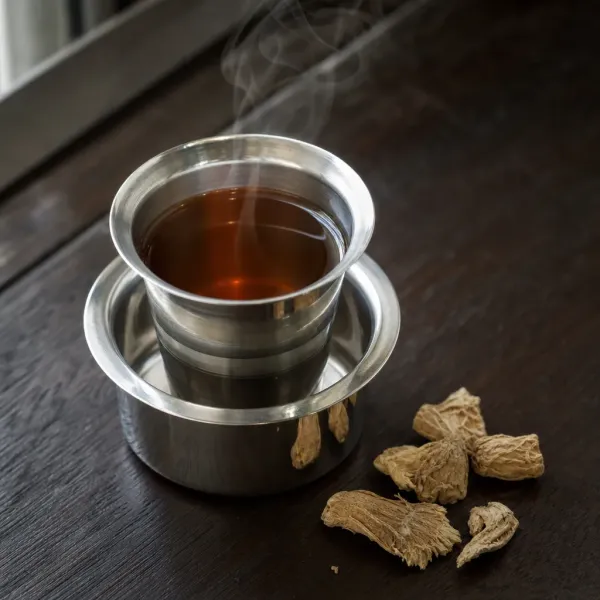
Sukku Malli Coffee
Traditional Kongunad sukku malli coffee made with dry ginger, coriander seeds and jaggery. A warming medicinal drink, ready in 15 minutes.
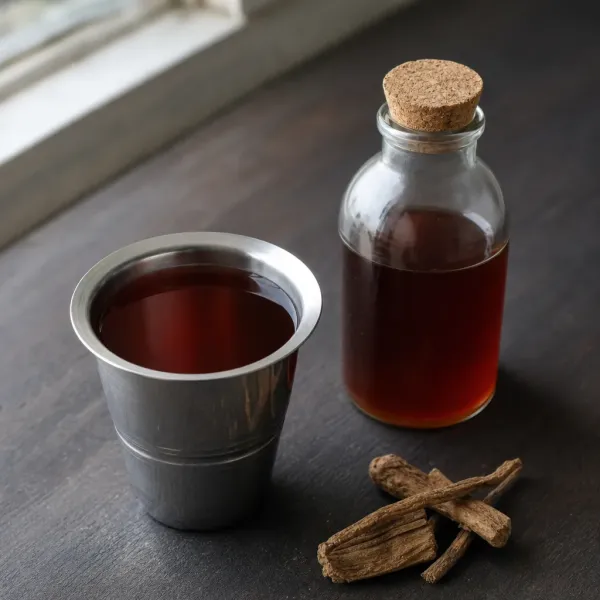
Nannari Sharbat: Sarsaparilla Root Syrup Drink
Traditional Tamil Nadu nannari sharbat made from dried sarsaparilla root and rock sugar. A cooling summer syrup, stored and diluted to drink. Step-by…
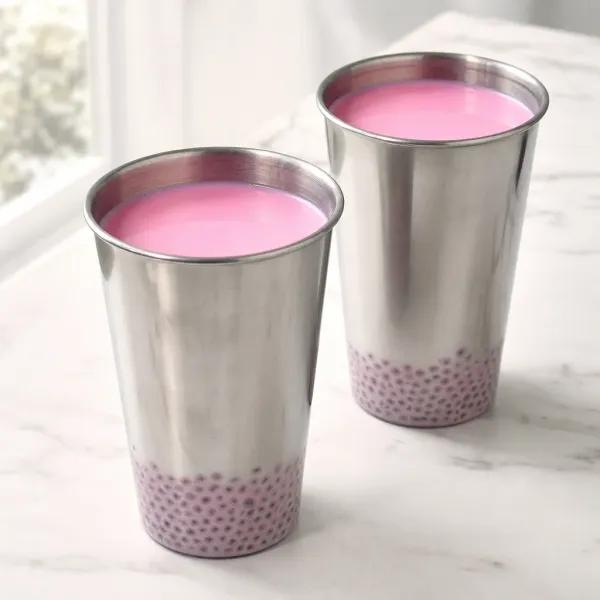
Rose Milk (Roja Paal)
Classic Tamil Nadu rose milk made with a from-scratch rose syrup, full-fat chilled cow's milk, and optional sabja seeds. Simple, cold, and properly p…
Madurai Jigarthanda
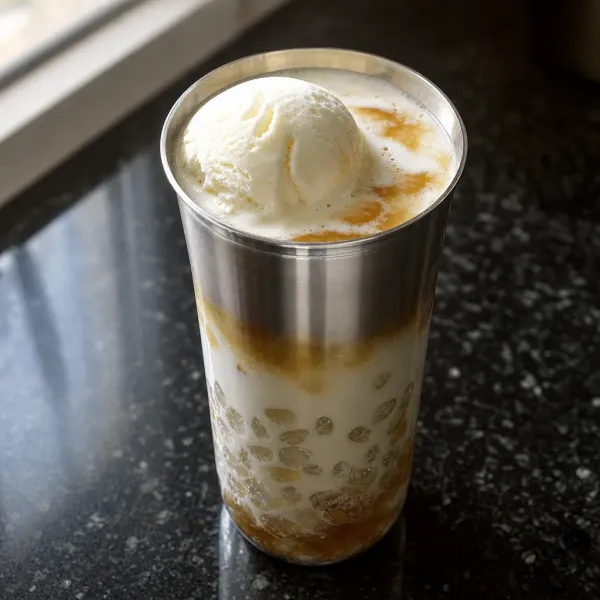
Traditional Madurai Jigarthanda with slow-reduced milk, soaked badam pisin, nannari syrup and milk ice cream. Authentic Tamil Nadu summer drink recip…