

Keerai Masiyal Recipe
Malayalam കീര മസിയൽTamil கீரை மசியல்Kannada ಕೀರೆ ಮಸಿಯಲ್Telugu కీర మసియల్
- Prep10 min
- Cook20 min
- Serves4
- DifficultyEasy
- DietVegan
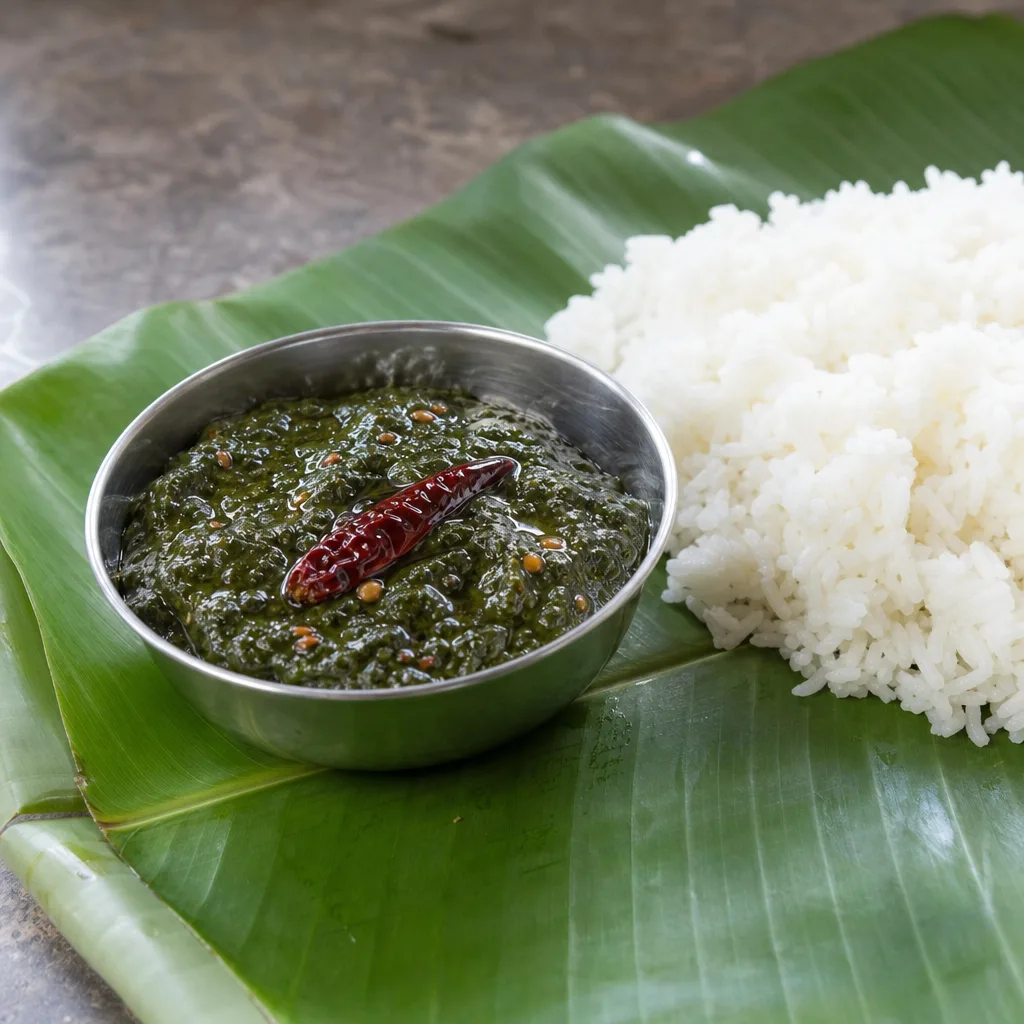
Keerai masiyal is a Tamil Brahmin staple made from arai keerai (Amaranthus dubius) or pasalai keerai (spinach), cooked briefly and mashed into a soft, homogenous paste. It is not a curry and not a soup. The texture is the whole point: thick, smooth, faintly fibrous, with nothing to dilute it except a small amount of cooking water.
In Iyer households it is eaten hot, poured straight onto the rice, and followed by the sambar course. It needs no tempering in its strictest form, though many home cooks add a final seasoning of mustard and dried red chilli in gingelly oil, which is how it most often appears at the table today. The two versions, tempered and plain, are both equally traditional.
The greens cook very fast. Overcooking turns the colour from bright green to dull grey and makes the paste bitter. Pay attention to those two minutes on the fire.
Ingredients (serves 4)
For the masiyal
For the tempering
Method
Prepare the greens
Strip the arai keerai leaves from thick stalks, keeping the tender upper stems. Wash in two changes of water, lifting the greens out rather than draining so any grit stays at the bottom. Shake off excess water; you do not want the pan flooded.
Cook with aromatics
Put the greens in a heavy-bottomed pan or kadai over medium heat. Add the 100 ml water, crushed garlic, green chilli, crushed pepper and salt. Cover and cook for 4 to 5 minutes. The greens will wilt completely and turn a deep, bright green. Do not cook beyond this point.
Check for moisture
Remove the lid. If there is more than a tablespoon of water left in the pan, raise the heat for 30 seconds to let it evaporate. The mixture should be moist but not pooled with liquid. Too much water makes the mash loose and bland.
Mash to a paste
Take the pan off the heat. Using a wooden masher (matthu) or the back of a heavy ladle, mash the greens firmly and steadily until you have a smooth, thick paste. The garlic and chilli break down into it. There should be no distinct leaf pieces left. This takes about two minutes of real effort.
Taste and adjust salt
Taste the mash and adjust salt now, before the tempering goes in. The paste should be well seasoned; it will sit on plain rice.
Make the tempering
Heat the gingelly oil in a small tempering pan over medium-high heat. Add the mustard seeds and wait until they have fully spluttered, about 30 seconds. Add the urad dal and dried red chilli. The dal will turn pale gold in another 20 to 30 seconds. Pull the pan off the heat immediately.
Combine and serve
Pour the tempering over the mashed greens and stir it in. Serve at once. Keerai masiyal loses its bright colour quickly once mashed; it is always better eaten the moment it is made.
How to serve
Hot plain rice (boiled or pressure-cooked); a small cup of rasam or sambar alongside. In a full Brahmin meal it arrives as the second course after sambar, eaten with a little ghee stirred into the rice.
Served with: Hot plain rice (boiled or pressure-cooked); a small cup of rasam or sambar alongside. In a full Brahmin meal it arrives as the second course after sambar, eaten with a little ghee stirred into the rice.
Cook's tips
Choosing the green
Arai keerai gives the most traditional flavour, slightly earthy and not as neutral as spinach. Pasalai keerai (palak) is widely used today and cooks faster. Mulai keerai (Amaranthus cruentus) is also used but has a slightly bitter edge and needs young leaves. Do not use drumstick leaves here; that is a different preparation entirely.
The colour problem
Grey-green masiyal means the greens were overcooked or the pan was too hot for too long. Once the leaves are fully wilted and bright green, you are done cooking. Speed is the whole technique at this step.
Skipping the tempering
In older Iyer households the tempering is sometimes omitted and the masiyal is eaten plain. This is a legitimate and quieter version of the dish. If you skip it, increase the pepper to 10 to 12 corns to compensate.
Storage
Masiyal does not store well. The colour turns grey by the next morning even under refrigeration, and the texture loosens. Make only as much as will be eaten at the meal.
Using a blender
A mixie gives a silkier texture and is now common in most households. If using one, pulse rather than run continuously so the paste does not become watery. A hand mash has a slightly more textured result that many older cooks prefer.
Regional variations
Mappila households in Malabar make a similar mashed spinach preparation with coconut milk and green chilli; Andhra households make a drier, garlicky version called kura that is not mashed to the same paste.
Glossary
- Arai keerai அரை கீரை
- Amaranthus dubius, a variety of amaranth green widely used in Tamil Nadu cooking, with a mild, slightly earthy flavour.
- Pasalai keerai பசலை கீரை
- Spinach (Spinacia oleracea), the most common substitute for arai keerai in urban households.
- Masiyal மசியல்
- From the Tamil verb masi, to mash. A preparation where the main ingredient is cooked and mashed thoroughly to a paste.
- Nallennai நல்லெண்ணெய்
- Gingelly oil, cold-pressed sesame oil used in Tamil Nadu cooking for tempering and finishing.
- Matthu மத்து
- A traditional wooden masher or churner used in Tamil kitchens to mash greens, chutneys or cooked dal.
- Keerai கீரை
- The Tamil word for leafy greens; used as a prefix to name any number of specific greens by variety.
Two things decide this dish. The first is pulling the greens off the heat while they are still a clean, bright green. The second is mashing them thoroughly enough that the paste is uniform and the garlic and chilli have disappeared into it. Everything else follows from those two moments.
More Dry Vegetable Sides recipes
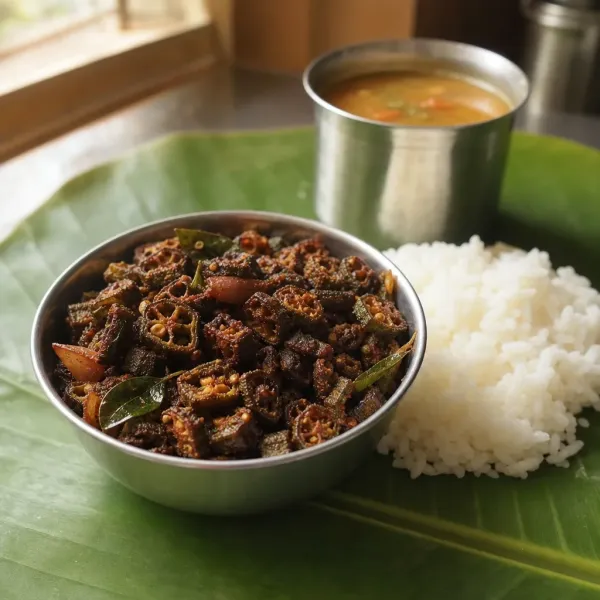
Vendakkai Fry
Traditional Tamil Brahmin vendakkai fry in gingelly oil with shallots, curry leaves and dry masala. Crisp, dry and slimy-free every time.
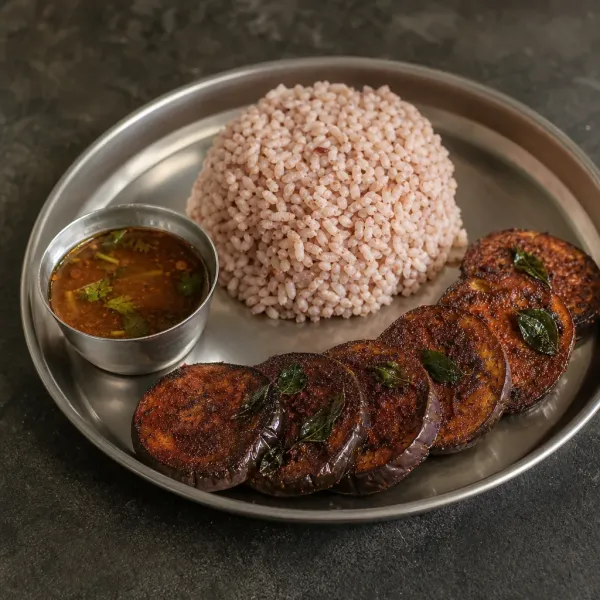
Kathirikai Varuval
Authentic Tamil kathirikai varuval: brinjal rounds shallow-fried in gingelly oil with a tamarind-spice coating. Traditional Kongunad household recipe.
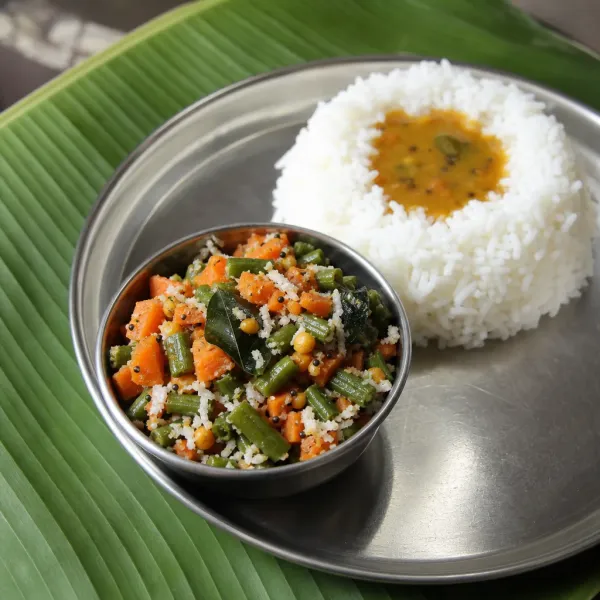
Carrot Beans Palya
Traditional Karnataka carrot beans palya with mustard seeds, curry leaves, chana dal, and fresh grated coconut. Dry stir-fry ready in 30 minutes.
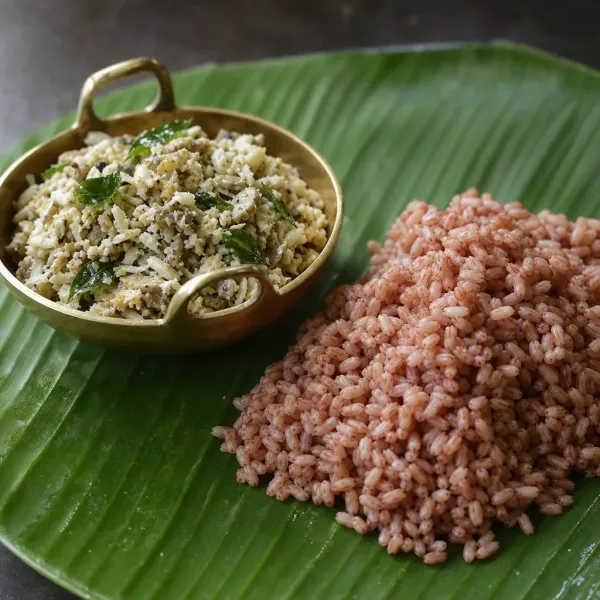
Mushroom Thoran
Traditional Kerala mushroom thoran with fresh grated coconut, cumin, and curry leaves. A dry, fragrant side dish for matta rice and sadya.
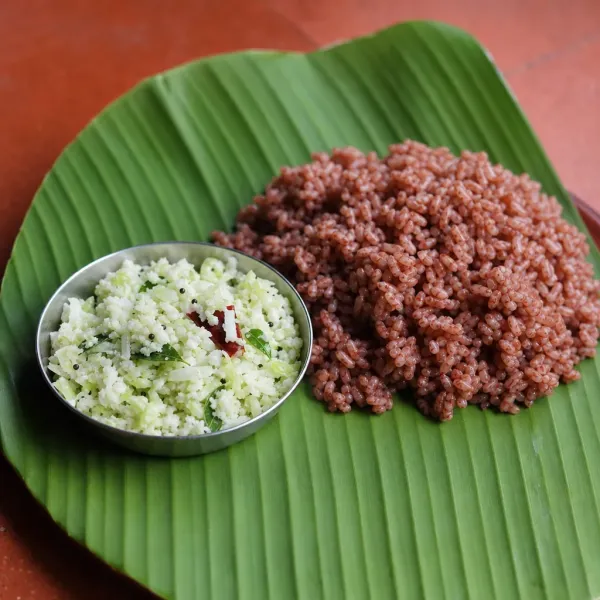
Cabbage Thoran
Classic Kerala cabbage thoran with fresh grated coconut, shallots, cumin, and a mustard-curry leaf tempering in coconut oil. Ready in under 30 minute…
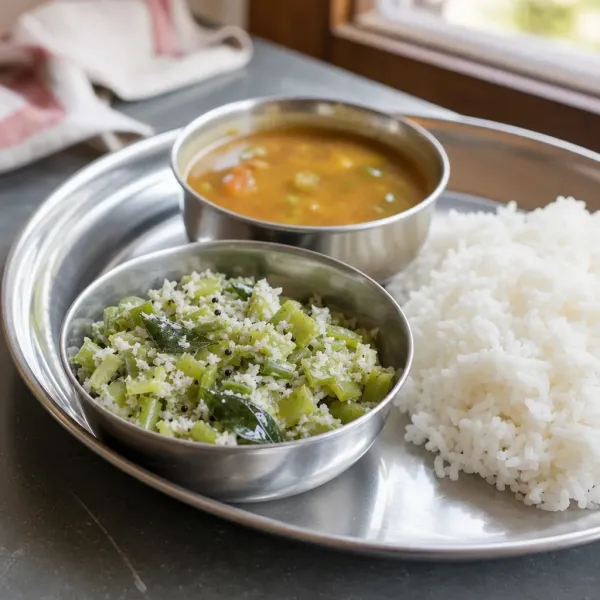
Avarakkai Poriyal (Broad Beans Stir-Fry)
Traditional Tamil Iyer-style avarakkai poriyal: broad beans stir-fried in gingelly oil with mustard, urad dal, curry leaves, and fresh coconut. Dry…