

Cabbage Thoran Recipe
Malayalam കാബേജ് തോരൻTamil கோஸ் துவரன்Kannada ಕ್ಯಾಬೇಜ್ ತೊರನ್Telugu క్యాబేజీ తోరన్
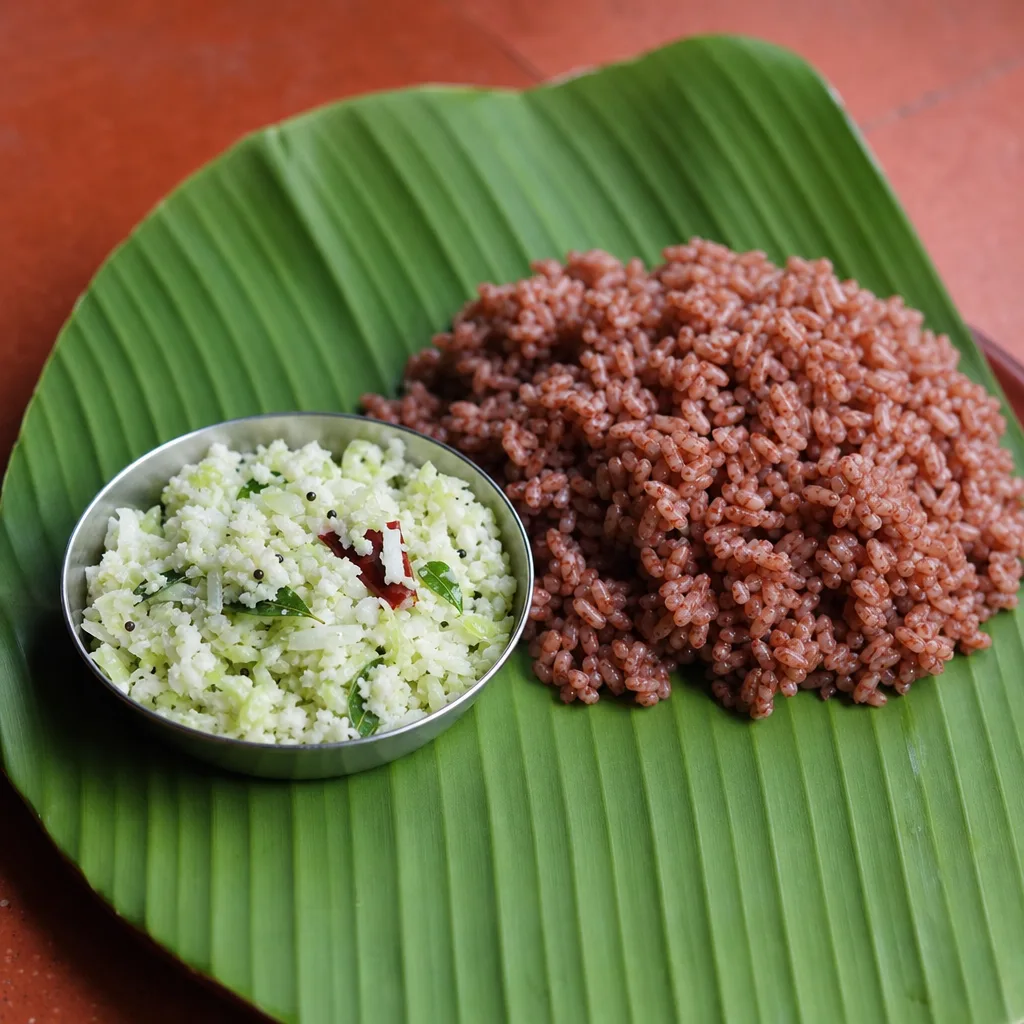
- Prep15 min
- Cook12 min
- Serves4
- DifficultyEasy
- DietVegan
Thoran is the dry vegetable side dish that appears at almost every Kerala meal, and cabbage is one of the most common versions made at home. The shredded vegetable is cooked just until tender in its own steam, then tossed with freshly grated coconut seasoned with cumin, turmeric, and green chilli. The result is dry, not oily, and the coconut stays pale and fluffy rather than frying into a crust.
It sits on the banana leaf or steel thali alongside rice, a kuzhambu or sambar, and a pickle. It is not a centrepiece dish but it is noticed when it is wrong — waterlogged cabbage, or coconut that has been cooked too long and gone grainy and dry, are common failures.
Households differ mainly in how finely they shred the cabbage and how much coconut they use. Some cooks add a pinch of rice flour to the coconut mixture to help it cling to the vegetable; others skip it entirely. The tempering is always in coconut oil, and the mustard seeds must pop fully before anything else goes in.
Ingredients (serves 4)
For the thoran
For the tempering
Method
Prepare the coconut mixture
Combine the grated coconut, chopped shallots, slit green chilli, cumin seeds, and turmeric in a small bowl. Mix well with your fingers, pressing lightly so the shallots release a little moisture and the turmeric colours the coconut evenly. Set aside. Do not grind this — it should stay coarse and textured.
Shred the cabbage
Quarter the cabbage, remove the hard core, and shred the leaves as finely as you can — roughly 2 to 3 mm wide. Thicker shreds take longer to cook and stay a little raw at the centre. Keep the shreds loose and airy in the vessel.
Temper the oil
Heat the coconut oil in a wide, heavy-bottomed pan or cheena chatti over medium heat. Add the mustard seeds and cover loosely. Wait for them to pop fully — this takes about 30 to 40 seconds. If you add the curry leaves before the mustard has finished popping, the leaves will not crisp properly.
Add dried chilli and curry leaves
Add the broken dried red chilli and curry leaves to the popped mustard. Stand back slightly — the curry leaves will spit in the hot oil. Stir once and let them sizzle for about 15 seconds until fragrant.
Add the cabbage and salt
Add the shredded cabbage to the pan and sprinkle salt over it. Toss to coat the cabbage in the tempered oil. The pan will seem very full; the cabbage will reduce quickly. Do not add water.
Cook covered on low heat
Reduce the heat to low, cover the pan tightly, and let the cabbage cook in its own steam for 5 to 6 minutes. Check once halfway and toss gently. The cabbage is ready when it has wilted and softened but still has a very slight bite — it should not be mushy or wet.
Add the coconut mixture
Uncover the pan and check that there is no water pooling at the bottom. If there is, raise the heat briefly and stir until it evaporates before proceeding. Add the coconut mixture and fold it through the cabbage gently.
Finish and serve
Cook uncovered on low heat for 2 minutes, stirring once or twice, just long enough for the coconut to warm through and the flavours to come together. The coconut must stay pale — do not let it fry or brown. Remove from heat and serve immediately.
How to serve
Steamed matta rice, sambar or a simple dal, and a pickle or papadam. Part of a full Kerala sadya or an everyday rice meal.
Served with: Steamed matta rice, sambar or a simple dal, and a pickle or papadam. Part of a full Kerala sadya or an everyday rice meal.
Cook's tips
Dry pan is essential
If the cabbage releases too much water and the pan is wet when you add the coconut, the coconut will turn soggy and clump. Dry it out over higher heat first, stirring, before adding the coconut mixture.
Fresh coconut only
Desiccated coconut does not work here. It absorbs moisture from the cabbage and turns gummy rather than staying fluffy. If fresh coconut is not available, frozen grated coconut, thawed and squeezed dry, is the only reasonable substitute.
Do not overcook the coconut
Two minutes is enough once the coconut goes in. Longer and it dries out and loses its fresh flavour. The dish should smell of coconut and curry leaf, not of toasted coconut.
Shallots, not onion
Shallots in the coconut mixture give a sharper, cleaner flavour than large onion. Large onion makes the coconut paste heavier and slightly sweet in a way that does not belong here.
Regional variations
Mappila households in Malabar sometimes add a small amount of fennel seed to the coconut mixture; Nasrani cooks occasionally add a sliver of green chilli directly to the tempering rather than into the coconut paste.
Glossary
- Thoran തോരൻ
- Kerala dry stir-fry of vegetables with grated coconut and a mustard-curry leaf tempering.
- Chuvannulli ചുവന്നുള്ളി
- Kerala shallots; small, reddish, more pungent than large onions.
- Jeerakam ജീരകം
- Cumin seeds.
- Kaduku കടുക്
- Mustard seeds used in tempering across Kerala cooking.
- Cheena chatti ചീനച്ചട്ടി
- Wide, shallow Kerala cooking vessel, traditionally of clay or cast iron, good for dry vegetable dishes.
Two things decide this dish: the cabbage must be dry when the coconut goes in, and the coconut must not be cooked beyond warming through. Get those two right and the thoran is exactly what it should be — pale, lightly fragrant, and just tender.
More Dry Vegetable Sides recipes
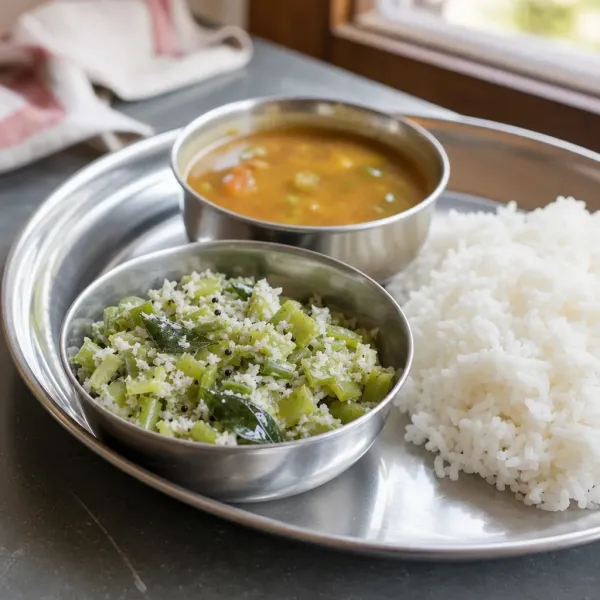
Avarakkai Poriyal (Broad Beans Stir-Fry)
Traditional Tamil Iyer-style avarakkai poriyal: broad beans stir-fried in gingelly oil with mustard, urad dal, curry leaves, and fresh coconut. Dry…
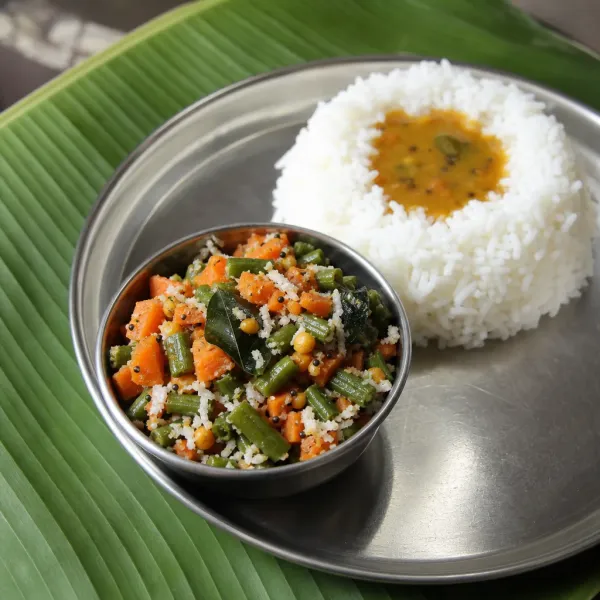
Carrot Beans Palya
Traditional Karnataka carrot beans palya with mustard seeds, curry leaves, chana dal, and fresh grated coconut. Dry stir-fry ready in 30 minutes.
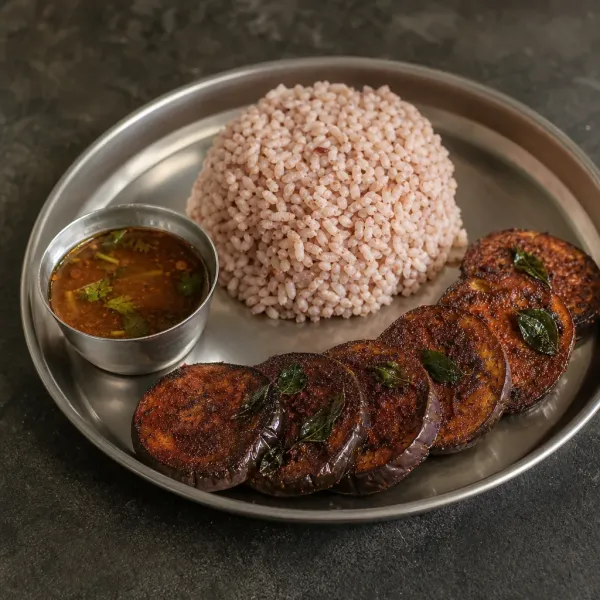
Kathirikai Varuval
Authentic Tamil kathirikai varuval: brinjal rounds shallow-fried in gingelly oil with a tamarind-spice coating. Traditional Kongunad household recipe.
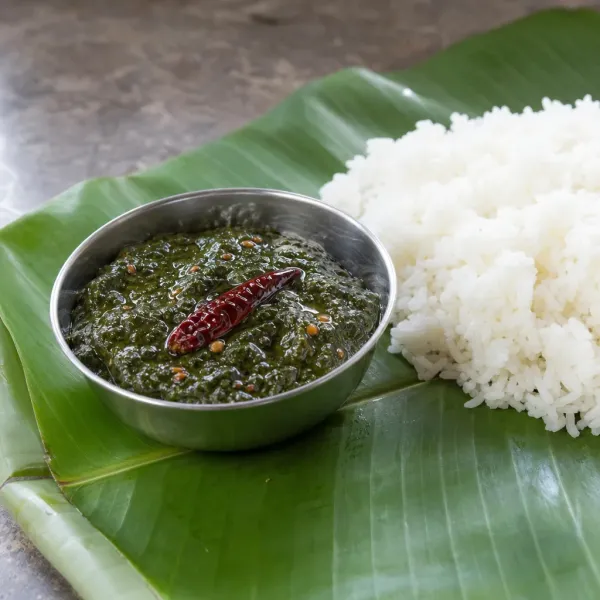
Keerai Masiyal
Traditional Tamil Brahmin keerai masiyal made with arai keerai, garlic, pepper and a gingelly oil tempering. Served hot on plain rice.
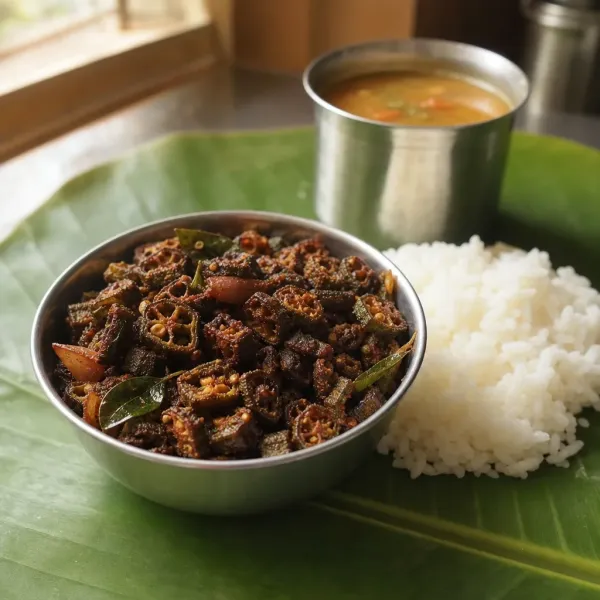
Vendakkai Fry
Traditional Tamil Brahmin vendakkai fry in gingelly oil with shallots, curry leaves and dry masala. Crisp, dry and slimy-free every time.
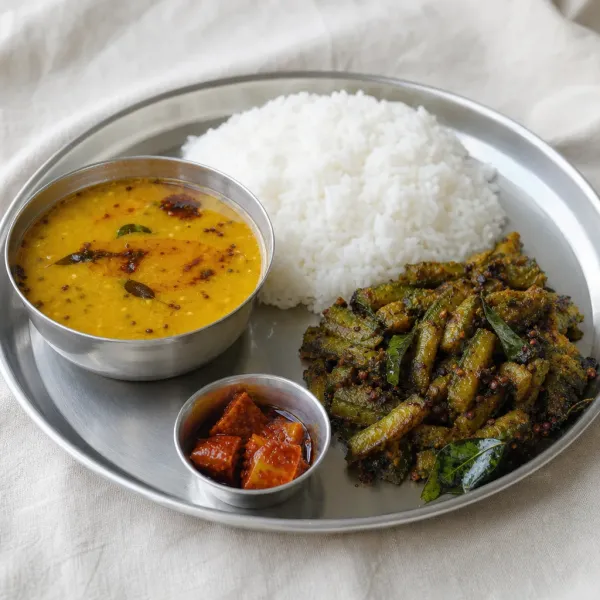
Beerakaya Vepudu (Andhra Ridge Gourd Stir-Fry)
Traditional Andhra Beerakaya Vepudu: a dry ridge gourd stir-fry cooked in gingelly oil with mustard, dried red chillies and curry leaves. Vegan and e…