

Sorakaya Pulusu Recipe
Malayalam സൊരക്കായ പുളുസుTamil சொரக்காய் புளுசுKannada ಸೊರಕಾಯಿ ಹುಳಿTelugu సొరకాయ పులుసు
- Prep20 min
- Cook35 min
- Serves4
- DifficultyEasy
- DietVegan
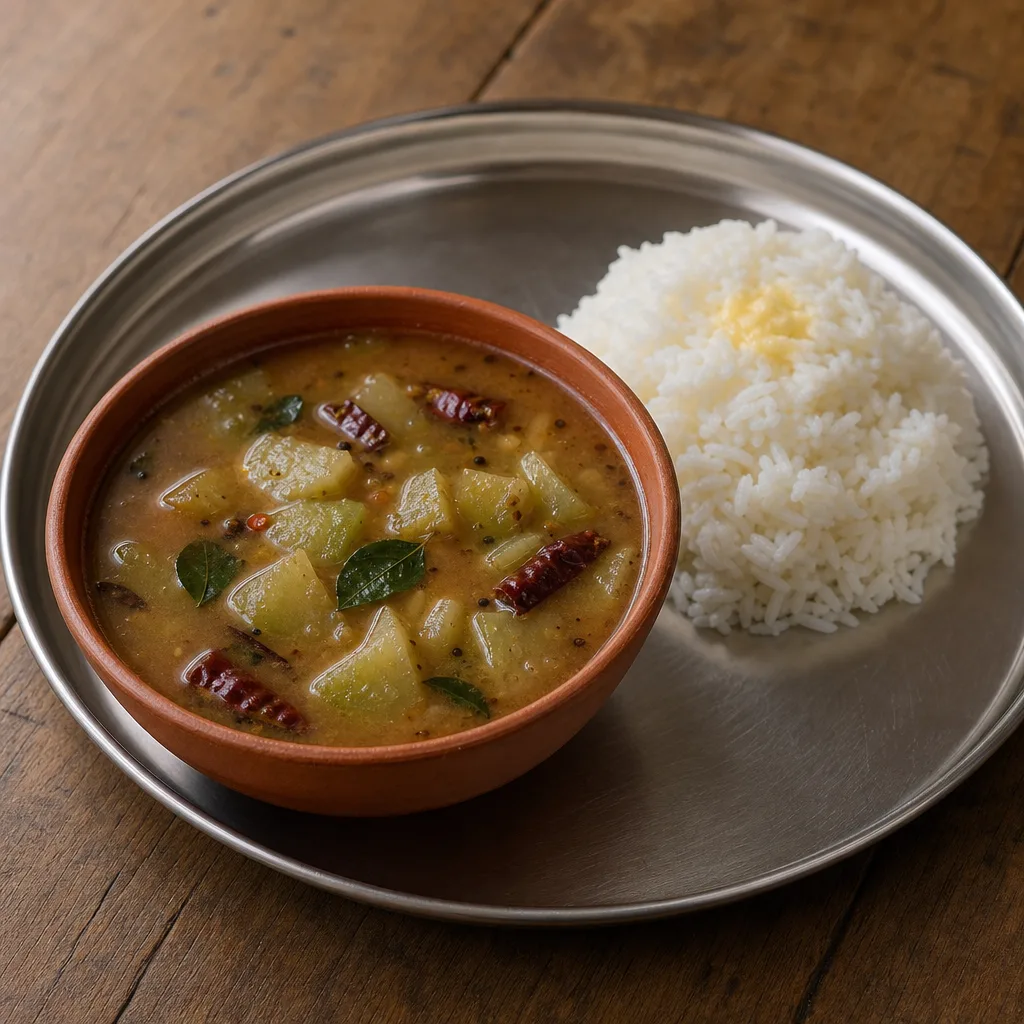
Sorakaya Pulusu is a tamarind-based stew built around bottle gourd, and it is one of those everyday Andhra dishes that does not announce itself loudly but disappears quickly from the pot. The gourd cooks down until it is just soft enough to drink the sour, spiced broth without falling apart entirely. It is a thin stew, not a gravy, and that is exactly what it should be.
In Coastal Andhra homes this is weekday food, made fast after the morning's work. It goes with hot rice and a smear of ghee, sometimes alongside a dry vegetable fry. The tamarind does the heavy lifting on flavour; the tempering of mustard, dried red chillies and curry leaves goes in at the start and again, in some households, at the very end as a second seasoning poured over the finished pot.
Households differ on a few things: how much tamarind, whether to add a pinch of jaggery to round the sourness, and whether to include a small amount of toor dal cooked soft and stirred in for body. This recipe uses a modest amount of jaggery and no dal, which is the lighter version. If your tamarind is very sharp, the jaggery is not optional.
Ingredients (serves 4)
Main
For the tempering
Method
Soak the tamarind
Break 30 g tamarind into a small bowl, pour 400 ml warm water over it and leave for 15 minutes. Squeeze the pulp thoroughly with your fingers, then strain through a sieve, pressing the solids to extract every bit of liquid. Discard the fibres and seeds. You should have roughly 350 ml of tamarind water; set it aside.
Temper the spices
Heat 3 tbsp gingelly oil in a wide, heavy-bottomed pot over medium heat. When the oil shimmers, add the mustard seeds and let them pop fully, about 30 seconds. Add the cumin seeds, fenugreek seeds, broken dried red chillies and asafoetida in quick succession. The fenugreek will colour in under a minute; do not let it go dark brown or the stew will taste bitter. Drop in the curry leaves last and stand back from the spatter.
Cook the shallots
Add the halved shallots and slit green chillies to the pot. Stir well to coat them in the spiced oil. Cook over medium heat, stirring occasionally, for 5 to 6 minutes until the shallots turn translucent and just begin to colour at the edges.
Add the tomato and dry spices
Add the chopped tomato, turmeric powder, red chilli powder and coriander powder. Stir everything together and cook for 4 to 5 minutes, pressing the tomato pieces occasionally, until the tomato is fully soft and the oil begins to separate at the edges of the mixture. This step is important: if the tomato is not cooked down properly, the raw-spice smell will carry into the finished stew.
Add the bottle gourd
Add the cubed bottle gourd and stir to coat each piece in the masala. Cook for 3 minutes over medium heat, turning the pieces so they pick up the colour and flavour of the base.
Pour in the tamarind water
Pour in the strained tamarind extract and the additional 300 ml of water. Add salt. Stir, bring to a boil over high heat, then reduce to a steady simmer. The liquid should be moving but not churning violently.
Simmer until the gourd is tender
Simmer uncovered for 18 to 22 minutes. The bottle gourd is ready when a piece offers no resistance to a spoon but still holds its shape and has not turned mushy. The stew will reduce and deepen in colour as the tamarind cooks. Skim any foam that rises in the first few minutes.
Add the jaggery and adjust
Stir in the grated jaggery and let it dissolve for 2 minutes. Taste now for salt, sourness and heat. If the tamarind is very sharp, add a little more jaggery. If the stew feels flat, a pinch more salt usually fixes it. The finished pulusu should be thin, sour-forward, with warmth from the chillies and a faint sweetness in the background.
Rest before serving
Take the pot off the heat and leave it uncovered for 5 minutes. The flavours settle and the gourd finishes absorbing the broth during this rest. Serve hot.
How to serve
Hot plain rice with a small pour of ghee; a dry vegetable fry such as vankaya fry or beans poriyal alongside. Some households serve it with pappad.
Served with: Hot plain rice with a small pour of ghee; a dry vegetable fry such as vankaya fry or beans poriyal alongside. Some households serve it with pappad.
Cook's tips
Choosing the gourd
A young, tender bottle gourd cooks in 20 minutes and has a mild, almost sweet flavour that works beautifully with tamarind. An older, larger gourd has tougher flesh and seeds that should be scooped out before cutting. If the seeds are already hard, the gourd is past its best for this dish.
Fenugreek quantity
A quarter teaspoon is the ceiling for fenugreek here. More than that and the bitterness overwhelms the tamarind. If you are not used to fenugreek, start with an eighth of a teaspoon.
Gingelly oil
Cold-pressed gingelly oil is the correct fat for Andhra pulusu and kuzhambu-style dishes. It has a nutty background note that refined oils do not give. Do not use refined sesame oil sold for East Asian cooking; the flavour is entirely different.
Keeping and reheating
Pulusu tastes better the next day once the gourd has fully absorbed the tamarind. Store covered at room temperature for up to 8 hours in a cool kitchen, or refrigerate for up to two days. Reheat gently; boiling it hard a second time can make the gourd fall apart.
Tamarind paste shortcut
If you use store-bought tamarind paste, start with 1½ tsp dissolved in 700 ml water. Paste varies in concentration and sourness, so taste and adjust before adding the jaggery. This is a common household shortcut but the flavour from block tamarind is noticeably rounder.
Regional variations
Telangana households sometimes finish with a coconut and peanut paste; Rayalaseema versions tend to be hotter and may include dried red chillies in greater quantity.
Glossary
- Sorakaya సొరకాయ
- Bottle gourd in Telugu; also called lauki in Hindi and sorekai in Kannada.
- Pulusu పులుసు
- A thin, tamarind-based stew in Telugu cuisine; the equivalent of kuzhambu in Tamil.
- Gingelly oil నువ్వుల నూనె
- Cold-pressed sesame oil used widely in South Indian cooking, especially for tempering in Andhra and Tamil Nadu.
- Kudampuli കുടംപുളി
- Gamboge or Malabar tamarind, a souring agent specific to Kerala; not used in this Andhra dish, which uses regular tamarind.
- Hing ఇంగువ
- Asafoetida, a dried resin used in small quantities as a digestive and flavouring agent in South Indian cooking.
Two things decide whether this pulusu works. First, the tamarind must be cooked long enough for its raw edge to mellow into a rounded sourness; a stew pulled off the heat too early tastes sharp rather than deep. Second, the bottle gourd must be tender but intact; the moment it turns to mush the texture is gone and no amount of spicing will recover it. Watch those two things and the dish takes care of itself.
More Vegetarian Gravies recipes
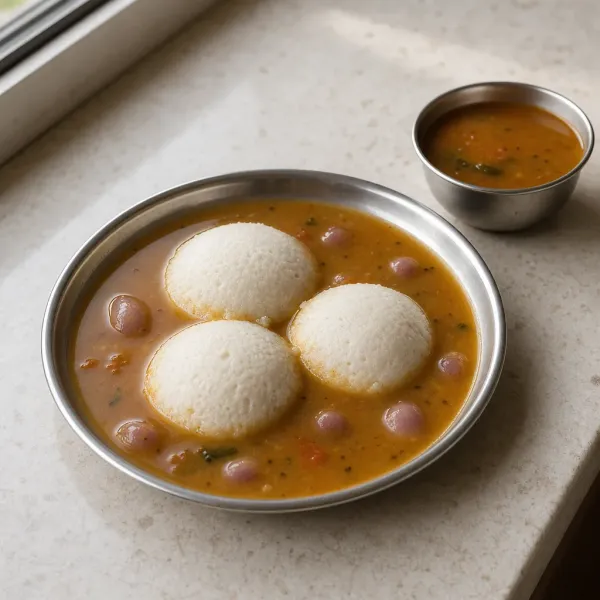
Tiffin Sambar
Thin, shallot-forward tiffin sambar from a Tamil Brahmin kitchen. Made fresh for idli and dosa, cooked with gingelly oil and tamarind. Traditional me…
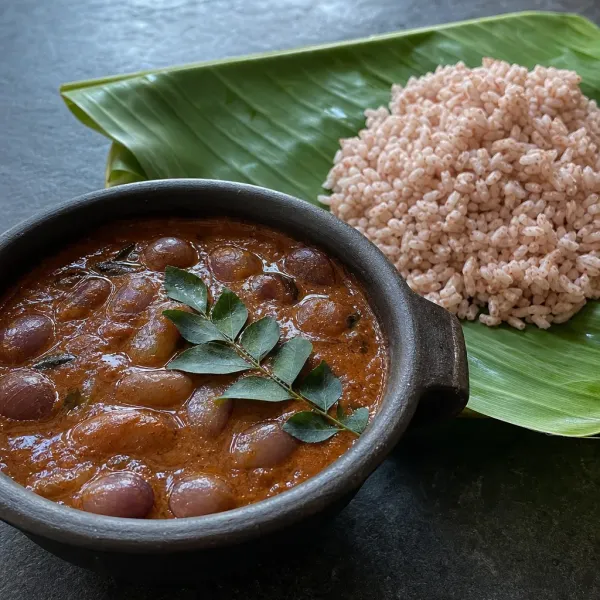
Theeyal
Traditional Kerala shallot theeyal with deep-roasted coconut, kudampuli, and fresh curry leaves. Step-by-step household method from Travancore kitche…
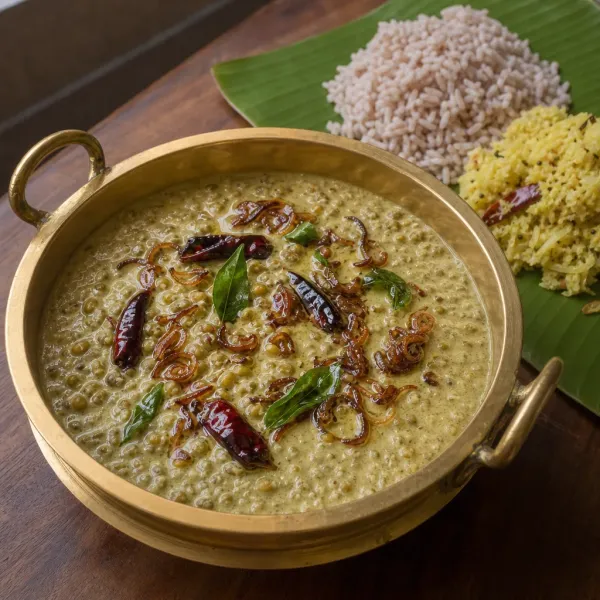
Cherupayar Curry (Kerala Green Gram Curry)
Traditional Kerala cherupayar curry with fresh ground coconut, shallots and coconut oil tempering. A simple everyday dish from Travancore households.
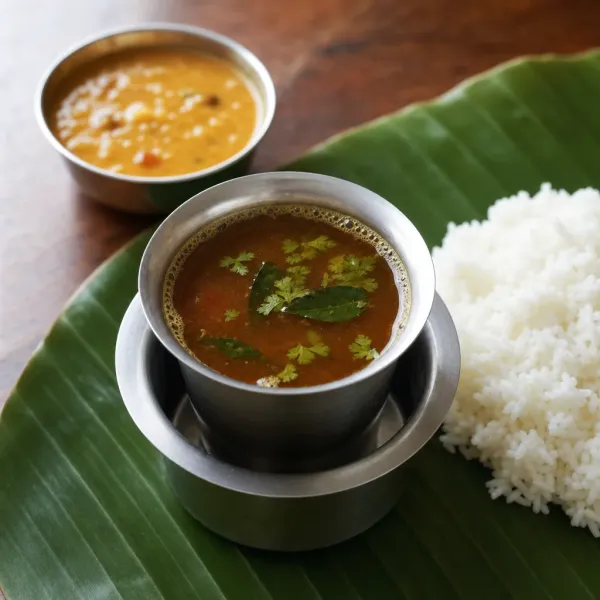
Iyer-Style Rasam with Homemade Rasam Powder
Traditional Tamil Brahmin rasam made with freshly ground rasam powder, tamarind, toor dal water and a ghee tadka. The authentic household method.
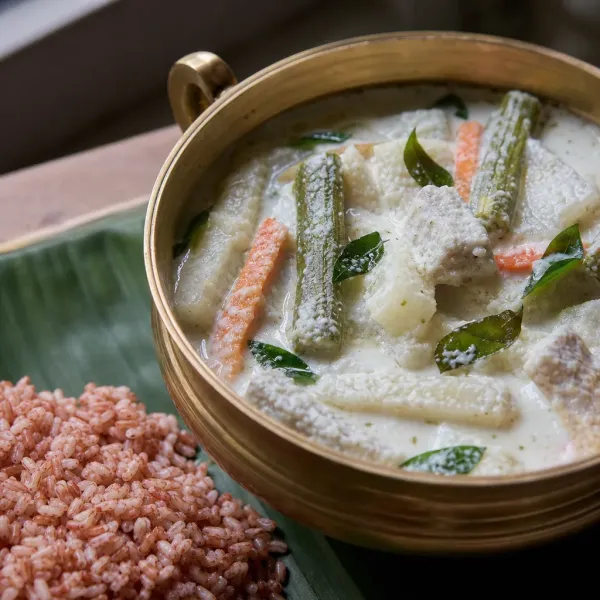
Avial
Classic Kerala avial with fresh coconut paste, sour yoghurt, and raw coconut oil. Traditional Travancore household method with exact quantities.
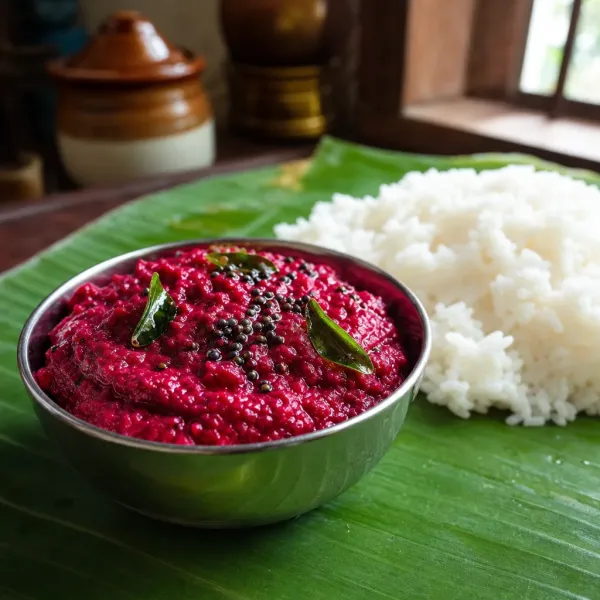
Beetroot Pachadi
Traditional Kerala beetroot pachadi with fresh coconut paste and curd, finished with a mustard and curry leaf tempering. A sadya essential, step by s…