

Tiffin Sambar Recipe
Malayalam ടിഫിൻ സാമ്പാർTamil டிஃபின் சாம்பார்Kannada ಟಿಫಿನ್ ಸಾಂಬಾರ್Telugu టిఫిన్ సాంబార్
- Prep20 min
- Cook40 min
- Serves4
- DifficultyEasy
- DietVegan
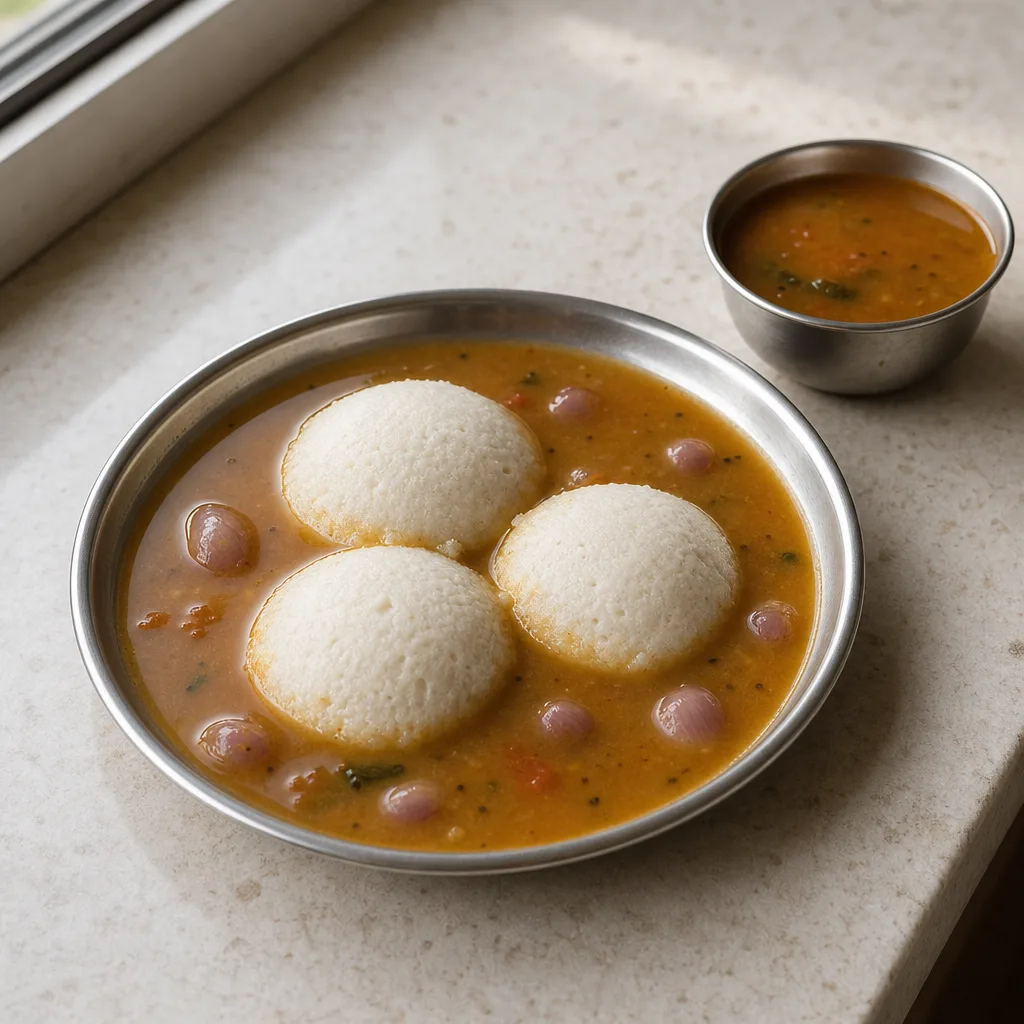
Tiffin sambar is not the same pot as the rice sambar. It is thinner, a little sweeter from the shallots and the small amount of jaggery, and it clings to idli rather than sitting under it. In a Tamil Brahmin household it is made fresh every morning for breakfast, cooked quickly because the dal is pressure-cooked ahead or the previous evening.
The vegetable in it is almost always small shallots, sometimes with a piece of drumstick or a few cubes of ash gourd, but the shallots are the constant. Tomato goes in, which is not the case in all sambar styles, and it gives the pot its slight sourness alongside the tamarind. The tamarind here is used lightly; this is not a sour sambar.
Households differ on one thing: some grind a small fresh coconut paste with coriander seeds and add it at the end for body, others rely entirely on the sambar powder and cooked dal for thickness. Both are genuine. This recipe follows the no-coconut version, which is the more common tiffin-sambar habit in Chennai and the surrounding towns.
Ingredients (serves 4)
For the dal
For the sambar
For the tadka
Method
Cook the dal
Put the rinsed toor dal in a pressure cooker with 350 ml water and the turmeric. Cook on medium heat for 4 to 5 whistles, until the dal is completely soft and collapses when pressed. Let the pressure drop on its own. Mash the cooked dal smooth with the back of a ladle or a whisk; there should be no lumps. Set aside.
Soak the tamarind
Soak the tamarind in 150 ml warm water for 10 minutes. Squeeze the pulp out with your fingers, pass it through a sieve and discard the fibres and seeds. You need a thin, pourable extract, not a thick paste.
Fry the shallots
Heat the gingelly oil in a wide, heavy-bottomed pan over medium heat. Add the mustard seeds and asafoetida. When the mustard seeds pop, add the dried red chillies and curry leaves and let them sizzle for 10 seconds. Add the whole peeled shallots and fry, stirring occasionally, for 6 to 8 minutes until they are lightly golden at the edges and softened through. Do not rush this; under-cooked shallots leave a raw bite in the finished sambar.
Add tomatoes and cook down
Add the chopped tomatoes to the pan. Sprinkle in the turmeric and sambar powder. Stir well and cook on medium heat for 5 to 6 minutes, until the tomatoes break down completely and the oil begins to show at the edges of the mixture. The raw smell of the sambar powder should be gone.
Pour in tamarind and water
Add the tamarind extract and 400 ml water to the pan. Stir, bring to a boil, then lower the heat and simmer uncovered for 8 minutes. The raw tamarind smell will mellow as it cooks.
Add the mashed dal
Pour the mashed dal into the simmering pot and stir it in well. The sambar should be noticeably thinner than a rice sambar; it should pour easily from a ladle. If it looks too thick at this point, add a little hot water, 50 ml at a time, and stir.
Season and balance
Add the jaggery and salt. Stir and taste. The sambar should be lightly sour from the tamarind, gently spiced, and have a faint sweetness from the jaggery and shallots. Adjust salt if needed. Simmer for a further 4 to 5 minutes on low heat so everything comes together.
Rest before serving
Take the pot off the heat and let it sit for 5 minutes before serving. Tiffin sambar thickens slightly as it stands; if it thickens too much before you serve, stir in a splash of hot water.
How to serve
Hot idli, plain dosa, or vada. A small steel cup of sambar is set alongside or poured directly over the idli on a steel plate.
Served with: Hot idli, plain dosa, or vada. A small steel cup of sambar is set alongside or poured directly over the idli on a steel plate.
Cook's tips
Sambar powder matters
The flavour of this sambar depends almost entirely on the sambar powder. A homemade powder roasted with coriander, cumin, dried red chillies, chana dal and urad dal will give a depth that most commercial powders do not. If you use a store-bought powder, taste it first; some brands are very salty.
Gingelly oil is not optional
The nutty background of gingelly oil is part of what makes tiffin sambar taste different from home-cooked rice sambar. Coconut oil or refined oil will change the character noticeably. Use cold-pressed gingelly oil if you can find it.
Dal cooked the previous night
In most households the toor dal is cooked the evening before and refrigerated. This makes the morning sambar a 20-minute job. The cooked dal keeps well in the fridge for two days.
Do not boil hard after adding dal
Once the mashed dal goes in, keep the heat low and simmer gently. A hard boil at this stage can make the sambar taste flat and slightly bitter.
Drumstick variation
Many households add two or three pieces of drumstick (murungakkai) along with the shallots. The drumstick takes about 10 minutes to soften, so add it before the tomatoes. It is a genuine addition, not a garnish.
Regional variations
Udupi hotel sambar (Karnataka) uses a freshly ground coconut-coriander masala and is slightly sweeter; Madurai-style tiffin sambar is sharper with more tamarind and dried red chillies.
Glossary
- Toor dal துவரம் பருப்பு
- Split and hulled pigeon peas; the base dal for most South Indian sambar.
- Perungayam பெருங்காயம்
- Asafoetida; a resin used in very small quantities as a digestive and flavouring in Tamil Brahmin cooking.
- Sambar onions சாம்பார் வெங்காயம்
- Small shallots, about the size of a large marble, used whole in tiffin sambar; sweeter and more fragrant than regular onions.
- Kudampuli കുടംപുളി
- Gamboge or Malabar tamarind; used in Kerala fish curries. Not used here; this recipe uses regular tamarind (puli).
- Gingelly oil நல்லெண்ணெய்
- Cold-pressed sesame oil used in Tamil cooking; has a distinct nutty flavour unlike the pale refined sesame oil used in East Asian cooking.
- Murungakkai முருங்கைக்காய்
- Drumstick; the long ridged pod of the moringa tree, commonly added to sambar.
Two things decide this sambar: the shallots must be properly softened and lightly coloured before anything else goes in, and the dal must be mashed completely smooth so it dissolves into the pot rather than sitting in it in lumps. Get those right and the rest follows.
More Vegetarian Gravies recipes
Theeyal
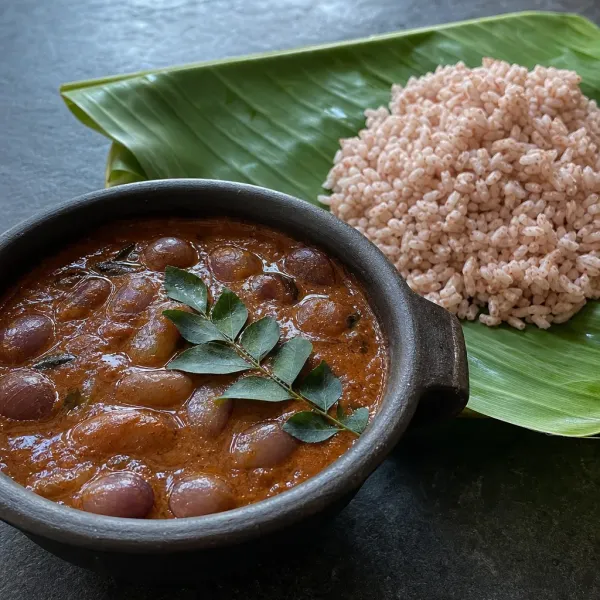
Traditional Kerala shallot theeyal with deep-roasted coconut, kudampuli, and fresh curry leaves. Step-by-step household method from Travancore kitche…
Sorakaya Pulusu
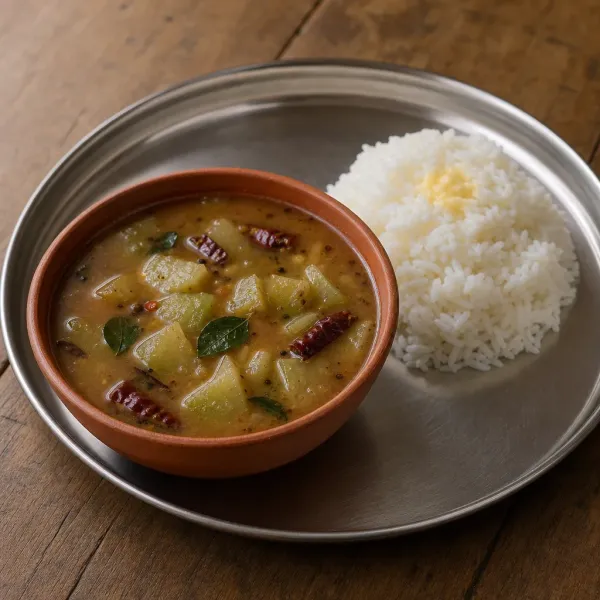
Traditional Coastal Andhra sorakaya pulusu: bottle gourd simmered in tamarind with gingelly oil tempering. Weekday rice dish, step-by-step recipe.
Cherupayar Curry (Kerala Green Gram Curry)
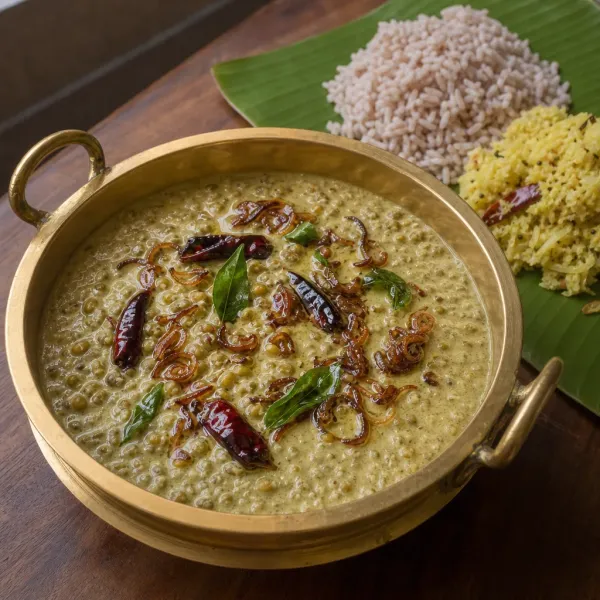
Traditional Kerala cherupayar curry with fresh ground coconut, shallots and coconut oil tempering. A simple everyday dish from Travancore households.
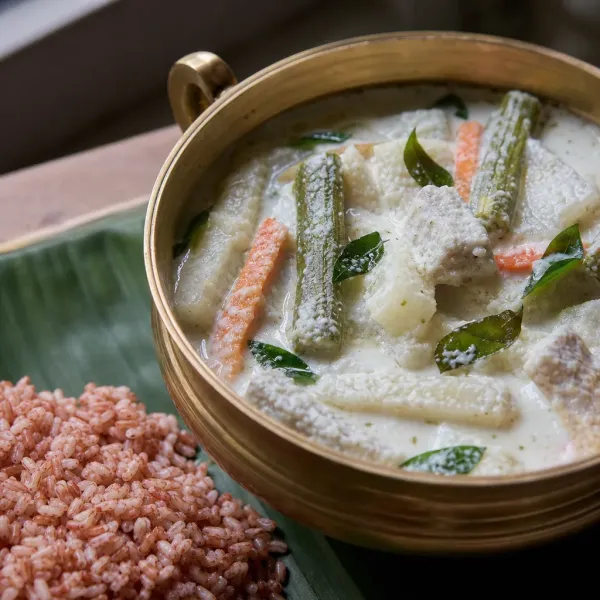
Avial
Classic Kerala avial with fresh coconut paste, sour yoghurt, and raw coconut oil. Traditional Travancore household method with exact quantities.
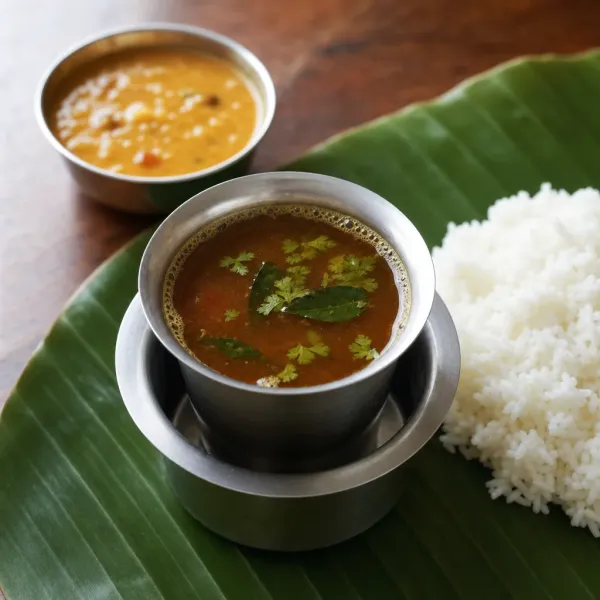
Iyer-Style Rasam with Homemade Rasam Powder
Traditional Tamil Brahmin rasam made with freshly ground rasam powder, tamarind, toor dal water and a ghee tadka. The authentic household method.
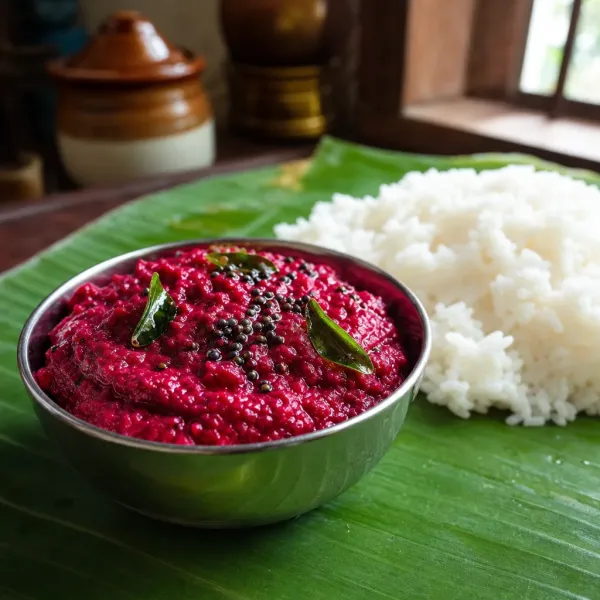
Beetroot Pachadi
Traditional Kerala beetroot pachadi with fresh coconut paste and curd, finished with a mustard and curry leaf tempering. A sadya essential, step by s…