

Beef Ularthiyathu Recipe
Malayalam ബീഫ് ഉലർത്തിയത്Tamil பீஃப் உலர்த்தியதுKannada ಬೀಫ್ ಉಲರ್ತಿಯತುTelugu బీఫ్ ఉలర్తియతు
- Prep25 min
- Cook1 hr
- Serves4
- DifficultyMedium
- DietNon-vegetarian
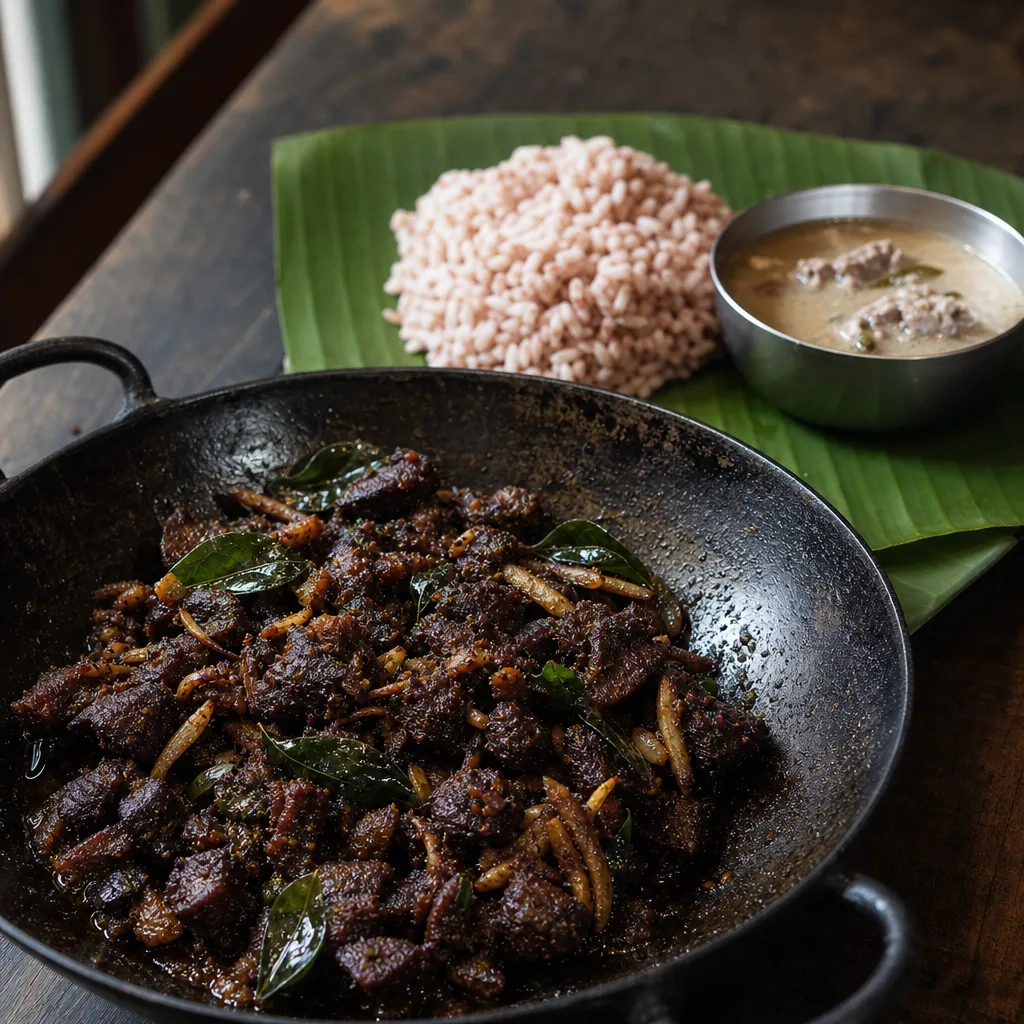
Beef ularthiyathu is a Sunday dish in Syrian Christian homes across Travancore and Kottayam. The beef is first pressure-cooked with whole spices and shallots until just tender, then moved to a wide iron or thick-bottomed kadai where it is roasted slowly in its own fat and coconut oil until the meat turns a deep, almost black-brown and the coconut slivers catch colour alongside it. The result is dry enough to eat with your fingers but not desiccated: each piece has a dark crust on the outside and stays moist within.
It is eaten with rice at the Sunday noon meal, almost always alongside a thin beef or chicken stew, so that the dry fry and the pale stew balance each other on the banana leaf or thali. Appam the same morning will see leftovers from the night before; fresh ularthiyathu is rarely made at breakfast. Some households keep back a tablespoon of the cooking liquid to splash into the kadai at the end, which lifts any crust stuck to the base and keeps the meat from going completely dry.
The differences between households are mostly in the spice quantities and in the coconut. Some cooks slice coconut thin and let it disappear into a dark chew. Others cut thicker pieces that stay pale inside and crunchy outside. The curry leaves must go in at two stages: once during the initial cook and again at the final roast, where they turn crisp in the oil.
Ingredients (serves 4)
For pressure-cooking the beef
For the final roast (ularthiyathu)
Method
Marinate and pressure-cook the beef
In a pressure cooker, combine the beef with all the pressure-cooking ingredients: sliced shallots, ginger, garlic, green chillies, coriander powder, black pepper, Kashmiri chilli, turmeric, fennel powder, salt, 2 tbsp coconut oil, and one sprig of curry leaves. Mix well so every piece is coated. Do not add water; the beef will release enough liquid. Cook on medium heat for 4 to 5 whistles, then lower the flame and cook for a further 10 minutes. The goal is tender meat that holds its shape and is not falling apart.
Rest and separate the cooking liquid
Let the pressure drop naturally; do not rush this by running cold water over the cooker. Open the lid and check the meat. It should be just tender when pressed. There will be cooking liquid in the pot. Carefully ladle out and reserve this liquid separately; you may need a spoonful or two later. If the liquid is more than about 4 to 5 tablespoons, pour off the excess and keep it aside.
Heat the kadai and fry the coconut slivers
Set a wide, heavy iron kadai or thick-bottomed uruli over medium heat. Add 3 tbsp coconut oil. When the oil is hot, add the coconut slivers. Stir them continuously; they go from pale to golden to burnt very quickly and there is no recovering from burnt coconut. Fry for 3 to 4 minutes until they are golden on all sides. Lift them out with a slotted spoon and set aside on a plate. Leave the oil in the pan.
Fry the shallots, ginger, and garlic
In the same oil, add the sliced shallots and cook over medium heat, stirring often, for 6 to 7 minutes until they turn translucent and begin to colour at the edges. Add the ginger matchsticks and sliced garlic and fry for another 2 minutes. The mixture should smell sweet and look lightly browned, not raw.
Add the whole peppercorns and curry leaves
Add the whole black peppercorns to the kadai and stir for 30 seconds. Then add the fresh curry leaves; they will sputter loudly in the hot oil, so stand back. Let them crackle and crisp for about a minute.
Add the cooked beef
Tip all the pressure-cooked beef into the kadai along with any thick paste clinging to it. Spread the pieces in a single layer as best you can. Increase the heat to medium-high. Do not stir immediately; let the beef sit undisturbed for 2 to 3 minutes so a crust begins to form on the underside.
Roast slowly, turning carefully
Now begin turning the pieces every 3 to 4 minutes. Keep the heat at medium to medium-high throughout. The objective is a slow, even roast, not a quick sear. The moisture from the pressure-cooking liquid will cook off gradually; as it does, the beef will begin to darken. This stage takes 15 to 20 minutes. If the pan looks dry and the meat threatens to stick and scorch before it is properly roasted, add a tablespoon of the reserved cooking liquid, not water.
Watch for the colour change
The dish is ready when the beef pieces are a deep reddish-brown, almost the colour of dark chocolate on the outside, and the oil in the pan has separated and pools clearly around the meat. The pieces should look dry and coated, not wet or saucy. Press a piece; it should feel firm on the outside and yield slightly inside. If the pieces still look pale brown or damp, keep roasting.
Return the coconut slivers and finish
Add the fried coconut slivers back to the kadai and fold them through the beef. Keep the heat at medium for another 3 to 4 minutes so the coconut warms through and takes on a little more colour. Taste and adjust salt. The coconut pieces should be golden and slightly chewy, not soft.
Rest before serving
Take the kadai off the heat. Let the ularthiyathu rest in the pan for 5 minutes before transferring. This resting matters: the crust on the meat firms up and the oil redistributes. Serve in the kadai or transfer to a steel serving bowl. It should look dry, dark, and glistening.
How to serve
Steamed matta rice (red Kerala rice) and a thin Kerala beef or chicken stew (ishtu). Also eaten with appam the following morning if there are leftovers.
Served with: Steamed matta rice (red Kerala rice) and a thin Kerala beef or chicken stew (ishtu). Also eaten with appam the following morning if there are leftovers.
Cook's tips
Choice of cut
Chuck or brisket, both with a reasonable amount of fat and connective tissue, work best. Very lean cuts like topside go dry and stringy during the long roast. Bone-in pieces are fine; the bone adds flavour during the pressure cook.
The iron kadai matters
A seasoned iron kadai gives better colour than a non-stick pan. Non-stick pans do not reach the same surface temperature and the beef stews rather than roasts. If you must use a non-stick pan, reduce the liquid more aggressively before the roasting stage.
Cutting the coconut slivers
Use fresh coconut only. Peel off the brown skin if you prefer a cleaner look; leaving it on gives a more rustic result both are correct. The thickness matters: too thin and they vanish into the dish; too thick and they stay raw inside.
Two-stage curry leaves
Curry leaves that go in during the pressure cook perfume the meat from within. The second lot added during the fry should be fresh, not dried out, so they crackle properly and contribute texture to the finished dish. Dried or old curry leaves will not crisp.
Storage
Ularthiyathu keeps well at room temperature through the day and improves overnight in the refrigerator as the fat sets around the meat. Reheat in the kadai over low heat; a few drops of coconut oil will refresh it. Do not microwave; it makes the meat rubbery.
Regional variations
Mappila households in Malabar cook a related beef fry with fennel and star anise in the spice profile; Kodava-influenced versions from border areas use a drier roast without coconut slivers.
Glossary
- ularthiyathu ഉലർത്തിയത്
- Roasted or fried dry; from the Malayalam verb ularthuka, meaning to roast or dry-fry, usually referring to a slow fry until moisture is fully driven out.
- thenga kothu തേങ്ങ കൊത്ത്
- Slivers or chunks cut from fresh coconut kernel, typically finger-sized; distinct from grated coconut.
- chuvannulli ചുവന്നുള്ളി
- Kerala shallots; small, elongated and purple-red, sharper and more aromatic than large onions. The correct allium for most Kerala dishes.
- matta rice മട്ട അരി
- Parboiled red Kerala rice, also called Rosematta or Palakkadan Matta; nutty, slightly chewy, and standard in Kerala Christian homes for the noon meal.
- kadai കടാ
- A deep, wide, thick-bottomed wok used for frying and roasting; iron versions are preferred for dishes requiring high, even heat.
Two things decide this dish. The first is patience during the roast: undercooking leaves wet, pale, stewy meat instead of the dry dark crust that defines ularthiyathu. The second is the coconut slivers: fry them separately and return them at the end, or they will overcook and turn bitter while the beef is still finishing.
More Non-Vegetarian recipes
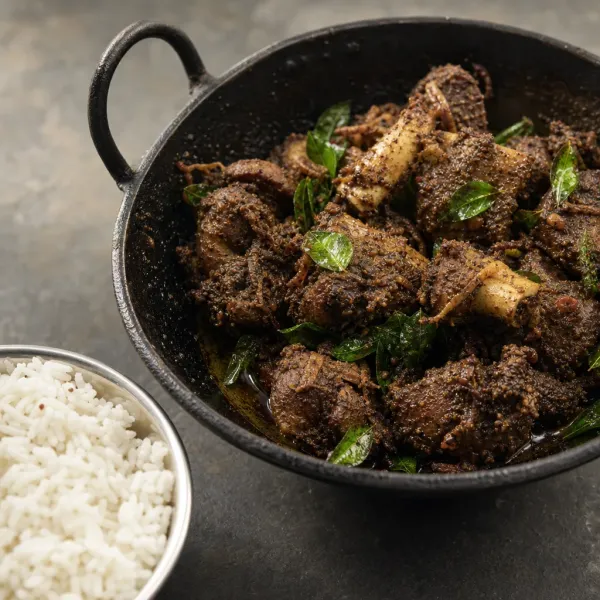
Mutton Pepper Fry
Traditional Chettinad mutton pepper fry in gingelly oil with cracked black pepper, kalpasi and marathi mokku. Bone-in mutton, iron pan finished.
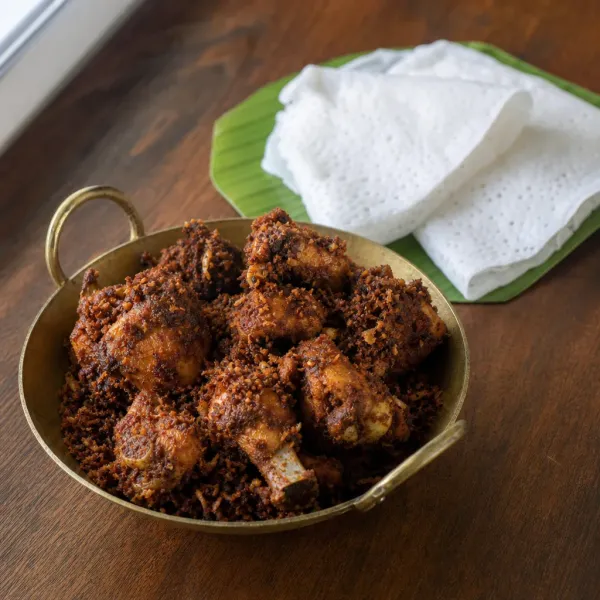
Mangalorean Chicken Sukka
Authentic Mangalorean Chicken Sukka from a Konkani Catholic home kitchen: roasted-ground byadagi masala, dry-fried chicken, finished with fresh grate…
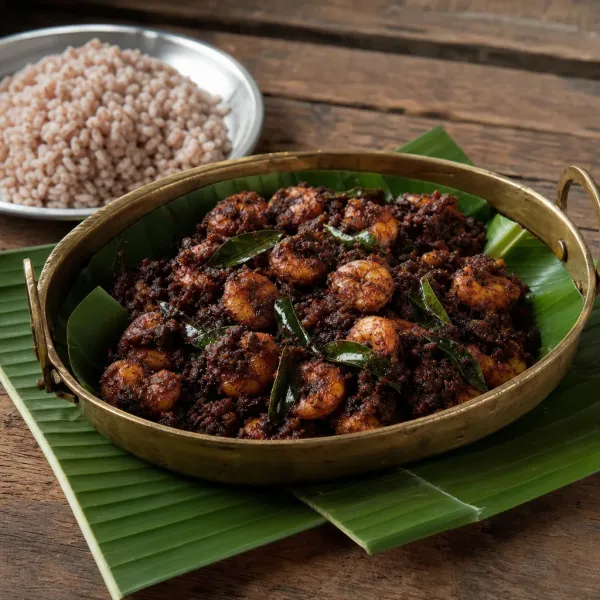
Chemmeen Roast
Traditional Kerala Nasrani chemmeen roast with shallots, kudampuli and coconut oil. Step-by-step method with the slow roasting technique that makes i…
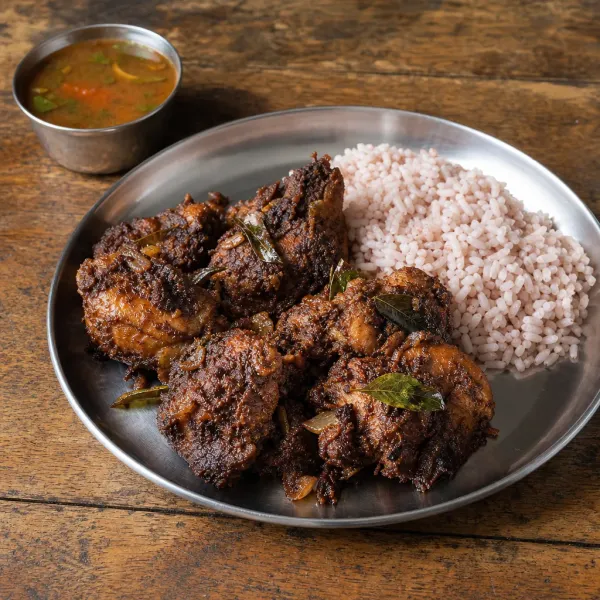
Kozhi Varuval
Traditional Kongunad kozhi varuval: bone-in chicken roasted dry in gingelly oil with shallots, tomato, and freshly ground spices. Stovetop method, no…
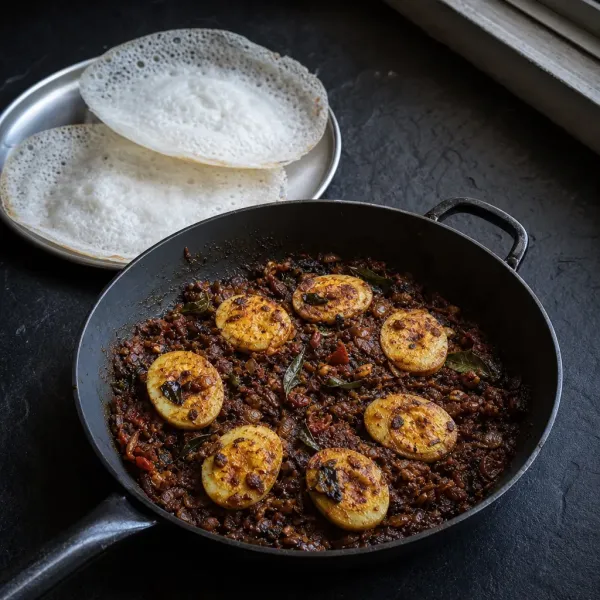
Kerala Egg Roast
Traditional Kerala egg roast from a Nasrani kitchen: hard-boiled eggs in a dark shallot and tomato masala, cooked in coconut oil and served with appa…
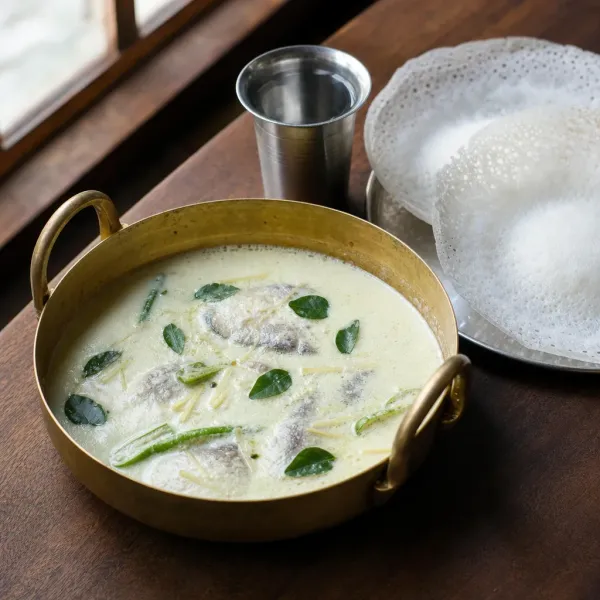
Meen Moilee
Traditional Nasrani Meen Moilee from Travancore: pale coconut-milk fish stew with green chilli, ginger and shallots. Served with appam or matta rice.