

Meen Moilee Recipe
Malayalam മീൻ മോയിലിTamil மீன் மோயிலிKannada ಮೀನ್ ಮೋಯಿಲಿTelugu మీన్ మోయిలీ
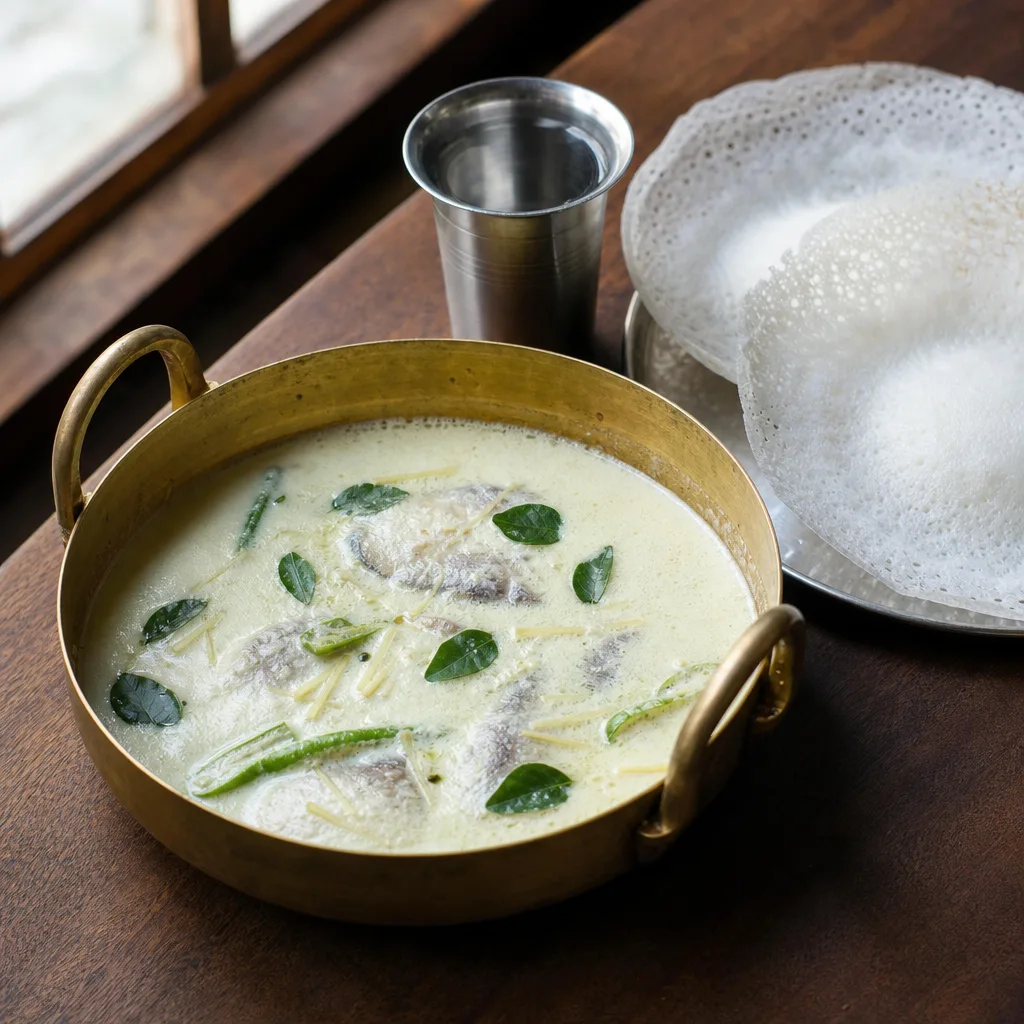
- Prep20 min
- Cook30 min
- Serves4
- DifficultyEasy
- DietNon-vegetarian
Meen Moilee is a Nasrani dish from the Syrian Christian households of Travancore, cooked when the fish is very fresh and the intention is to disturb it as little as possible. It is a stew, not a curry: the gravy is pale yellow, almost translucent, fragrant with coconut milk and green chilli, with no browning of spices and no roasted-masala depth. The fish is slid into the sauce gently and just barely cooked through.
In most Nasrani homes this was the fish dish made for guests or for Sunday lunch after church, precisely because it is mild enough to be eaten by anyone, including children and elders who cannot take chilli heat. The fat is coconut oil, used sparingly so the dish is light. Thin coconut milk goes in early to build the gravy; thick coconut milk comes in at the very end, off the heat or on the lowest possible flame, because boiling it breaks the sauce and makes it grainy.
Households differ mainly on the fish. Karimeen (pearl spot) is considered the natural choice in Kuttanad and backwater towns. Coastal families use ayala (mackerel) or kora (kingfish). A thicker fish that holds its shape — not one that falls to flakes — is the practical preference. Some households marinate the fish briefly in turmeric and salt; others do not marinate at all and simply season the gravy well. Both are genuine.
Ingredients (serves 4)
For the fish
For the stew
For finishing
Method
Marinate the fish
Pat the fish pieces dry with a cloth. Rub them all over with ½ tsp turmeric and salt. Set aside for 15 minutes while you prepare the base. Do not leave longer than 30 minutes or the salt will draw out moisture and the fish will tighten.
Soften the shallots and aromatics
Warm 2 tbsp coconut oil in a wide, heavy-bottomed pan over medium-low heat. Add the sliced shallots and cook, stirring occasionally, for 6 to 8 minutes until they are soft, translucent, and just beginning to turn the palest gold at the edges. They must not brown; this is not a fried-base curry. Add the ginger matchsticks, sliced garlic, slit green chillies, and curry leaves and stir for 2 minutes more until fragrant.
Add turmeric and thin coconut milk
Sprinkle in ½ tsp turmeric and stir it through the aromatics for 30 seconds. Pour in all 400 ml of the thin coconut milk. The colour will be a pale, clear yellow. Taste and adjust salt. Bring to a gentle simmer over medium heat; do not let it boil hard.
Slide in the fish
Lower the marinated fish pieces into the simmering gravy in a single layer. Spoon some gravy over any pieces that sit above the liquid. Cover loosely and cook on medium-low heat for 8 to 10 minutes. The fish is ready when the flesh turns opaque all the way through and a thin skewer meets no resistance at the thickest part. Do not stir or the pieces will break; tilt the pan to baste instead.
Add thick coconut milk off the heat
Take the pan off the flame completely, or reduce the heat to the absolute minimum. Pour in the 200 ml thick coconut milk and stir in gently. The residual heat is enough. If you let it simmer after this point the milk will curdle and the sauce will look grainy and yellow-white instead of smooth and ivory. Add the cracked black pepper now.
Finish and rest
Drizzle 1 tsp raw coconut oil over the surface and scatter the final sprig of curry leaves on top. Cover the pan and let the stew rest for 5 minutes before serving. The sauce will thicken very slightly as it rests and the raw oil will perfume the top layer. Serve directly from the pan.
How to serve
Appam (lace-edged fermented rice hoppers) or palappam. Also eaten with matta rice (Kerala red parboiled rice) in many households for everyday meals. Idiyappam is another pairing in some Nasrani homes.
Served with: Appam (lace-edged fermented rice hoppers) or palappam. Also eaten with matta rice (Kerala red parboiled rice) in many households for everyday meals. Idiyappam is another pairing in some Nasrani homes.
Cook's tips
Which fish works best
Karimeen is traditional in backwater towns and considered the finest choice because the flesh is firm and sweet. Where karimeen is unavailable, choose a thick, white-fleshed fish that holds shape when poached: kora (kingfish), pomfret, or snapper all work. Avoid mackerel here; its oily flesh competes with the coconut milk.
Extracting coconut milk at home
Grate one medium coconut. Add 100 ml warm water and squeeze hard through a cloth — this is your thick milk (first extraction). Add 400 ml warm water to the same grated coconut and squeeze again — this is your thin milk (second extraction). Fresh extraction gives a cleaner, less sweet result than canned. If using canned, the undiluted tin is your thick milk; dilute it 1:2 with water for thin.
The one step that breaks the dish
Boiling the thick coconut milk is the single most common mistake. Once it goes in, keep the flame off or barely alive. If you see the sauce separating into oily yellow puddles and white curds, the heat was too high. There is no rescuing it at that point.
No tomato
Tomato does not belong in Meen Moilee. It is sometimes added in restaurant versions to give colour or tang, but it muddies the pale, delicate gravy and changes the dish entirely. If you want acidity, a Nasrani household might add a single piece of kudampuli (Malabar tamarind) to the thin milk stage, though even that is not universal.
Storing leftovers
Moilee keeps for one day in the refrigerator. Reheat on the lowest possible flame, covered, without stirring. The coconut milk will look slightly separated when cold; gentle warmth brings it back together. Do not microwave at high power.
Regional variations
Mappila households in Malabar make a similar coconut-milk fish stew with a darker, more peppery base and sometimes fennel; Konkani Catholics in coastal Karnataka make a pale coconut-milk fish preparation called fish ambat that shares the turmeric-and-coconut-milk logic but uses kokum.
Glossary
- Karimeen കരിമീൻ
- Pearl spot fish (Etroplus suratensis), a freshwater and brackish-water fish native to Kerala's backwaters, considered a prized table fish.
- Chuvannulli ചുവന്നുള്ളി
- Small red shallots used across Kerala cooking; sharper and more aromatic than large onions.
- Kudampuli കുടംപുളി
- Gambooge (Garcinia cambogia), a dried sour fruit used as the souring agent in Kerala fish curries; also called Malabar tamarind.
- Matta rice മട്ട അരി
- Kerala red parboiled rice with a characteristic nutty flavour and firm texture; also called Rosematta or Palakkadan Matta.
- Nasrani നസ്രാണി
- Kerala's Saint Thomas Christians (Syrian Christians), one of the oldest Christian communities in the world, with a distinct cuisine separate from Hindu and Muslim Kerala cooking.
- Moilee / Moily മോയിലി
- A pale, lightly spiced coconut-milk stew; the word is used in Nasrani and some other Kerala Christian households. Etymology is debated; possibly from Portuguese 'molho' (sauce).
Two things decide this dish. The first is restraint at the shallot stage: they must soften without colouring, because any browning pulls the stew toward a darker, heavier style that is not moilee. The second is discipline with the thick coconut milk: it goes in off the heat, and it does not boil. Get those two right and the gravy will be what it should be — ivory, barely set, fragrant, and light enough that the fish is the thing you taste.
More Non-Vegetarian recipes
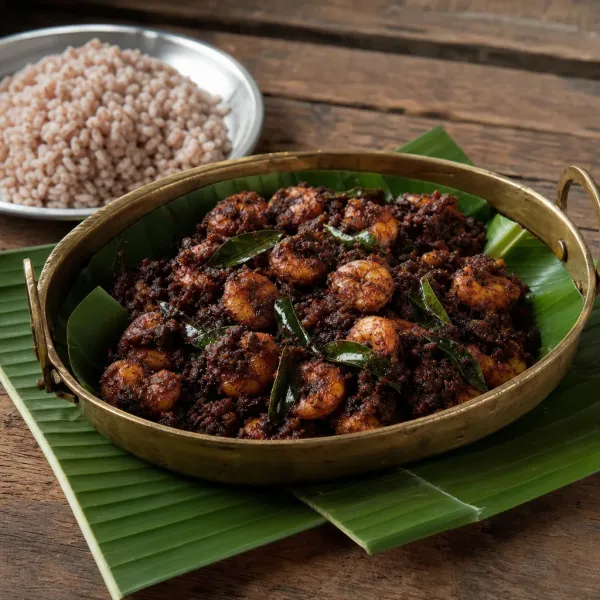
Chemmeen Roast
Traditional Kerala Nasrani chemmeen roast with shallots, kudampuli and coconut oil. Step-by-step method with the slow roasting technique that makes i…
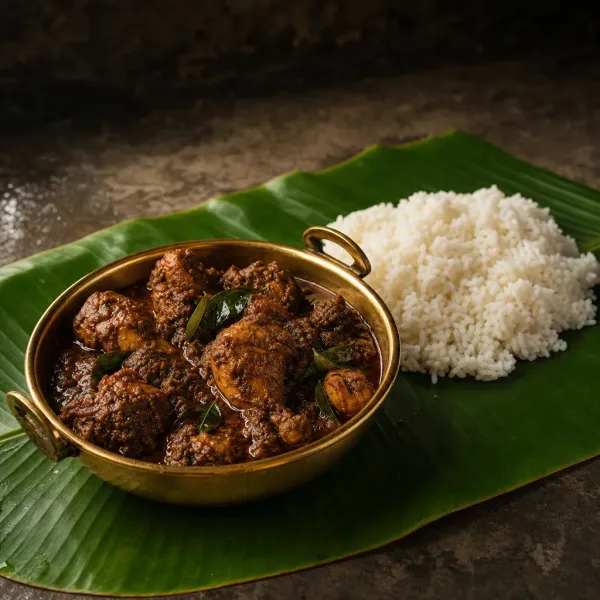
Chettinad Chicken Curry
Authentic Chettinad chicken curry from the Nagarathar kitchen, with fresh-ground masala of kalpasi, marathi mokku and whole spices. Cooked in gingell…
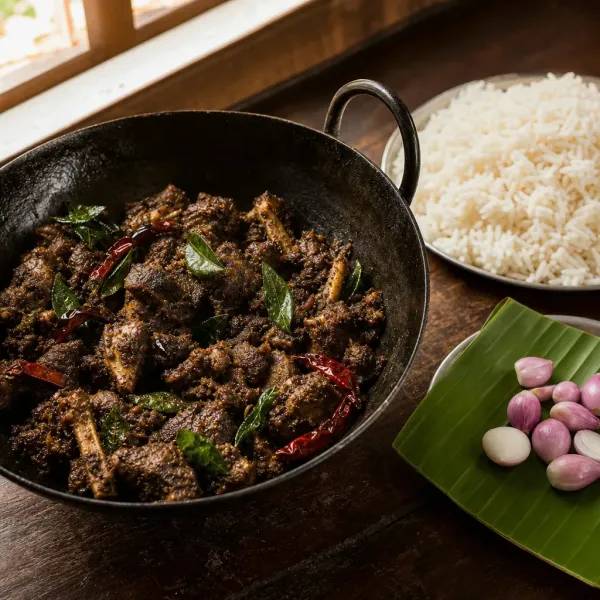
Mutton Chukka Varuval
Authentic Chettinad mutton chukka varuval with freshly ground kalpasi-marathi mokku masala, roasted dry in gingelly oil. Traditional household method.
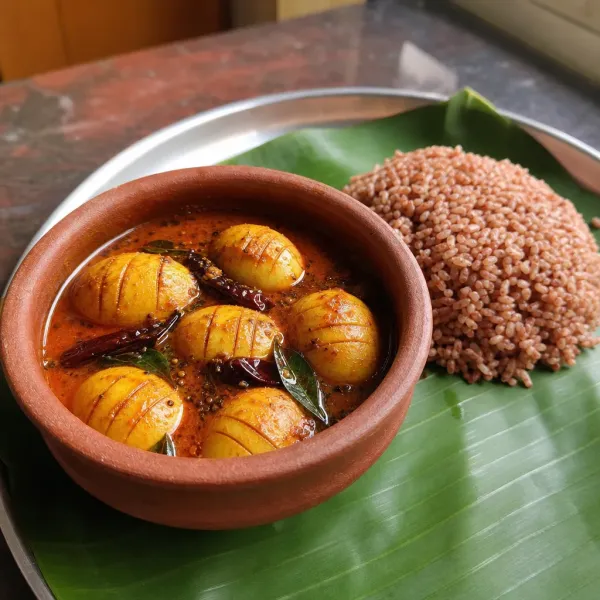
Mutta Curry
Traditional Kerala Nasrani mutta curry with kudampuli, shallots, and coconut milk. Step-by-step home recipe with exact quantities and cook's notes.
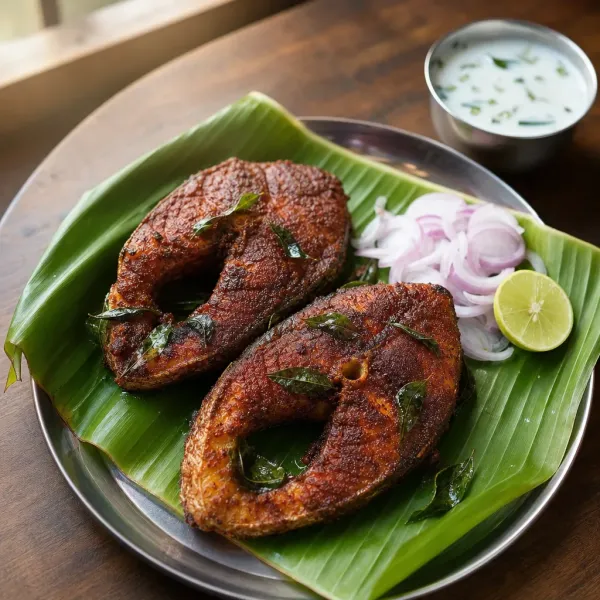
Kerala Fish Fry (Meen Varuthathu)
Authentic Malabar Mappila fish fry with chilli paste and kudampuli marinade, fried on a tawa in coconut oil. Traditional Kerala method.
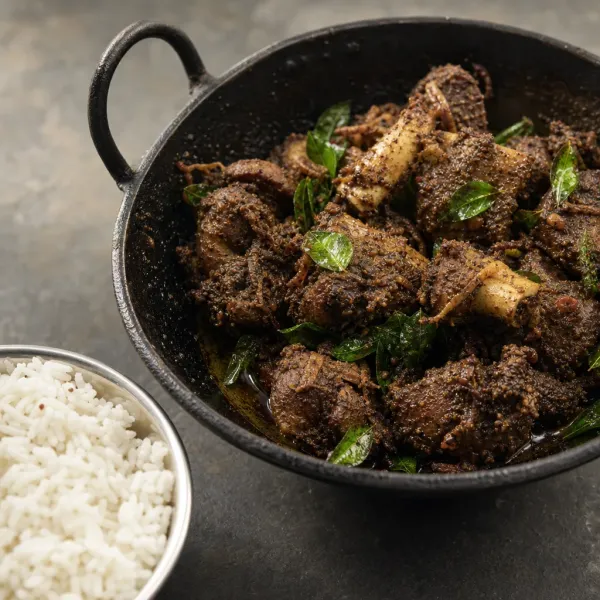
Mutton Pepper Fry
Traditional Chettinad mutton pepper fry in gingelly oil with cracked black pepper, kalpasi and marathi mokku. Bone-in mutton, iron pan finished.