

Chemmeen Roast Recipe
Malayalam ചെമ്മീൻ റോസ്റ്റ്Tamil இறால் ரோஸ்ட்Kannada ಸೀಗಡಿ ರೋಸ್ಟ್Telugu రొయ్యల రోస్ట్
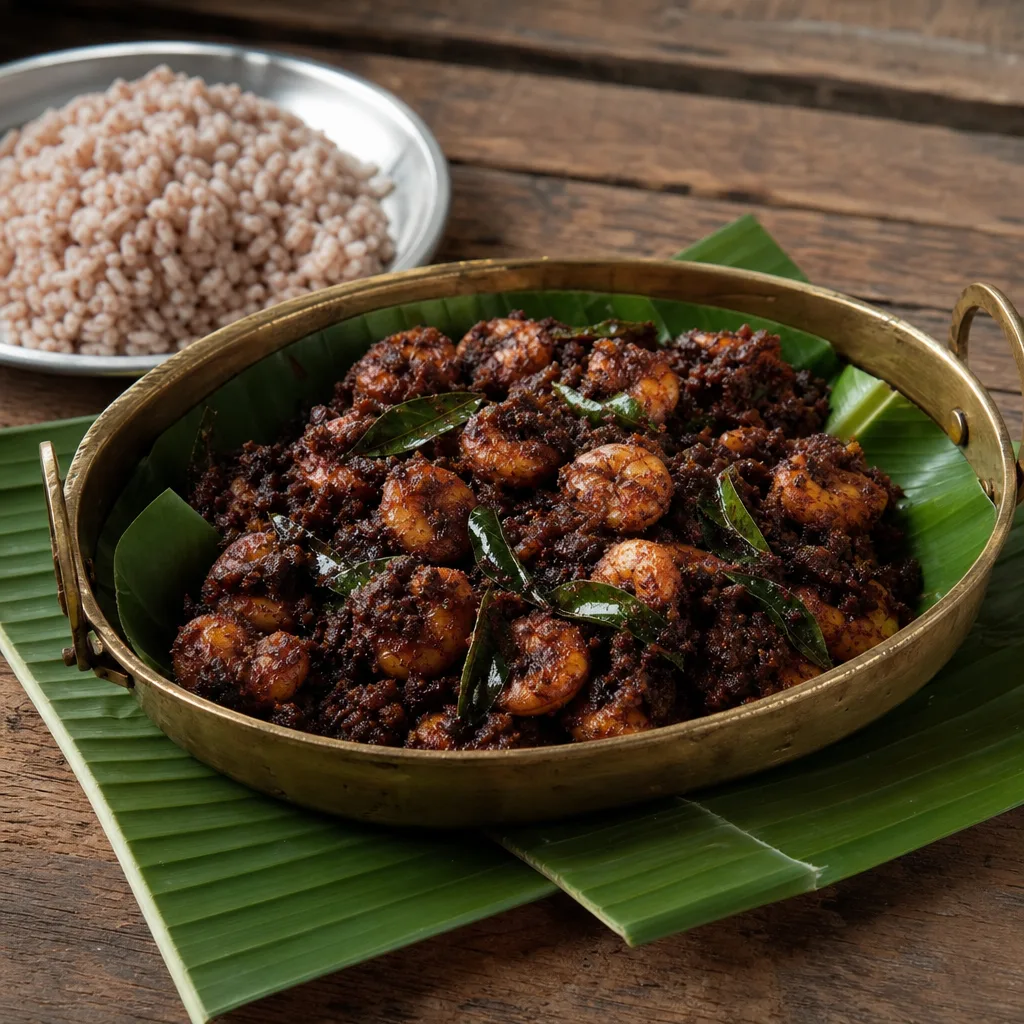
- Prep20 min
- Cook35 min
- Serves4
- DifficultyMedium
- DietNon-vegetarian
Chemmeen roast is a Nasrani kitchen staple along the backwaters and coastal districts of Travancore. It is a dry, dark, deeply spiced prawn preparation cooked down in coconut oil until the masala clings to each prawn and the whole thing is nearly black at the edges. The word roast here means something specific: the masala is cooked until the moisture is almost entirely gone and the oil separates back out, coating everything in a glossy, rust-coloured film.
It is eaten with matta rice and a simple thoran, or tucked into appam on a Sunday morning. In many households it doubles as a side at lunch and reappears at dinner, tasting better the second time. Some cooks add a small piece of kudampuli to sharpen the masala; others rely entirely on the heat of the chilli and the caramelised shallots for depth.
Household differences are real but small. Some cooks marinate the prawns briefly before cooking; others go straight to the pan. The chilli heat varies by family, but the cooking method — low heat, patient stirring, oil separating at the end — is the same everywhere.
Ingredients (serves 4)
For the prawns
For the masala
Method
Coat the prawns
Put the cleaned prawns in a bowl. Add 1/4 tsp turmeric, 1/2 tsp Kashmiri chilli powder and a pinch of salt. Mix well so every prawn is coated. Set aside while you prepare the masala. Do not leave them longer than 20 minutes or the salt will draw out moisture and make the prawns watery.
Soak the kudampuli
Place the piece of kudampuli in a small bowl with 3 tbsp warm water. Let it sit for 10 minutes. You will use both the soaked piece and the soaking water. The water will turn pale yellow and taste sharply sour.
Fry the shallots
Heat 4 tbsp coconut oil in a heavy-bottomed kadai or cheenachatti over medium heat. Add the sliced shallots and a small pinch of salt. Cook, stirring regularly, for 12 to 15 minutes until they are deep golden brown and have shrunk considerably. Do not rush this step on high heat; burnt shallots will make the whole dish bitter.
Add ginger, garlic and green chilli
Add the chopped ginger and garlic to the browned shallots. Stir and cook for 2 to 3 minutes until the raw smell disappears and the mixture begins to stick slightly to the pan. Add the slit green chillies and one sprig of curry leaves, stir once, and let the leaves splutter.
Add the dry spice powders
Lower the heat to medium-low. Add the red chilli powder, coriander powder, black pepper powder and turmeric. Stir constantly for about 1 minute. The spices should cook in the oil and turn fragrant. If the pan looks dry and the spices are beginning to catch, add a tablespoon of water and continue stirring. The colour will deepen to a dark rust.
Add kudampuli and cook the masala down
Pour in the kudampuli soaking water and add the soaked piece itself. Stir everything together. Cook on medium-low for 2 to 3 minutes until the water evaporates and the masala thickens and begins to leave the sides of the pan. At this point the oil will start to show around the edges.
Add the prawns
Tip the coated prawns into the pan. Stir to coat them thoroughly in the masala. Cook on medium heat for 4 to 5 minutes, turning the prawns occasionally. Prawns cook quickly; watch for them to curl and turn opaque. Overcooking makes them rubbery.
Dry-roast the masala onto the prawns
Lower the heat to low. Continue cooking and stirring, scraping the masala from the bottom of the pan, for another 6 to 8 minutes. The moisture should be almost entirely gone. The masala will darken, the prawns will look glossy and coated, and you will see the coconut oil separating back out and pooling at the edges. This separation is the sign the roast is ready. Do not stop early; an under-roasted chemmeen roast tastes raw and pasty.
Finish and rest
Add the second sprig of curry leaves and 1 tsp fresh coconut oil. Stir once and take the pan off the heat. Let the roast rest in the pan for 5 minutes before serving. The residual heat finishes the curry leaves and the fresh oil lifts the aroma.
How to serve
Hot matta rice and a vegetable thoran, or alongside appam at breakfast. A wedge of lemon is sometimes placed on the plate, though not universal.
Served with: Hot matta rice and a vegetable thoran, or alongside appam at breakfast. A wedge of lemon is sometimes placed on the plate, though not universal.
Cook's tips
Prawn size matters
Medium prawns work best here. Very large prawns take longer to cook and the masala can over-darken before they are done. Very small prawns overcook and toughen in the time it takes the masala to roast properly.
Kudampuli vs tamarind
Kudampuli gives a specific, mellow sourness with a slight resinous edge that tamarind does not replicate. If you cannot find it, a very small amount of tamarind extract works at a pinch, but the flavour profile shifts noticeably. Reduce the water added with tamarind since it is more liquid.
Tastes better the next day
Like most roasted masala dishes, this improves after sitting for a few hours. The spices settle into the prawns. Reheat gently in the same pan with a splash of water on very low heat to avoid hardening the prawns.
Do not use frozen prawns without thawing fully
Frozen prawns that have not been properly drained release a lot of water into the pan and you end up boiling rather than roasting. Thaw completely, pat dry before marinating.
The cheenachatti advantage
A traditional clay cheenachatti retains and distributes heat gently, which helps the slow roasting at the end. A cast-iron or thick-bottomed steel pan works well too. Avoid thin stainless steel pans, which create hot spots and burn the masala before the moisture is gone.
Regional variations
Mappila version uses fennel and star anise in the masala; coastal Tamil Nadu households make a similar dry prawn preparation with gingelly oil and tamarind.
Glossary
- Chemmeen ചെമ്മീൻ
- Prawn or shrimp in Malayalam; the word is used for both.
- Kudampuli കുടംപുളി
- Dried rind of Garcinia cambogia, also called Malabar tamarind or fish tamarind; used as a souring agent in Kerala fish and prawn dishes.
- Cheriya ulli ചെറിയ ഉള്ളി
- Small shallots; the standard allium in Kerala cooking, sharper and more fragrant than large onions.
- Cheenachatti ചീനച്ചട്ടി
- A wide, shallow clay cooking vessel used across Kerala for frying and roasting; the name is derived from Chinese-influenced coastal trade pottery.
- Matta rice മട്ട അരി
- Partially milled red rice from Palakkad, also called Rosematta or Kerala red rice; the everyday rice of traditional Kerala households.
- Thoran തോരൻ
- A dry vegetable stir-fry cooked with freshly grated coconut, typical of Kerala; no gravy.
What decides this dish is patience at two moments: browning the shallots deeply enough before the spices go in, and then staying with the pan at the end, stirring and scraping, until the oil separates back out and the masala is truly dry. Cut either short and you have spiced prawns; stay with it and you have a roast.
More Non-Vegetarian recipes
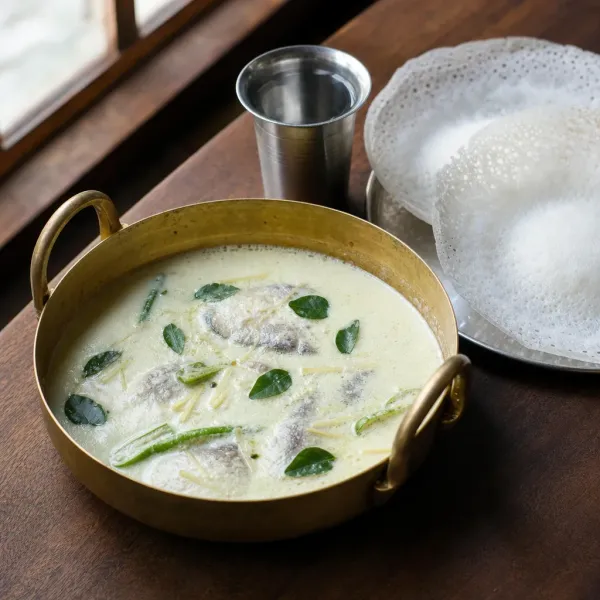
Meen Moilee
Traditional Nasrani Meen Moilee from Travancore: pale coconut-milk fish stew with green chilli, ginger and shallots. Served with appam or matta rice.
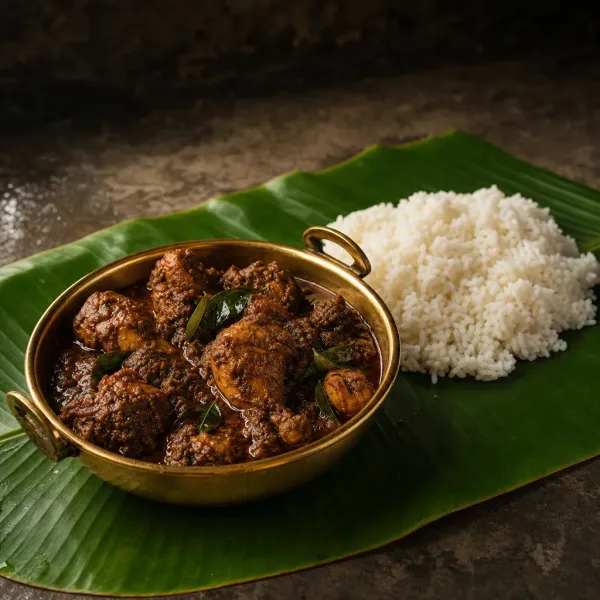
Chettinad Chicken Curry
Authentic Chettinad chicken curry from the Nagarathar kitchen, with fresh-ground masala of kalpasi, marathi mokku and whole spices. Cooked in gingell…
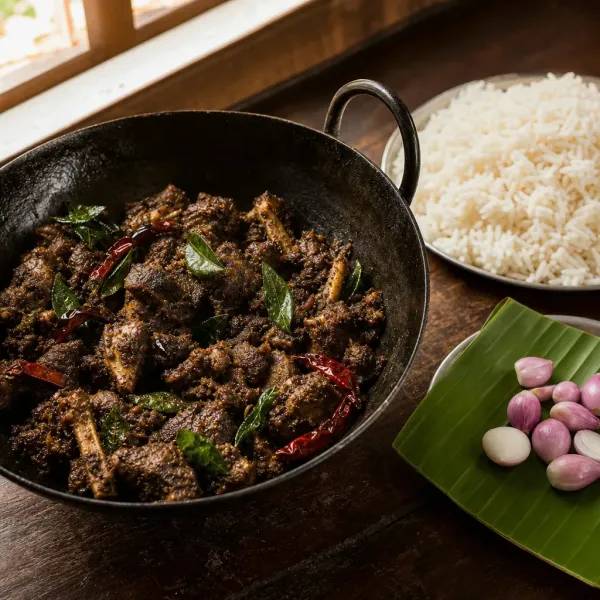
Mutton Chukka Varuval
Authentic Chettinad mutton chukka varuval with freshly ground kalpasi-marathi mokku masala, roasted dry in gingelly oil. Traditional household method.
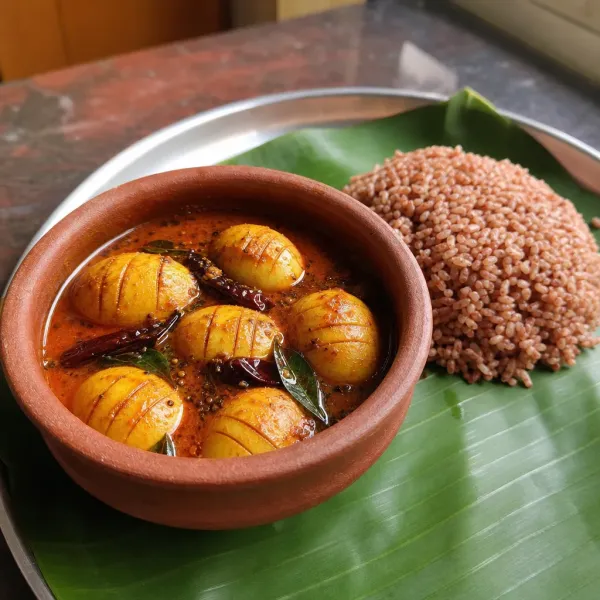
Mutta Curry
Traditional Kerala Nasrani mutta curry with kudampuli, shallots, and coconut milk. Step-by-step home recipe with exact quantities and cook's notes.
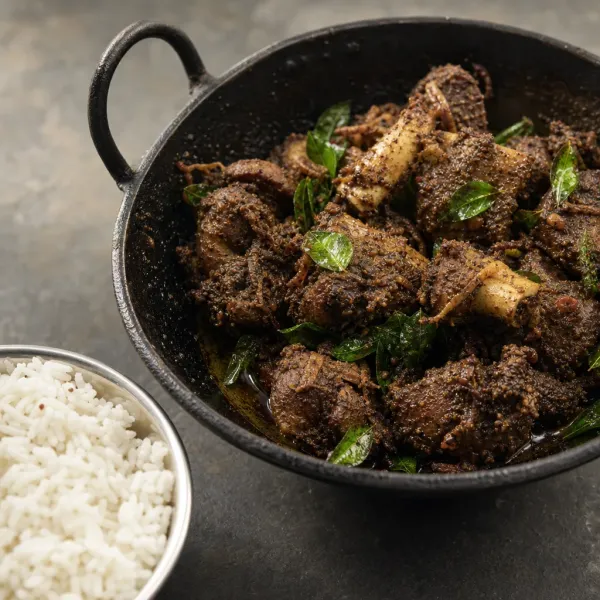
Mutton Pepper Fry
Traditional Chettinad mutton pepper fry in gingelly oil with cracked black pepper, kalpasi and marathi mokku. Bone-in mutton, iron pan finished.
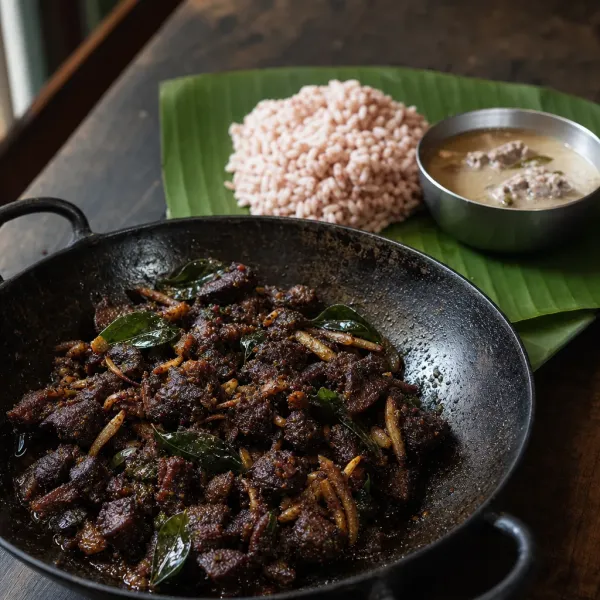
Beef Ularthiyathu
Traditional Kerala Nasrani beef ularthiyathu with coconut slivers. Slow-roasted in an iron kadai with shallots, black pepper, and fresh curry leaves.