

Uggani Recipe
Malayalam ഉഗ്ഗാനിTamil உக்கானிKannada ಉಗ್ಗಾನಿTelugu ఉగ్గాని
- Prep15 min
- Cook10 min
- Serves3
- DifficultyEasy
- DietVegan
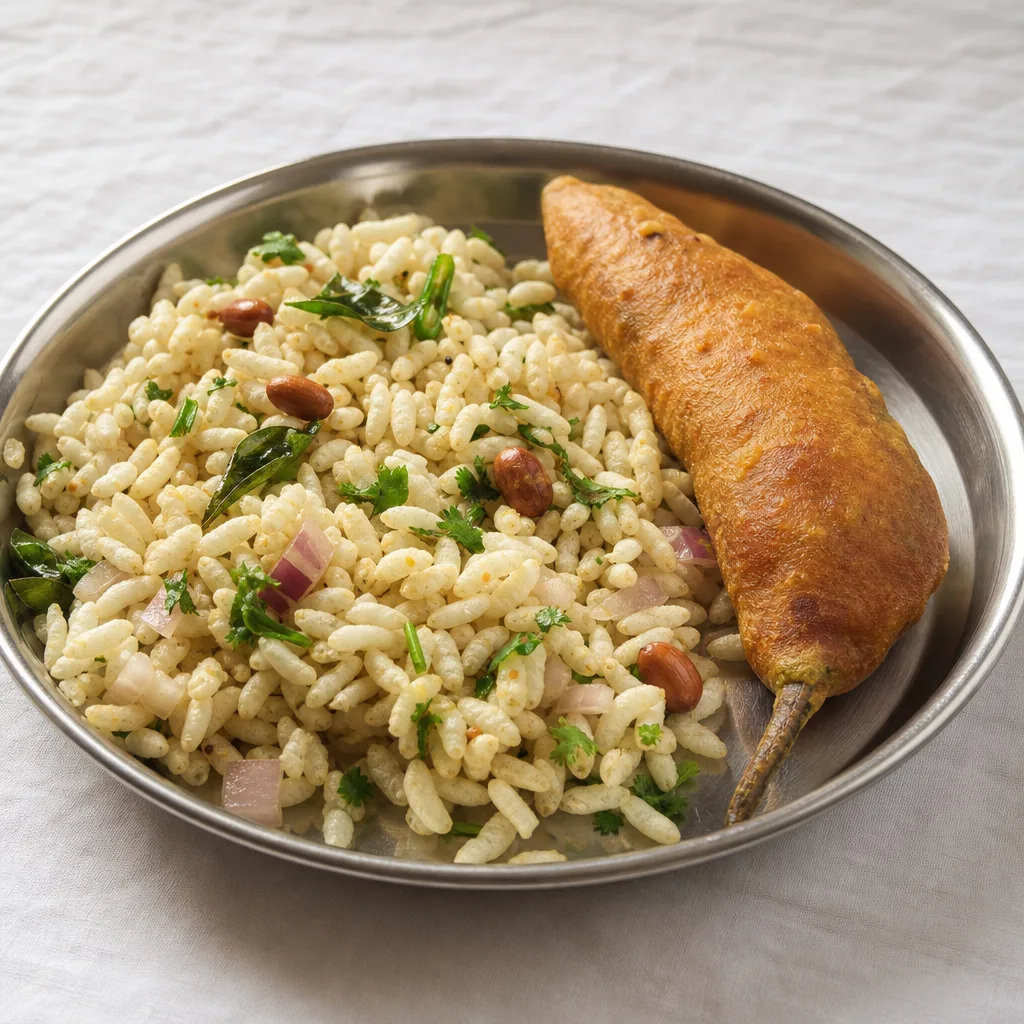
Uggani is a morning dish from the four districts of Rayalaseema — Kurnool, Kadapa, Anantapur and Chittoor — eaten as breakfast or as a quick tiffin. It is made from borugulu, the large-grained puffed rice of the region, soaked briefly in water until just softened, squeezed dry, and then tossed through a hot tempering of mustard, curry leaves, green chilli and onion. Roasted peanuts go in for body. A squeeze of lemon at the end is not optional; it is what lifts the whole thing.
The dish takes less than twenty minutes from start to finish, which is part of why it is a breakfast staple. The puffed rice must be the coarser variety — the fine, airy kind sold elsewhere in South India turns to paste the moment water touches it. In Rayalaseema homes, borugulu is kept in a large tin and uggani is made when there is little time and a hungry household.
Households differ mainly on onion: some cook the chopped onion briefly in the oil until it just loses its raw edge, others add it raw at the very end so it stays sharp and crunchy. Both are correct. The version here adds the onion raw at the end, which is the crisper, more textured result.
Ingredients (serves 3)
Main
For the tempering
To finish
Method
Dry-roast the peanuts
Put the raw peanuts in a dry pan over medium heat. Stir or shake the pan continuously for 6 to 8 minutes until the skins blister and darken in patches and the peanuts smell nutty. Tip them onto a plate to cool. Once cool, rub them between your palms to loosen most of the skins and blow the skins away, or leave the skins on — both are fine. Set aside.
Soak the puffed rice
Put the borugulu in a wide bowl and pour over enough water to just submerge it. Let it sit for 8 to 10 minutes — no longer. You want the grains to soften so they are pliable and not dusty-dry, but they must not turn mushy. Press one grain between your fingers: it should give without dissolving. If you are using a finer variety, check at 4 minutes.
Squeeze out all the water
Lift the soaked puffed rice in handfuls and squeeze firmly to expel as much water as possible, then spread it loosely on a plate. Do not skip this step. Water left in the puffed rice will make the finished dish heavy and clumped rather than light.
Heat the oil and bloom the mustard
Heat the groundnut oil in a wide kadai or heavy pan over medium-high heat. When the oil shimmers, add the mustard seeds and cover loosely. Wait for them to pop and quieten, about 30 seconds.
Add the dals and dried chillies
Add the urad dal and chana dal to the popping mustard. Stir and fry for about 45 seconds until the dals turn pale gold. Add the broken dried red chillies and stir once.
Add green chillies, curry leaves and asafoetida
Add the slit green chillies and curry leaves to the pan — stand back, the leaves will splutter. Add the pinch of asafoetida immediately after and stir everything together for 20 seconds. The curry leaves should be glossy and fragrant.
Add the peanuts
Tip in the roasted peanuts and toss them through the tempering for 30 seconds so they pick up the flavour of the oil.
Add the puffed rice and salt
Add the squeezed puffed rice to the pan and season with salt. Toss everything together over medium heat using a wide spatula or by shaking the pan. Work quickly and gently — you want every grain coated in the tempered oil without breaking the grains down. This takes about 2 minutes. The mixture should look dry and separate, not clumped.
Take off the heat and add onion, lemon and coriander
Remove the pan from the heat. Add the finely chopped onion, lemon juice and fresh coriander and toss through. The onion goes in off the heat so it stays crisp. Taste and adjust salt and lemon. Serve immediately.
How to serve
Mirchi bajji (green chilli fritters) are the classic pairing in Rayalaseema — almost inseparable from uggani at breakfast stalls and in homes. A cup of strong, milky filter coffee alongside is standard.
Served with: Mirchi bajji (green chilli fritters) are the classic pairing in Rayalaseema — almost inseparable from uggani at breakfast stalls and in homes. A cup of strong, milky filter coffee alongside is standard.
Cook's tips
The puffed rice matters enormously
Coarse borugulu from Andhra holds its shape after soaking. The fine, light puffed rice sold in Kerala or Tamil Nadu turns to wet powder within two minutes of hitting water. If you cannot find the coarse variety, reduce soaking time to 3 to 4 minutes and check constantly.
Do not let it sit
Uggani is a dish that must be eaten the moment it is made. Even 15 minutes later, the puffed rice begins to soften and lose its texture. Make it only when everyone is seated.
Onion variation
If you prefer a softer, sweeter onion flavour, add the chopped onion to the pan after the curry leaves and cook for 2 minutes before adding the puffed rice. Both approaches are made in Rayalaseema households.
Lemon, not tamarind
Some recipes online add tamarind water. Lemon juice is the household standard in Rayalaseema and gives a cleaner brightness. Add it only off the heat, or it turns bitter.
Regional variations
Some households in Chittoor add grated fresh coconut; a few add finely chopped tomato, though this is less traditional; a version without peanuts exists in households where groundnut allergy is a concern.
Glossary
- Borugulu బొరుగులు
- Coarse puffed rice used in Andhra Pradesh, larger and sturdier than the fine puffed rice found elsewhere in South India.
- Uggani ఉగ్గాని
- A Rayalaseema breakfast made from soaked and squeezed puffed rice tossed through a mustard and green chilli tempering with peanuts.
- Kadai కడాయి
- A deep, wide, round-bottomed pan used across South Asian kitchens for frying and tossing.
- Hing ఇంగువ
- Asafoetida, a dried resin used in small quantities in tempering to add a savoury depth and aid digestion.
Uggani stands or falls on two things: the quality of the puffed rice and the timing of the soak. Use coarse borugulu and squeeze it genuinely dry, and the dish will be light, textured and bright with lemon. Rush the squeezing or soak it a minute too long, and you have a heavy, clumped mass that no amount of tempering will rescue.
More Breakfast & Tiffin recipes
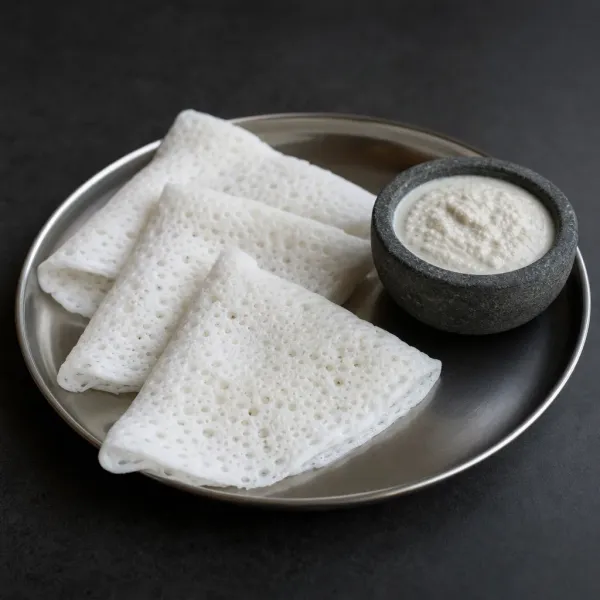
Neer Dosa
Traditional Mangalorean neer dosa made with raw rice and fresh coconut. No fermentation, cooked on one side only. Soft, white and lacy.
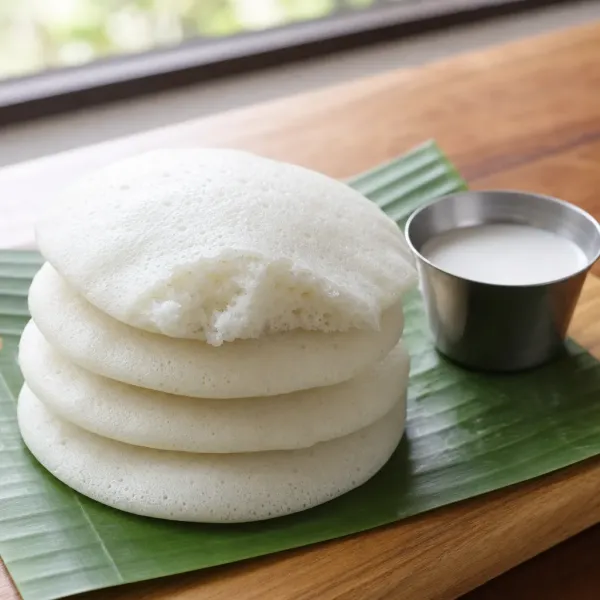
Vellayappam
Traditional Kerala Nasrani vellayappam recipe: thick, soft, pale fermented rice pancake made with pachari and coconut. Overnight batter, cooked cover…
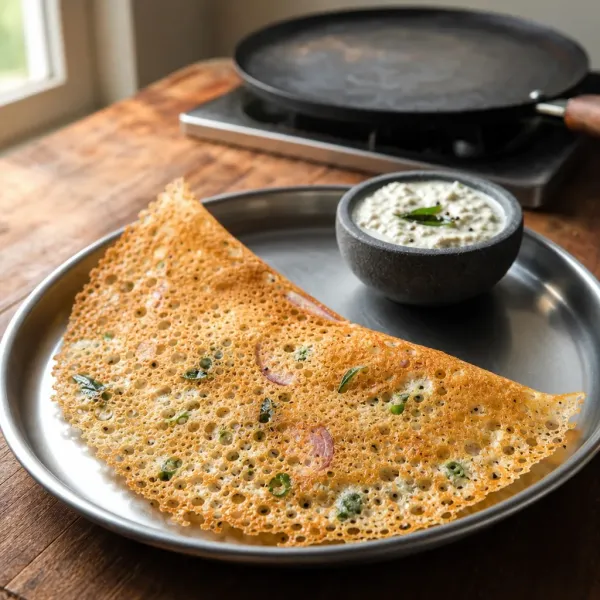
Onion Rava Dosa
Traditional Tamil Nadu onion rava dosa with shallots, cumin, and curry leaves. Thin batter, iron tawa, gingelly oil. No fermentation needed.
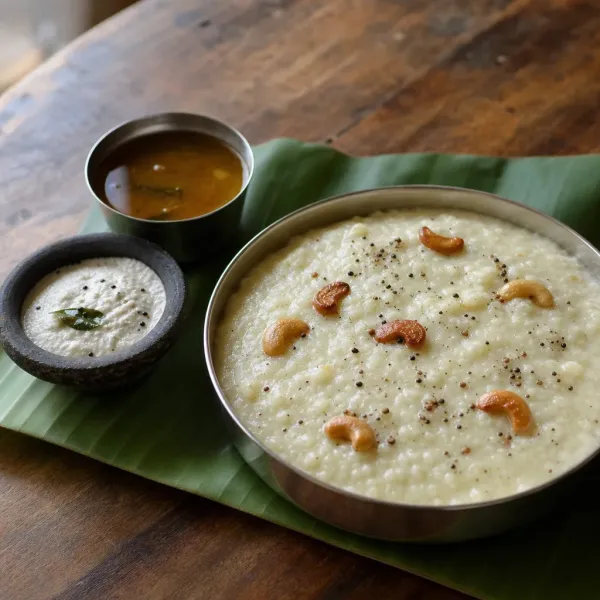
Ven Pongal (Khara Pongal)
Authentic Tamil Brahmin ven pongal with raw rice, moong dal, cracked pepper and ghee. Soft, flowing texture, no turmeric, no onion.
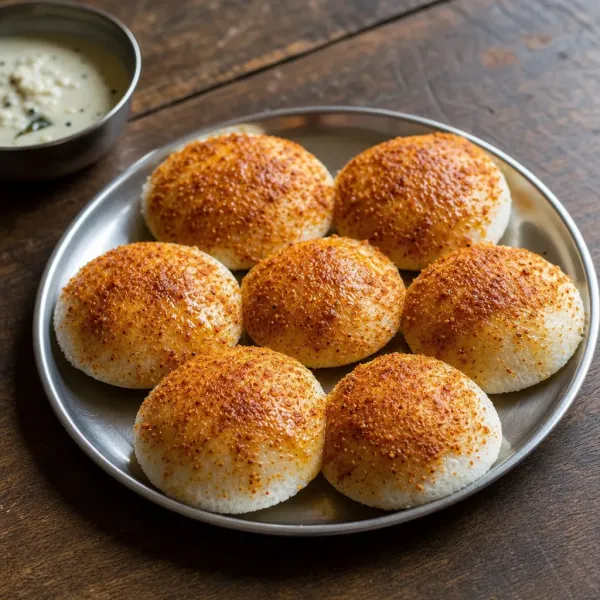
Podi Idli
Soft steamed idli tossed in homemade milagai podi and gingelly oil. Traditional Tamil Iyer household recipe with full batter and podi method.
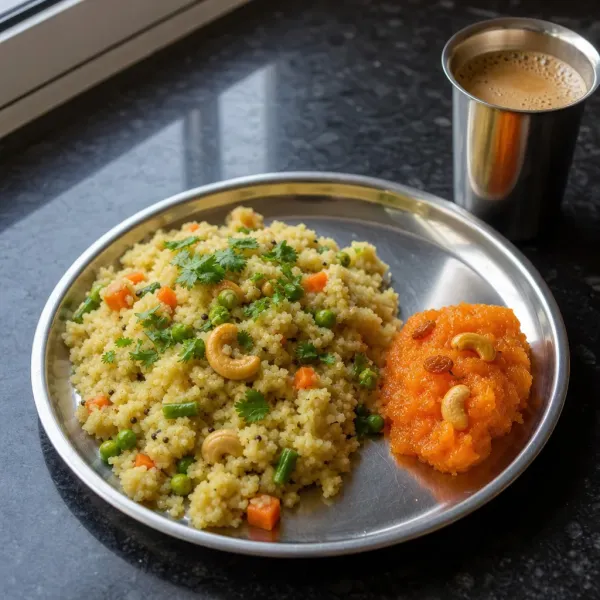
Khara Bath
Authentic Karnataka khara bath made with toasted bombay rava, ghee, green chillies and vegetables. The Bengaluru household method, step by step.