

Thalassery Chicken Biryani Recipe
Malayalam തലശ്ശേരി ചിക്കൻ ബിരിയാണിTamil தலச்சேரி சிக்கன் பிரியாணிKannada ತಲಸ್ಸೇರಿ ಚಿಕನ್ ಬಿರಿಯಾನಿTelugu తలస్సేరి చికెన్ బిర్యానీ
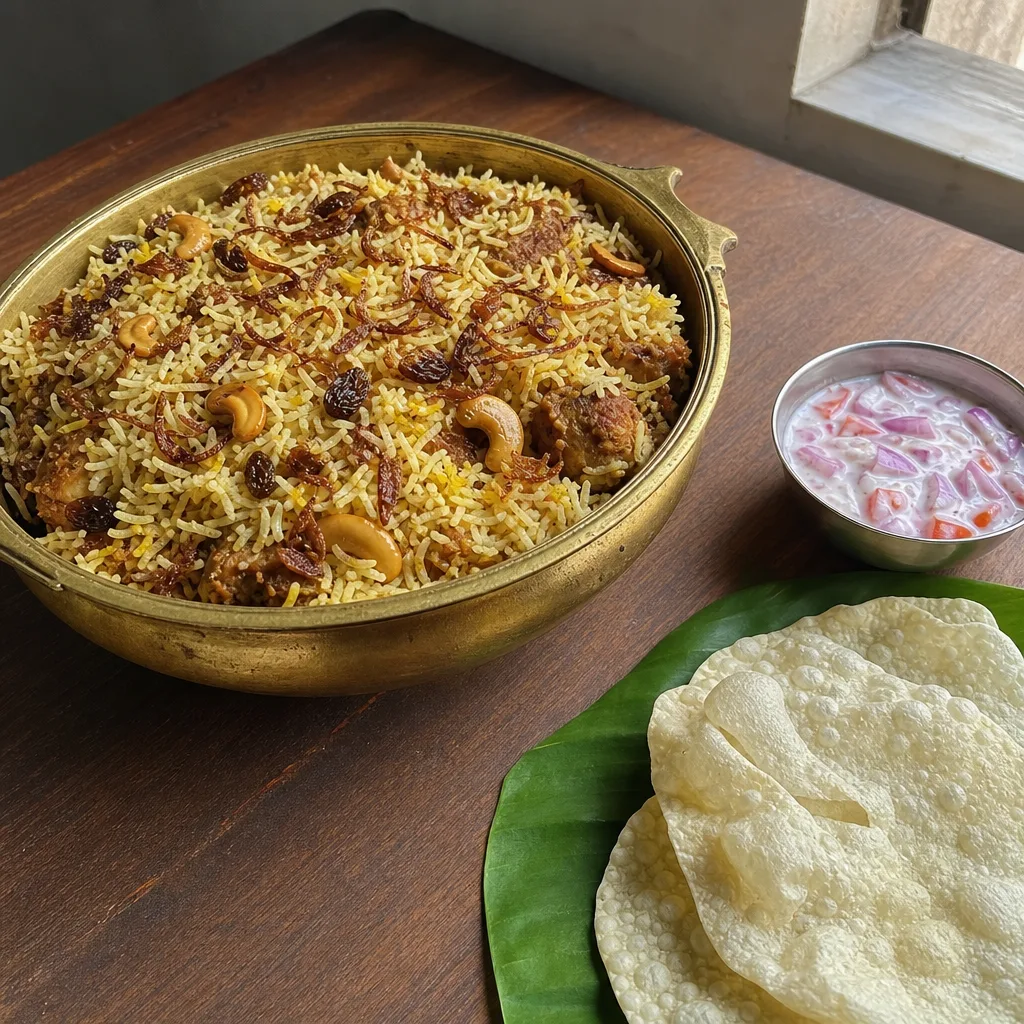
- Prep40 min
- Cook1 hr 15 min
- Serves6
- DifficultyHard
- DietNon-vegetarian
Thalassery biryani belongs to the Mappila Muslim community of northern Malabar and is unlike any other biryani made in Kerala. The rice is Kaima, also called Jeerakashala, a small-grained, aromatic variety grown in Wayanad and traded through Thalassery port for centuries. It cooks faster than Basmati and absorbs fat differently, staying separate without being dry. The dish arrived through the Arab trade connections of the Malabar coast and was shaped entirely in Mappila kitchens over generations.
The method is dum: the chicken masala and the par-cooked rice are layered in a heavy-bottomed vessel, sealed, and finished over a low flame with a tawa underneath to diffuse the heat. What makes a Thalassery household version distinct is the garnish cooked into the dish itself — fried shallots, fried cashews, and fried raisins are scattered between layers and on top, not added as an afterthought. The masala uses whole spices generously but is not fiery; the heat is mild to medium, and the dominant notes are the rice's own fragrance and the sweetness of the caramelised shallots.
Families differ on whether to marinate the chicken overnight or cook it straight. Some add a spoonful of curd to the masala; others do not. The ratio of ghee is a matter of pride. What no household changes is the rice: Kaima is non-negotiable, and anyone who has eaten this biryani will know immediately if another rice has been used.
Ingredients (serves 6)
For the rice
For the chicken masala
For the garnish (fried and layered in)
For the dum sealing and finishing
Method
Fry the garnish first
Heat the 4 tbsp ghee in a wide pan over medium heat. Add the sliced shallots for the garnish and fry, stirring often, until they are deep golden brown and beginning to crisp, about 12 to 15 minutes. Do not rush this on high heat or they will burn bitter. Lift them out with a slotted spoon and spread on a plate. In the same ghee, fry the cashews until pale gold, then the raisins until they puff and swell. Remove each separately. Reserve the flavoured ghee left in the pan.
Build the chicken masala
In a heavy-bottomed vessel large enough to hold the whole biryani later, heat the coconut oil and 2 tbsp ghee together over medium heat. Add the sliced shallots for the masala and cook, stirring regularly, until they are soft and a deep amber colour, about 18 to 20 minutes. Add the ginger and garlic pastes and cook until the raw smell is completely gone, about 4 minutes. Add the slit green chillies and stir for a minute.
Add spice powders and tomato
Lower the heat. Add the coriander powder, red chilli powder, turmeric, and the freshly ground garam masala. Stir continuously for 90 seconds so the powders cook in the fat without scorching. Add the chopped tomato and cook, crushing it as you go, until the oil begins to separate from the masala and the mixture looks thick and jammy, about 8 minutes.
Cook the chicken
Add the chicken pieces and turn them to coat in the masala. Add the curd, coriander leaves, mint leaves, and salt. Stir once, then cover and cook over medium-low heat for 20 to 25 minutes, turning the pieces once halfway through, until the chicken is just cooked and the gravy is thick and clinging — not watery. There should be very little free liquid. If the gravy looks loose, cook uncovered for a few minutes. Taste and correct the salt. Set aside.
Par-cook the rice
Bring the 1.1 litres of water to a rolling boil in a large pot. Add salt generously — the water should taste clearly salty. Add the 2 tbsp ghee and all the whole spices listed for the rice. Add the drained Kaima rice and cook uncovered over high heat, stirring once or twice. Kaima cooks quickly: check at 6 minutes. The grains should be about 70 per cent done — cooked on the outside but with a distinct chalky bite at the centre when you press one between your fingers. Drain immediately through a colander. Do not rinse.
Layer the biryani
The vessel with the chicken masala is your dum pot. Spread the chicken and masala evenly across the bottom. Scatter half the fried shallots, half the cashews, and half the raisins over the chicken. Spoon the par-cooked rice evenly on top in one layer. Drizzle the saffron water in a thin stream across the rice. Drizzle the 2 tbsp ghee and the reserved garnish ghee over the rice. Scatter the remaining fried shallots, cashews, and raisins on top.
Seal and dum-cook
Place the lid on the pot. Seal the gap between lid and pot with a rope of stiff atta dough pressed all the way around, or tuck a damp kitchen cloth around the rim before setting the lid firmly. Place a tawa or flat griddle on the lowest burner over the smallest flame. Set the sealed pot on the tawa. Cook for 20 minutes without lifting the lid. The steam trapped inside finishes the rice and melds the layers. If you lift the lid early, the steam escapes and the rice on top will be underdone.
Rest and open
Remove the pot from the heat and let it rest, still sealed, for 10 minutes. Break the dough seal or remove the cloth carefully — the steam that escapes is very hot. Lift the lid away from you. The rice on top should look dry, each grain separate, faintly tinged gold and orange from the saffron. The kitchen will smell of the Kaima rice and the fried shallots.
Serve
Use a wide, flat spoon or a spatula to serve, going down through the layers so each portion has both rice and chicken with masala. Do not stir the pot or the grains will break. Serve immediately from the pot at the table.
How to serve
Malabar chicken biryani is traditionally served with a cooling raita of sliced shallots, tomato, and green chilli in curd; a thin, sour pappadam pickle called achar; and sometimes a light chicken or mutton salna on the side. Sliced raw shallots and lime wedges are set on the table.
Served with: Malabar chicken biryani is traditionally served with a cooling raita of sliced shallots, tomato, and green chilli in curd; a thin, sour pappadam pickle called achar; and sometimes a light chicken or mutton salna on the side. Sliced raw shallots and lime wedges are set on the table.
Cook's tips
Kaima rice is not optional
Basmati will give you a different dish entirely. Kaima grains are shorter, starchier at the surface, and carry a distinct fragrance. They are sold in Kerala grocery stores and online. If you genuinely cannot find Kaima, Seeraga Samba from Tamil Nadu is closer than Basmati, but this will still not be a Thalassery biryani.
The par-cooking window is narrow
Kaima cooks in 7 to 9 minutes from boiling water. If you drain it too early it will be hard in the centre after dum; if you drain it too late it will turn mushy. The 70 per cent test — a chalky white dot visible when you press a grain — is the only reliable guide. Taste a grain every minute from the 6-minute mark.
Chicken moisture controls everything
If the chicken masala has too much liquid when you layer it, the rice sitting on top will absorb that liquid and become sticky. Cook the masala until the oil separates clearly before layering. If you see a pool of liquid at the bottom of the pot when you check, cook it down uncovered first.
The tawa is not optional
Placing the dum pot directly on the flame, even the lowest setting, scorches the bottom layer of chicken. The tawa diffuses the heat. In households without a tawa, a cast-iron pan works. Some cooks also place a few live charcoal pieces on the lid for top heat, but this is more common in restaurant kitchens than in homes.
Fry the garnish shallots low and slow
The fried shallots are a defining flavour. Rushed on high heat, they burn and turn bitter before they caramelise. Medium heat and patience — 12 to 15 minutes — gives you sweet, crisp, dark-golden shallots that perfume the whole dish.
Regional variations
Kozhikode (Calicut) biryani uses the same Kaima rice but a slightly different masala balance and more ghee; Malappuram households sometimes add a small amount of coconut milk to the gravy.
Glossary
- Kaima / Jeerakashala കൈമ / ജീരകശാല
- A small-grained, aromatic short rice variety cultivated in Wayanad, essential to Malabar biryani; its name refers to its jeera-like (cumin-like) fragrance.
- Cheriya ulli ചെറിയ ഉള്ളി
- Small shallots native to Kerala; sweeter and more pungent than large onions, used throughout Mappila cooking.
- Dum دم
- A Persian-origin cooking technique in which a sealed vessel traps steam to finish cooking the rice and meld the layers; the word means 'breath' in Persian.
- Kudampuli കുടംപുളി
- Malabar tamarind (Garcinia cambogia); not used in this dish but included here because it is the souring agent that distinguishes Kerala fish curries from dishes that use regular tamarind.
- Tawa തവ
- A flat or slightly concave griddle placed under the dum pot to prevent direct flame contact and distribute heat evenly.
Two things decide this biryani: the rice and the masala moisture. Kaima rice at exactly 70 per cent doneness before it goes into the dum pot, and a chicken masala that is thick and oil-separated with no pooling liquid — get those two right and the dum does the rest.
More Rice Dishes recipes
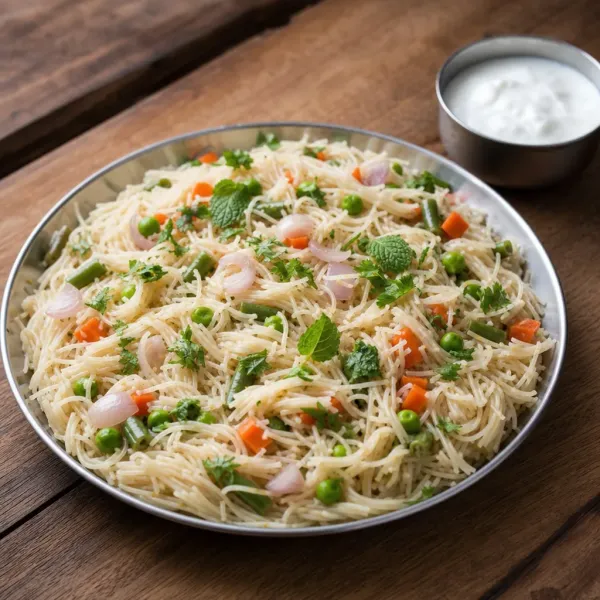
Semiya Biryani (Vermicelli Biryani)
Traditional Tamil Nadu semiya biryani made with roasted vermicelli, shallots, and gingelly oil. A quick, spiced weekday dish from Kongunad home kitch…
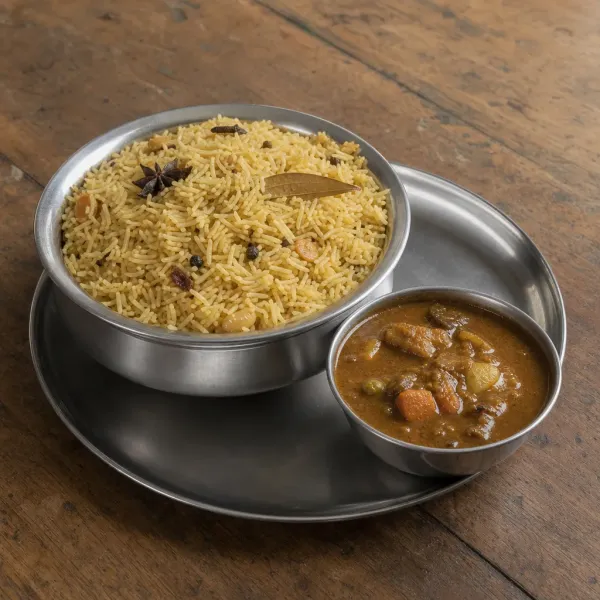
Kuska
Traditional Tamil Muslim kuska: fragrant seeraga samba rice cooked with whole spices and golden shallots. Stovetop method, no meat, no food colour.
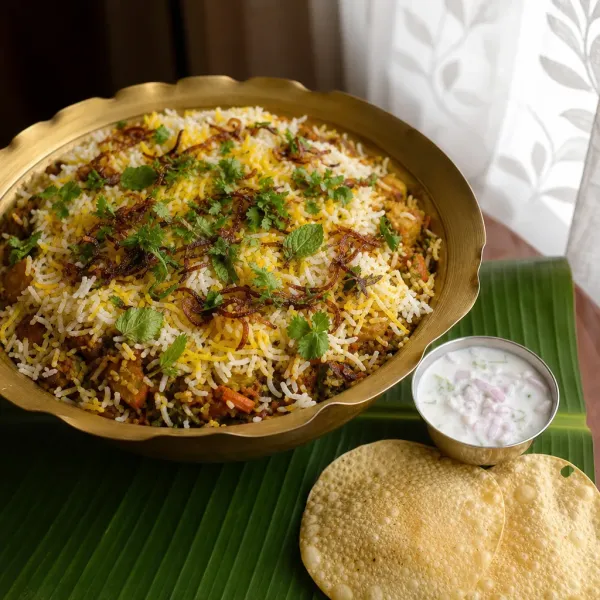
Malabar Vegetable Dum Biryani
Traditional Mappila-style vegetable dum biryani with Kaima rice, whole spices, and a layered masala sealed and slow-cooked on a tawa. Kerala home rec…
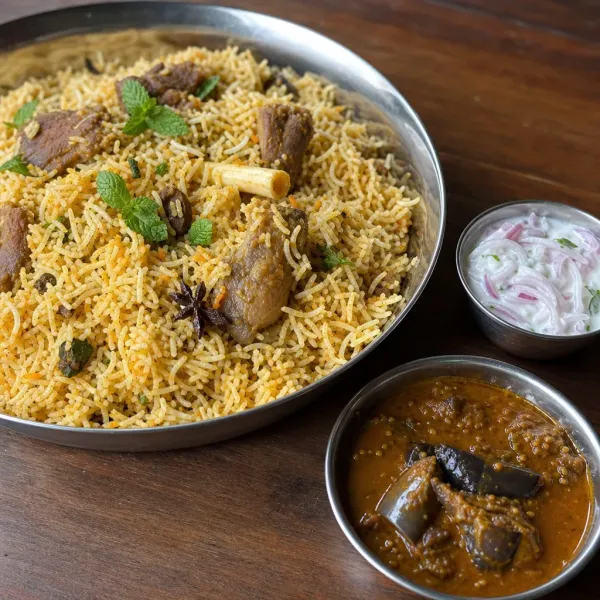
Ambur Biryani
Authentic Ambur biryani with seeraga samba rice and mutton, cooked the Arcot Nawayath way: gingelly oil, dried red chilli paste, and a sealed dum fin…
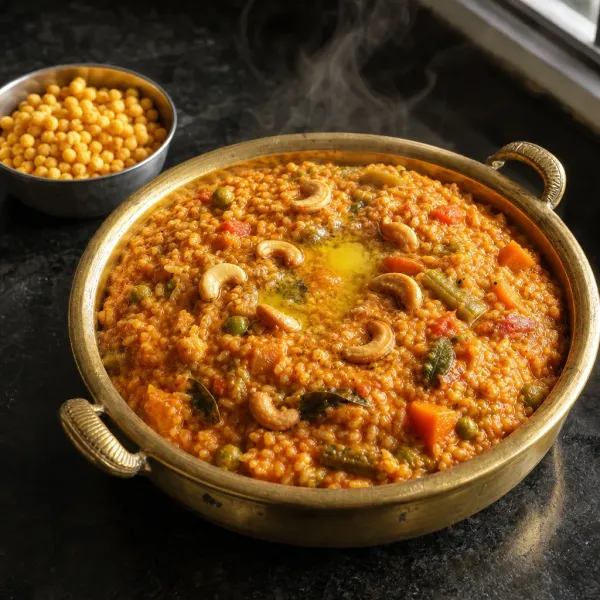
Bisi Bele Bath
Authentic Karnataka bisi bele bath with homemade spice powder, toor dal, seasonal vegetables, tamarind, and a hot ghee tempering. Traditional househo…
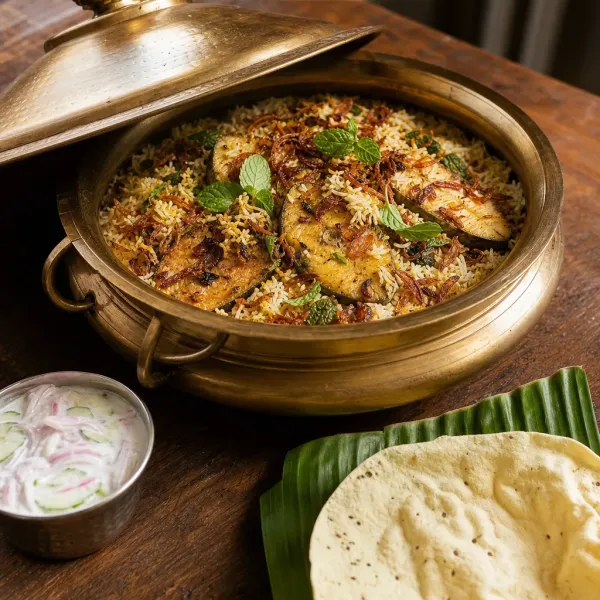
Malabar Meen Biryani
Traditional Mappila Malabar Meen Biryani with king fish, Kaima rice and coconut oil masala. Authentic Kerala fish biryani recipe with dum method.