

Kuska Recipe
Malayalam കുസ്കTamil குஸ்காKannada ಕುಸ್ಕಾTelugu కుస్కా
- Prep20 min
- Cook40 min
- Serves4
- DifficultyEasy
- DietVegan
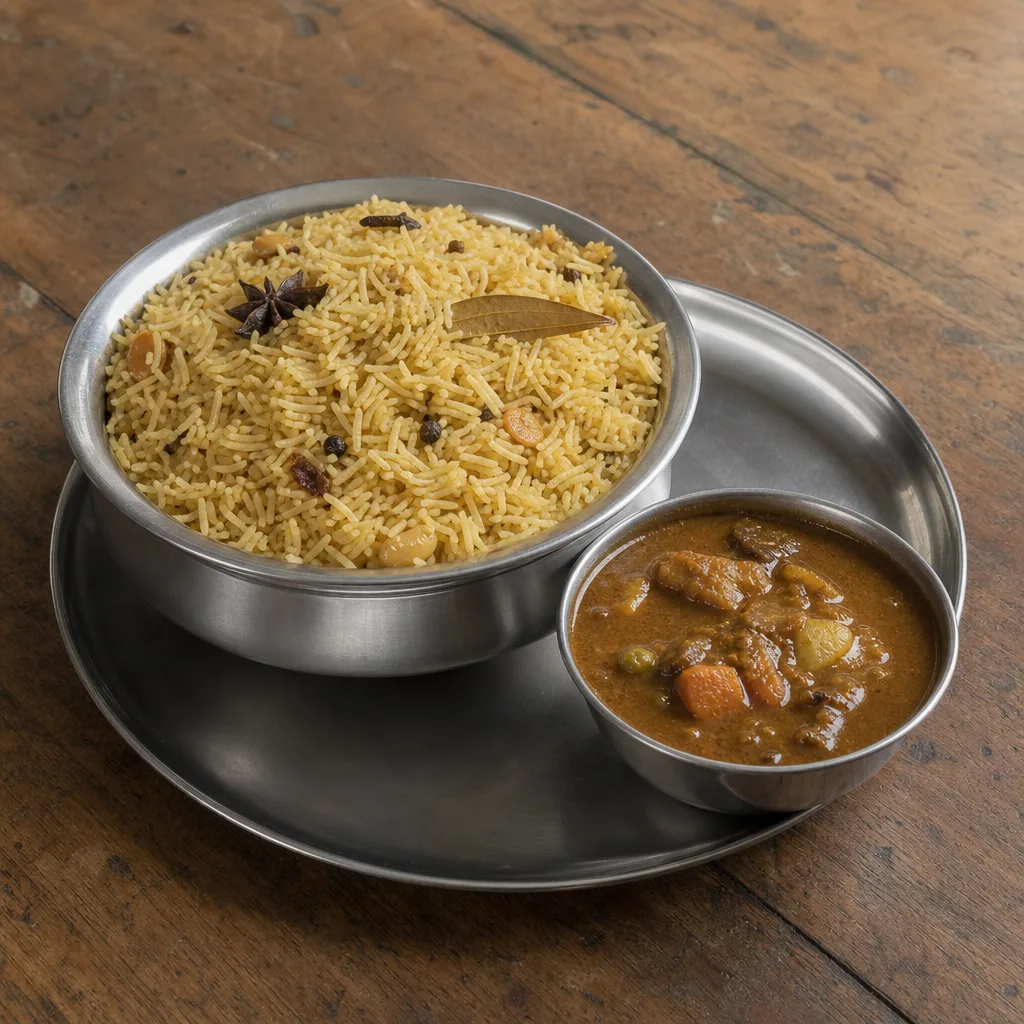
Kuska is what you cook when you want the fragrance and colour of biryani without any meat. The name is Tamil, the dish belongs to Tamil Muslim home kitchens, and in those households it is not considered a lesser thing. It is the everyday rice that sits beside a good kurma or a brinjal salan on a weekday afternoon, doing its job quietly.
The rice is cooked by absorption in a base of whole spices, fried shallots, ginger, and garlic, all in generous oil. The colour comes from the onions cooking long enough to turn a deep gold, and from a small amount of mint. There is no food colouring, no saffron, no rose water. The result is a rice that is separate-grained, faintly fragrant, and slightly savoury on its own.
Households differ mainly in which whole spices they use and how much. Some add a single dried red chilli to the oil; some do not. Some finish with fried shallots on top; others serve it plain from the pot. The rice variety matters: seeraga samba is the traditional choice in many Tamil Muslim kitchens because its short, slender grain holds the spice fragrance well, but basmati is now common in city homes.
Ingredients (serves 4)
Rice
Whole spices
Aromatics
Fat and seasoning
Method
Soak the rice
Wash the seeraga samba rice in two or three changes of water until the water runs mostly clear. Cover with cold water and soak for 20 minutes. Drain completely in a colander and leave it there while you prepare everything else. A properly soaked and drained grain cooks evenly and will not turn mushy.
Heat the oil and bloom the spices
Set a heavy-bottomed pot or a wide vessel with a tight lid over medium heat. Pour in the 60 ml of oil. When the oil is hot but not smoking, add the cinnamon, cardamom, cloves, star anise, bay leaves, and mace. Let them sizzle for about 30 seconds. The spices should smell fragrant, not burnt. If they darken too fast, lower the heat.
Fry the shallots
Add the sliced shallots to the oil. Fry over medium heat, stirring regularly, for 12 to 15 minutes. The shallots need to reach a deep, even gold, not just soft and pale. This colour is where most of the flavour of the finished rice comes from. Do not rush this step.
Add ginger, garlic, and chillies
Add the crushed ginger-garlic paste and the slit green chillies. Stir constantly for 2 to 3 minutes over medium heat. The raw smell of garlic should be gone before you move on. If it catches on the bottom, add a splash of water and scrape up anything stuck.
Add mint and coriander
Add the torn mint leaves and coriander. Stir for about 1 minute. The leaves will wilt quickly. This is enough; you want them to perfume the oil, not completely disappear into it.
Toast the drained rice
Add the drained rice to the pot. Stir gently to coat every grain in the spiced oil. Cook over medium heat for 2 minutes, turning the rice carefully. The grains should look glossy and separate, not wet.
Add water and salt
Pour in the 480 ml of water. Add salt. Stir once to combine, then taste the water: it should be slightly saltier than you want the finished rice, because the rice will absorb it and some salt will be lost to steam. Bring to a full boil over high heat.
Cook covered on low heat
Once the water is boiling, lower the heat to its lowest setting. Cover the pot with a tight-fitting lid. If your lid does not seal well, place a folded kitchen cloth over the pot and press the lid on top. Cook undisturbed for 15 minutes. Do not lift the lid during this time.
Check and rest
After 15 minutes, lift the lid briefly and check: the surface should look dry, with small steam holes visible, and no standing water. If there is still visible water, cover and cook for 3 more minutes. Turn off the heat. Add the tablespoon of ghee. Replace the lid and leave the pot to rest, undisturbed, for 10 minutes. This resting time lets the grains firm up and makes them easier to separate.
Fluff and serve
Open the lid and use a wide, flat spoon or a fork to gently fluff the rice from the edges inward. Do not stir aggressively or the grains will break. Each grain should be separate, faintly golden from the fried shallots, and fragrant from the whole spices. Serve immediately.
How to serve
Vegetable kurma, brinjal salan, or a simple raita. In Tamil Muslim homes it is also eaten with a boiled egg curry or a plain dal. The whole spices in the rice are not eaten.
Served with: Vegetable kurma, brinjal salan, or a simple raita. In Tamil Muslim homes it is also eaten with a boiled egg curry or a plain dal. The whole spices in the rice are not eaten.
Cook's tips
Water ratio for seeraga samba
Seeraga samba absorbs less water than basmati. The 1:1.6 ratio used here (300 g rice to 480 ml water) is correct for a 20-minute soak and stovetop cooking. If you use basmati, increase water to 540 ml. If you skip the soak, add 2 to 3 tablespoons more water and increase the covered cooking time by 3 minutes.
The shallot step is not optional
Pale, under-fried shallots give a raw, sharp taste to the finished rice. Take the full 12 to 15 minutes. If the shallots are burning at the edges before the centre is cooked, the heat is too high.
Pressure cooker shortcut
Many households now use a pressure cooker. After adding the water and salt, cook on high heat until one whistle, then immediately move the cooker off the heat and let the pressure release naturally. Do not cook for more than one whistle; seeraga samba turns soft quickly.
Storing leftover kuska
It keeps well in the refrigerator for one day. Reheat by sprinkling a tablespoon of water over the rice, covering, and warming over low heat for 5 minutes. Do not microwave uncovered or the grains dry out.
Regional variations
Chettinad kuska uses slightly more whole spices and gingelly oil is sometimes added; Kongunad households sometimes cook it with seeraga samba rice; restaurant versions across Tamil Nadu often add a small amount of tomato, which traditional home cooks in this community do not.
Glossary
- Seeraga samba சீரக சம்பா
- A short, slender, aromatic rice variety native to Tamil Nadu, named for its resemblance to cumin (seeragam). It has a natural fragrance and is the traditional rice for Tamil biryani and kuska.
- Kuska குஸ்கா
- Plain biryani rice cooked with whole spices and aromatics but without meat. The word is Tamil and the dish is common across Tamil Nadu, particularly in Muslim home kitchens.
- Shallots சிறிய வெங்காயம்
- Small, pungent, purple-skinned onions used across South Indian cooking. They are sharper and more flavourful than large onions and are the correct choice in this dish.
- Mace జాపత్రి / javithri
- The lacy red-orange covering of the nutmeg seed, dried and used as a whole spice in biryanis and spiced rice dishes across South India. It has a warm, slightly floral flavour.
Two things decide this rice: how long you fry the shallots, and whether you let the pot rest undisturbed after the heat goes off. Pale shallots and an impatient hand that lifts the lid early are the two most common reasons kuska disappoints.
More Rice Dishes recipes
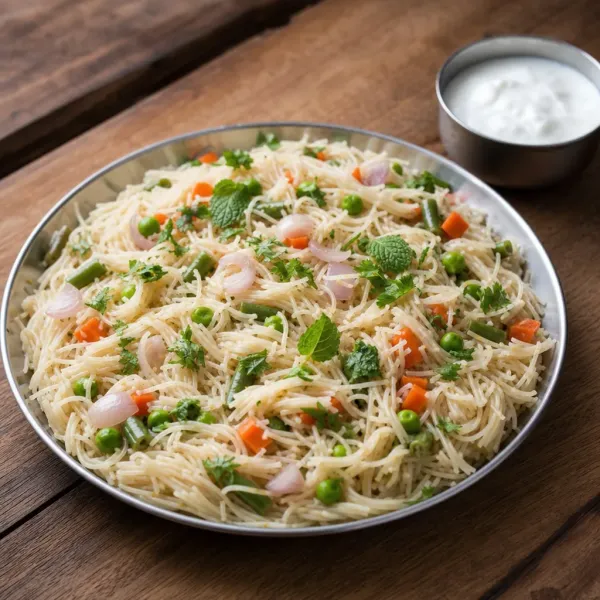
Semiya Biryani (Vermicelli Biryani)
Traditional Tamil Nadu semiya biryani made with roasted vermicelli, shallots, and gingelly oil. A quick, spiced weekday dish from Kongunad home kitch…
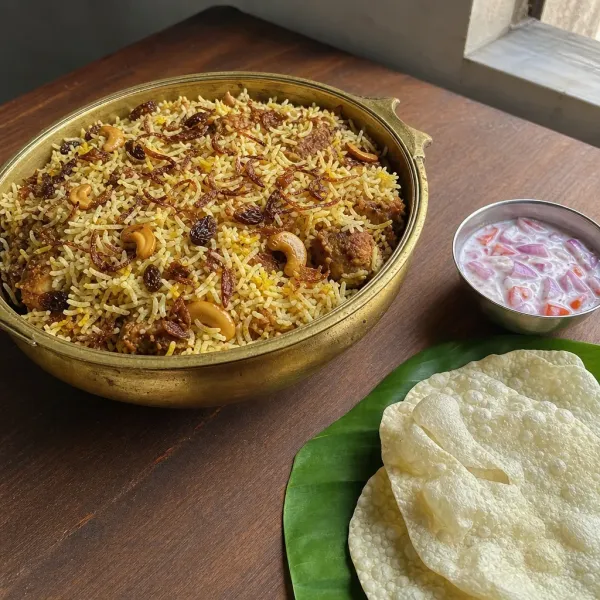
Thalassery Chicken Biryani
Authentic Thalassery chicken biryani with Kaima rice, Mappila masala, and dum method. Step-by-step traditional Kerala Malabar household recipe.
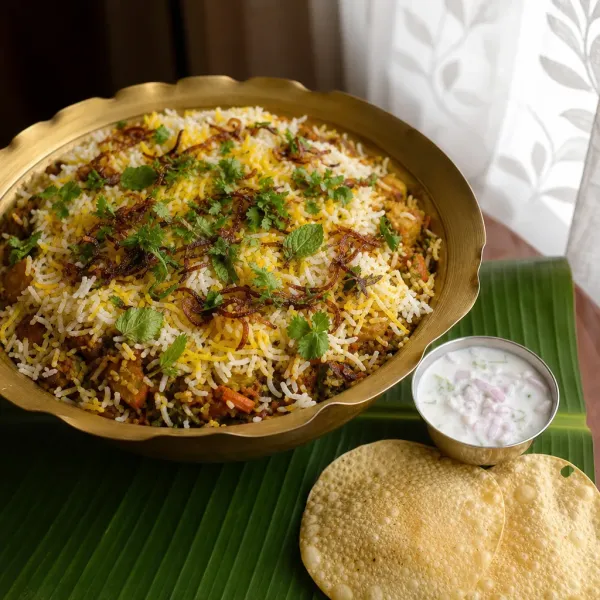
Malabar Vegetable Dum Biryani
Traditional Mappila-style vegetable dum biryani with Kaima rice, whole spices, and a layered masala sealed and slow-cooked on a tawa. Kerala home rec…
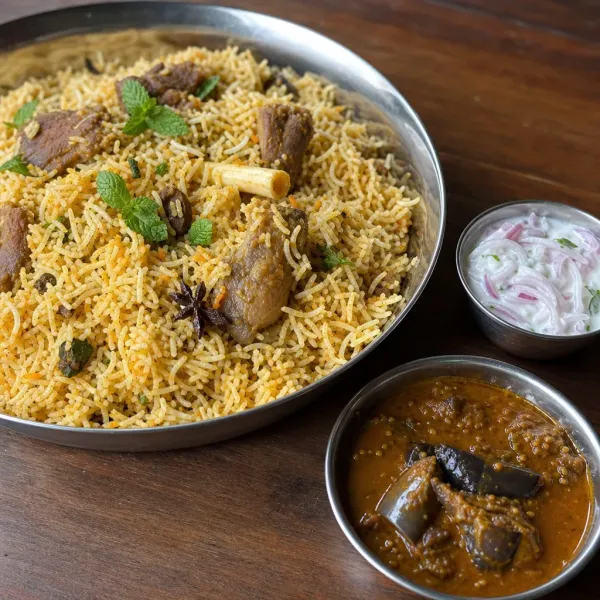
Ambur Biryani
Authentic Ambur biryani with seeraga samba rice and mutton, cooked the Arcot Nawayath way: gingelly oil, dried red chilli paste, and a sealed dum fin…
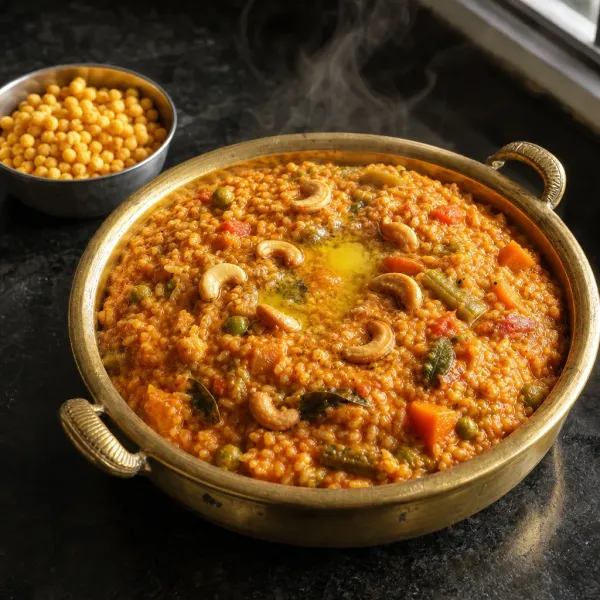
Bisi Bele Bath
Authentic Karnataka bisi bele bath with homemade spice powder, toor dal, seasonal vegetables, tamarind, and a hot ghee tempering. Traditional househo…
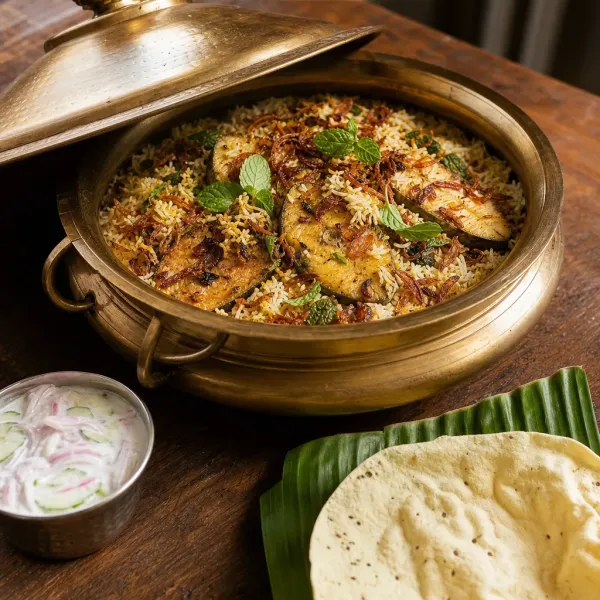
Malabar Meen Biryani
Traditional Mappila Malabar Meen Biryani with king fish, Kaima rice and coconut oil masala. Authentic Kerala fish biryani recipe with dum method.