

Semiya Biryani (Vermicelli Biryani) Recipe
Malayalam സേമിയ ബിരിയാണിTamil சேமியா பிரியாணிKannada ಶೇವಿಗೆ ಬಿರಿಯಾನಿTelugu సేమియా బిర్యానీ
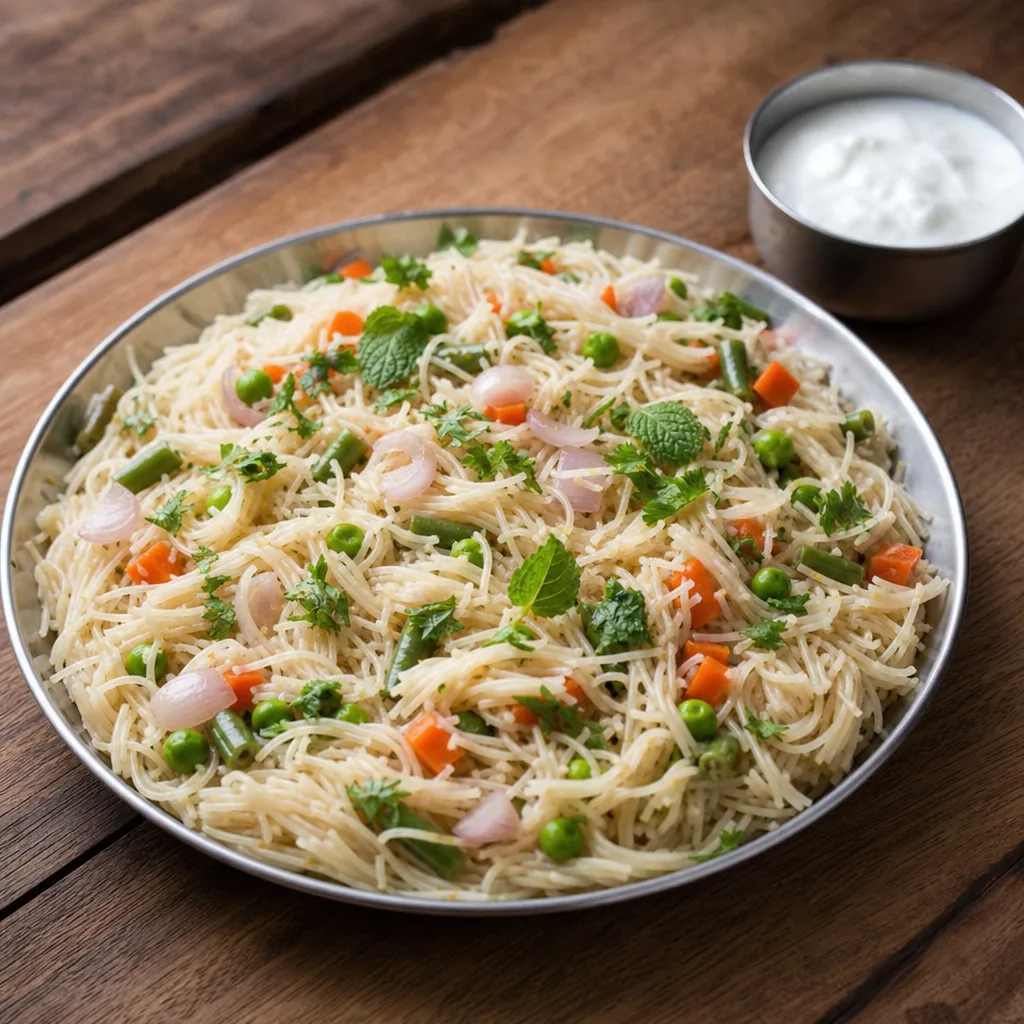
- Prep20 min
- Cook30 min
- Serves4
- DifficultyEasy
- DietVegetarian
This is a weekday dish, not a celebration dish. It lands on the table in under an hour and uses pantry staples. Roasted vermicelli absorbs spiced, onion-and-tomato-thick masala the way rice absorbs biryani stock, and the result is fragrant and cohesive without being wet. Calling it biryani is a household usage, not a claim about technique — there is no dum, no layering, no marinating. The name signals the spice profile and the festive intention, not the method.
In Kongunad kitchens, gingelly oil is the cooking fat, and the spice hand is confident: whole spices go in first, shallots are used rather than large onions, and green chillies do real work alongside red chilli powder. Tomatoes are added because they genuinely belong here — they dissolve into the masala and give the dish its body. This is one of the few Tamil dishes where tomato is traditional and not a later addition.
Households differ mainly on the vermicelli: some families use roasted vermicelli from the packet and skip the dry-roasting step, others insist on roasting raw vermicelli in the pan until it turns a deep amber. The deeper the roast, the nuttier the flavour and the better the strands hold their shape. Mint and coriander leaves are added at the end in most homes, though some families skip mint entirely.
Ingredients (serves 4)
For roasting and cooking the vermicelli
For the masala
For the vegetables
Method
Roast the vermicelli
If your semiya is already roasted (the packet will say so), skip this step. If it is raw and pale, heat a wide, heavy pan on medium flame with no oil. Add the vermicelli and stir constantly for 3 to 4 minutes until it turns a warm amber and smells nutty. Tip it out immediately onto a plate. It will continue to colour from residual heat if you leave it in the pan.
Boil the water
Bring 500 ml of water to a full boil in a separate vessel and keep it ready. You will need it hot when the time comes. Cold water added to the masala will make the vermicelli gummy.
Fry the whole spices
Heat gingelly oil in the same wide pan on medium flame. When the oil shimmers, add the cinnamon, cloves, cardamom pods and bay leaf. Let them sizzle for about 30 seconds until fragrant. The cardamom skins will puff slightly.
Cook the shallots and chillies
Add the sliced shallots and slit green chillies. Cook on medium flame, stirring often, for 8 to 10 minutes until the shallots are soft and turning light golden at the edges. Shallots take longer than large onions to soften, so do not rush this. Undercooked shallots will leave a raw bite in the finished dish.
Add ginger and garlic
Add the grated ginger and garlic. Stir and cook for 2 minutes until the raw smell disappears and the mixture looks dry and cohesive. If it sticks, add a splash of water and scrape the bottom of the pan.
Cook the tomatoes down
Add the chopped tomatoes and salt. Cook on medium flame for 6 to 8 minutes, pressing the tomatoes down with the back of the spoon, until they completely break down and the oil begins to separate at the edges of the masala. The mixture should look like a thick, dark paste, not a chunky sauce. This is important: if the tomatoes are not fully cooked out, the semiya will taste sour.
Add the spice powders
Reduce the flame to low. Add red chilli powder, coriander powder and turmeric. Stir for 1 minute so the powders cook in the oil rather than sitting raw on top of the masala. The colour will deepen.
Cook the vegetables
Add the carrot, beans and peas. Stir to coat them in the masala. Add 3 tablespoons of water, cover the pan, and cook on low-medium flame for 5 minutes until the vegetables are just tender but not mushy. They will cook further when the semiya is added.
Add the semiya and hot water
Add the roasted vermicelli to the pan and stir gently to coat every strand in the masala. Pour in the boiling water in a steady stream while stirring. The water should just cover the vermicelli; do not add more than 500 ml or it will turn soggy. Taste the liquid for salt and adjust now, before the semiya absorbs it.
Cook covered on low flame
Cover the pan tightly and cook on the lowest flame for 6 to 7 minutes. Do not lift the lid before 6 minutes. When you open it, the water should be fully absorbed and the strands should be separate and cooked through. If there is still liquid at the bottom, cover and cook for 2 more minutes.
Rest and finish with herbs
Turn off the flame. Scatter the chopped coriander and mint leaves over the top. Replace the lid and let it rest for 5 minutes. This resting time lets the steam finish the cooking and the herbs wilt gently into the dish without losing their colour. Fluff gently with a fork before serving.
How to serve
Plain yogurt or a simple cucumber-shallot raita. Some households serve it with a thin coconut chutney. A wedge of lime on the side is common.
Served with: Plain yogurt or a simple cucumber-shallot raita. Some households serve it with a thin coconut chutney. A wedge of lime on the side is common.
Cook's tips
Semiya brand matters
Thin semiya (sometimes labelled 'fine vermicelli') works best. Thick semiya takes longer to cook and can turn pasty in the centre. If you can only find thick semiya, increase the water by 50 ml and the covered cooking time by 3 minutes.
The water ratio
The standard ratio is 1 part semiya to 2 parts water by weight. With 250 g semiya, 500 ml water is correct. If your masala is very wet from juicy tomatoes, reduce the water to 450 ml. Adding too much water is the most common mistake; it turns the dish into a soft, clumped mass.
Gingelly oil substitute
If gingelly oil is unavailable, use coconut oil or a neutral vegetable oil. The flavour will be different but the dish will still work. Do not use toasted sesame oil — it is a different product entirely and will overpower everything.
Leftovers
Semiya biryani stiffens as it cools because the starch sets. To reheat, sprinkle 2 tablespoons of water over it, cover, and warm on low flame for 3 to 4 minutes. It loosens back to the right texture.
Regional variations
Tamil Muslim (Mappila-adjacent) chicken or mutton semiya biryani; Coimbatore household version with more ghee; Kerala Mappila semiya biryani with coconut milk.
Glossary
- Semiya சேமியா
- Vermicelli made from wheat flour, used across South India in both sweet and savoury dishes.
- Nallennai நல்லெண்ணெய்
- Cold-pressed gingelly oil (sesame oil) used as the primary cooking fat in Tamil Nadu for many savoury dishes.
- Chinna vengayam சின்ன வெங்காயம்
- Small shallots, literally 'small onion'; the preferred allium in Tamil cooking for their sharper, more complex flavour compared to large onions.
Two things decide whether this dish works: roasting the vermicelli deeply enough so the strands stay separate, and cooking the tomato masala until the oil floats free before the semiya goes in. Get those two right and the rest follows.
More Rice Dishes recipes
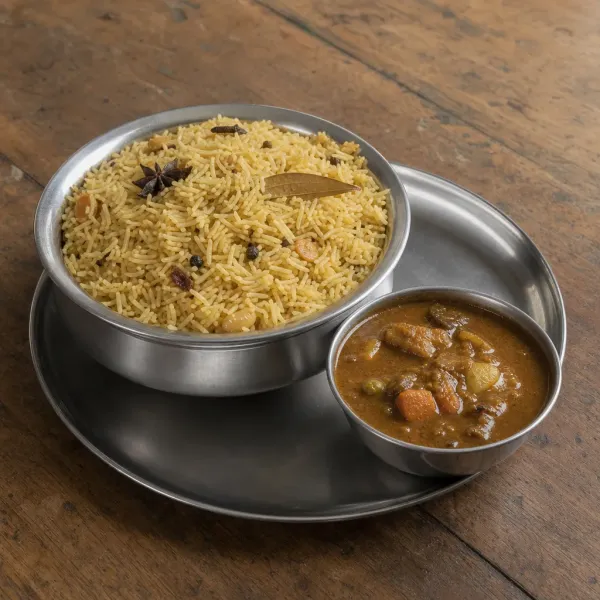
Kuska
Traditional Tamil Muslim kuska: fragrant seeraga samba rice cooked with whole spices and golden shallots. Stovetop method, no meat, no food colour.
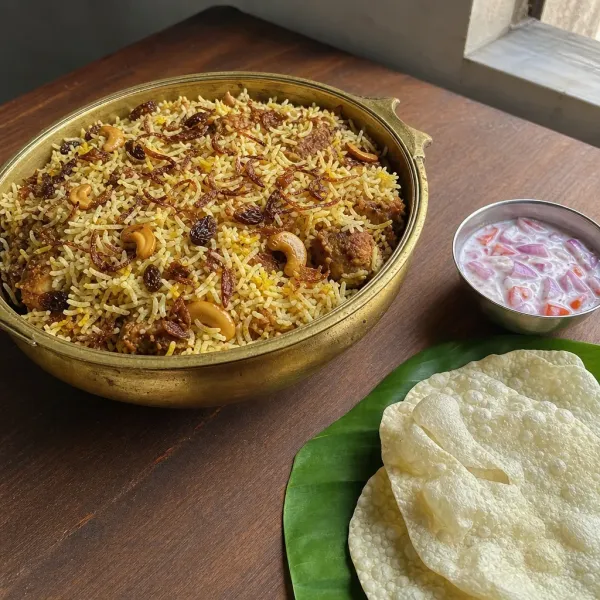
Thalassery Chicken Biryani
Authentic Thalassery chicken biryani with Kaima rice, Mappila masala, and dum method. Step-by-step traditional Kerala Malabar household recipe.
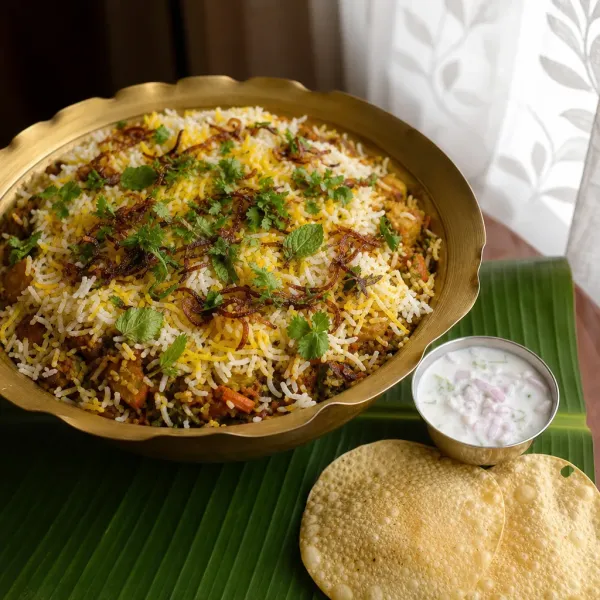
Malabar Vegetable Dum Biryani
Traditional Mappila-style vegetable dum biryani with Kaima rice, whole spices, and a layered masala sealed and slow-cooked on a tawa. Kerala home rec…
Ambur Biryani
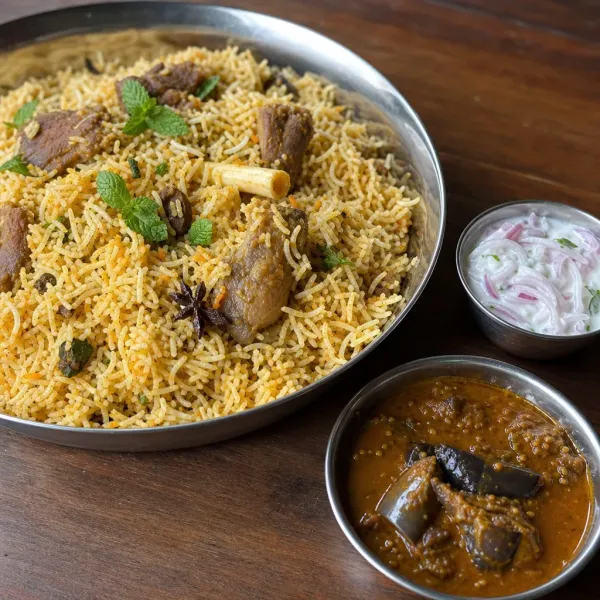
Authentic Ambur biryani with seeraga samba rice and mutton, cooked the Arcot Nawayath way: gingelly oil, dried red chilli paste, and a sealed dum fin…
Bisi Bele Bath
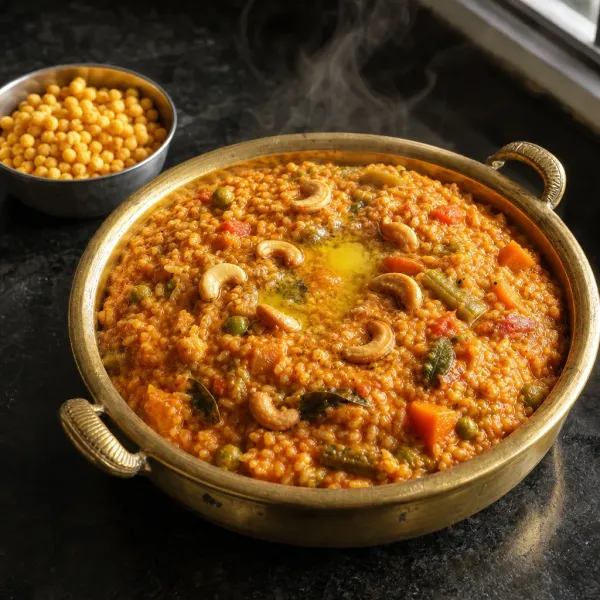
Authentic Karnataka bisi bele bath with homemade spice powder, toor dal, seasonal vegetables, tamarind, and a hot ghee tempering. Traditional househo…
Malabar Meen Biryani
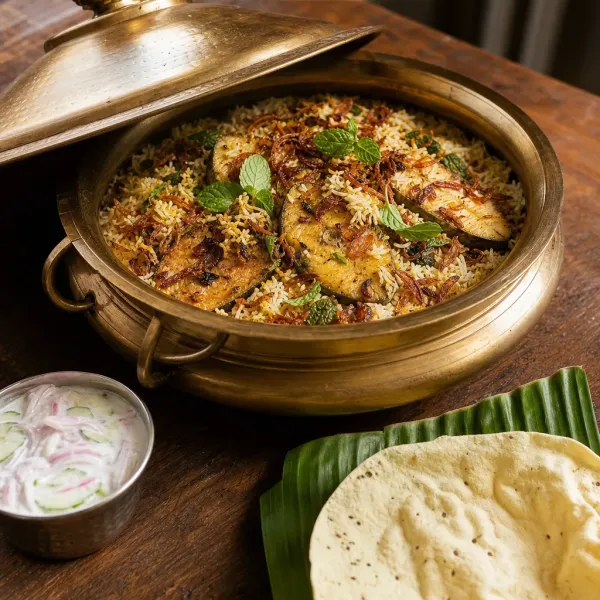
Traditional Mappila Malabar Meen Biryani with king fish, Kaima rice and coconut oil masala. Authentic Kerala fish biryani recipe with dum method.