

Paruppu Usili Recipe
Malayalam പരിപ്പ് ഉസിലിTamil பருப்பு உசிலிKannada ಪರುಪ್ಪು ಉಸಿಲಿTelugu పప్పు ఉసిలి
- Prep20 min
- Soak / ferment1 hr
- Cook40 min
- Serves4
- DifficultyMedium
- DietVegan
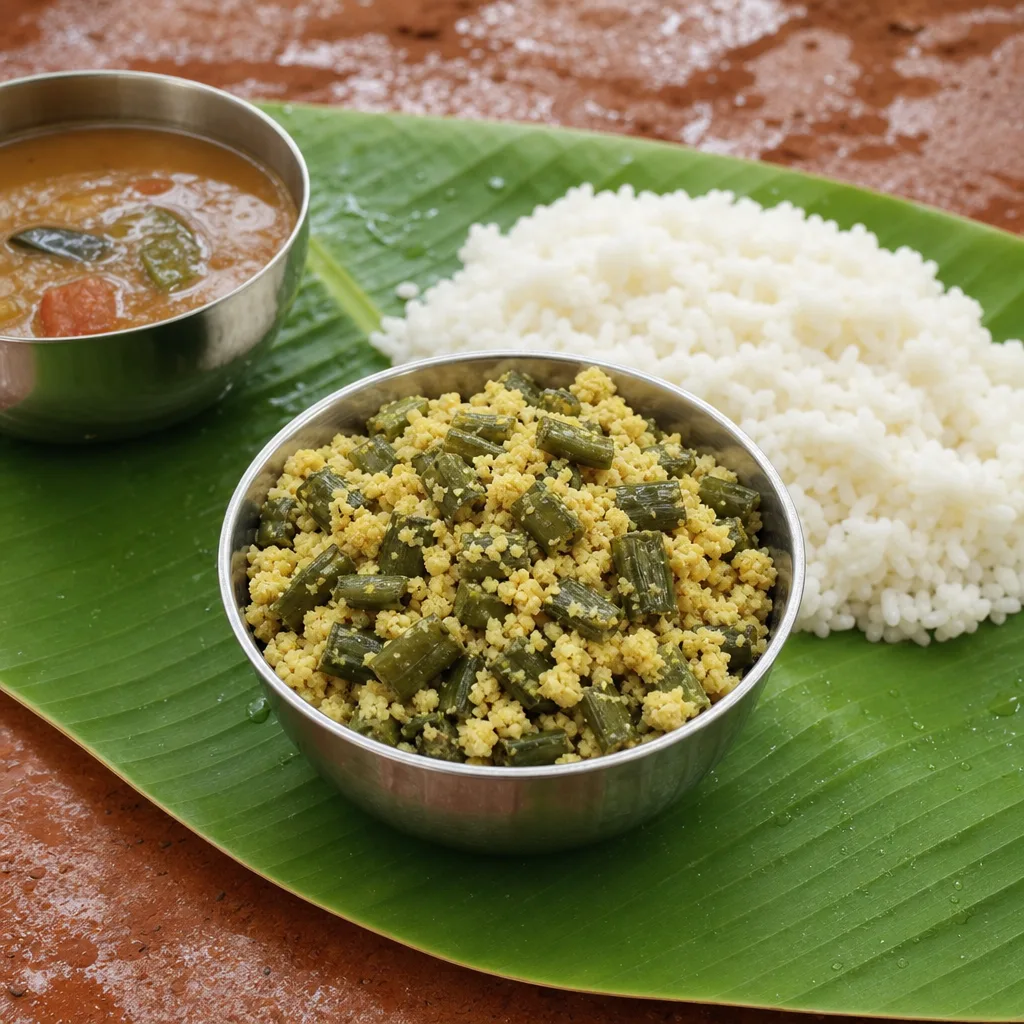
Paruppu usili is a dry vegetable dish from Tamil Brahmin kitchens where a spiced lentil paste is crumbled and cooked with a vegetable, most often cluster beans (kothavarangai) or banana flower (vazhaipoo). The lentils are soaked, ground coarse, steamed in a cloth or vessel until set, then crumbled by hand and tossed with the cooked vegetable in seasoned gingelly oil. It is not a curry and it is not a stir-fry. It is dry throughout, with a slightly grainy, almost nutty texture from the dal.
In Iyer households this appears on the banana leaf as the kootu or poriyal course during festival meals and everyday rice-and-sambar lunches alike. The cluster bean version is the most common weekday preparation. Banana flower usili takes more time to clean but is considered the more festive of the two.
Households differ mainly in the dal ratio. Some use only toor dal; most use a mix of toor and chana dal in roughly equal parts, which gives a firmer crumble that holds its texture after mixing with the vegetable. The red chillies can be two or three depending on how much heat the family likes, but this is not a hot dish. Asafoetida is non-negotiable.
Ingredients (serves 4)
For the lentil paste
For the vegetable
For the tempering and final cook
Method
Soak the lentils
Put the toor dal and chana dal together in a bowl, cover generously with cold water, and soak for one hour. They should feel softened but not mushy when you press one between your fingers. Drain completely before grinding.
Grind the paste
Put the drained dals into a mixer jar with the dried red chillies, asafoetida, and salt. Grind without adding water first. The mixture will look crumbly and dry. Add water one tablespoon at a time, just enough to get the mixer moving, and grind to a coarse paste — not smooth. You want to see small flecks of dal, not a uniform purée. If it is too wet the steamed cake will be dense and gummy rather than crumbly.
Steam the lentil paste
Lightly grease a small steel vessel or a flat-bottomed katori with a few drops of gingelly oil. Spread the ground paste in it to a depth of about 2 cm. Place it in a steamer or a large vessel with a tight lid over boiling water. Steam on medium heat for 12 to 15 minutes. The paste is ready when it has firmed up, looks pale and set throughout, and a skewer or knife inserted in the centre comes out clean with no wet paste clinging to it.
Cool and crumble
Lift the vessel out and let the steamed dal cake cool for 10 minutes. Once it is cool enough to handle, break it apart with your fingers into small, rough crumbs. Some pieces will be pea-sized, some smaller — this unevenness is correct and gives the dish its texture. Set the crumble aside.
Cook the cluster beans
Bring a small amount of salted water to a boil in a wide pan — just enough to come halfway up the beans. Add the chopped cluster beans, cover, and cook on medium heat for 8 to 10 minutes until they are tender but not soft and collapsing. Drain and set aside. Cluster beans should keep a little bite; if they are overcooked they turn grey-green and lose their flavour.
Temper the oil
Heat the gingelly oil in a wide, heavy kadai over medium heat. Add the mustard seeds and wait for them to splutter completely. Add the broken dried red chilli and curry leaves and let them crackle for a few seconds. Add the pinch of asafoetida and stir once.
Fry the crumble
Add the dal crumble to the kadai and spread it out. Cook on medium-low heat, stirring and turning every minute or two, for 8 to 10 minutes. You want the crumble to dry out further and turn a pale golden at the edges — not browned, but no longer raw-smelling. If you rush this step the usili will taste starchy. The crumble should feel dry and separate when you press it.
Add the beans and finish
Add the cooked cluster beans to the kadai. Mix gently but thoroughly so every piece of bean is coated with crumble. Taste for salt and adjust. Cook together for 2 to 3 minutes on low heat so the flavours come together. The finished dish should be completely dry — no moisture pooling at the bottom of the pan.
How to serve
Hot plain rice, sambar, and rasam as part of a full Tamil Brahmin lunch. It also pairs well with mor kuzhambu in place of sambar.
Served with: Hot plain rice, sambar, and rasam as part of a full Tamil Brahmin lunch. It also pairs well with mor kuzhambu in place of sambar.
Cook's tips
Grinding the dal coarse
The single most common mistake is over-grinding to a smooth paste. A smooth paste steams into a dense, rubbery block that will not crumble properly. Stop the mixer while you can still see small pieces of dal.
Banana flower version
Vazhaipoo usili follows the same method. Clean the banana flower thoroughly, removing the stamen from each floret, chop it fine, and cook it in salted water with a little turmeric before adding to the crumble. The cleaning is time-consuming but the method from step 6 onwards is identical.
Gingelly oil is not optional here
Coconut oil changes the flavour profile significantly and is not traditional in this dish. Gingelly oil gives the usili its characteristic nutty background note. Refined sunflower oil can be used in a pinch but the dish will taste flat.
Storing leftovers
Paruppu usili keeps well in the refrigerator for a day. Reheat in a dry pan on low heat, stirring, to restore the crumbly texture. Do not microwave it covered or it will turn soggy.
Steaming without a steamer
A large vessel with a tight lid works fine. Place a small stand or an inverted katori at the bottom, add water to just below the stand, place the dal vessel on top, and cover tightly. Check the water level once during steaming.
Regional variations
Mudaliar and Pillai households make versions with the same lentil crumble but sometimes use a different ratio of toor to chana dal; Iyengar kitchens omit onion and shallots entirely.
Glossary
- Kothavarangai கொத்தவரங்காய்
- Cluster beans, also called Gavar; long, slightly bitter pods used widely in South Indian cooking.
- Perungayam பெருங்காயம்
- Asafoetida; a pungent dried resin used in tiny quantities as a digestive and flavouring in Tamil Brahmin cooking.
- Nallennai நல்லெண்ணெய்
- Gingelly oil, sesame oil; the traditional cooking fat for Tamil kuzhambu, poriyal and usili dishes.
- Toor dal துவரம் பருப்பு
- Split pigeon peas; one of the two dals used in the usili paste.
- Chana dal கடலைப் பருப்பு
- Split Bengal gram; adds firmness and a slightly sweet flavour to the crumble.
- Usili உசிலி
- A dry preparation in which a spiced lentil paste is steamed, crumbled, and cooked with a vegetable; the name refers to the crumbling technique.
Two things decide this dish. The first is grinding the dal paste coarse enough to crumble after steaming — go too smooth and the texture is lost entirely. The second is taking the time to fry the crumble properly in gingelly oil before adding the beans, so the raw dal smell cooks out and the crumble turns dry and fragrant. Get those two right and the rest follows.
More Dry Vegetable Sides recipes
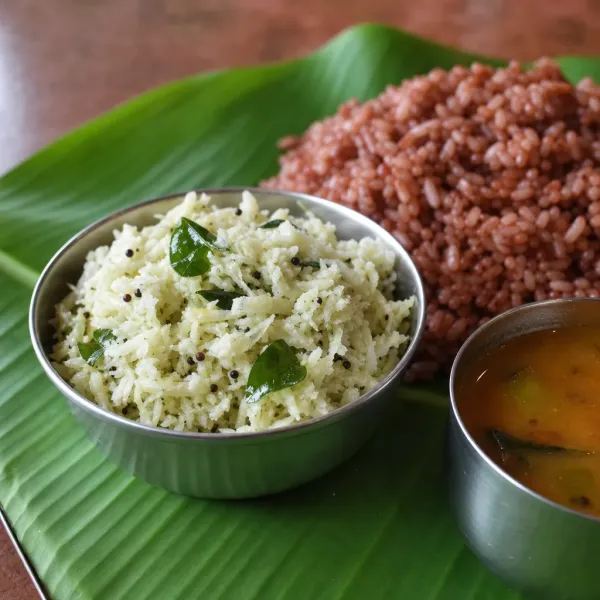
Vazhakka Thoran (Raw Banana Stir-Fry with Coconut)
Traditional Kerala vazhakka thoran: raw banana stir-fried with fresh coconut, shallots, and curry leaves in coconut oil. A dry, everyday side dish fo…
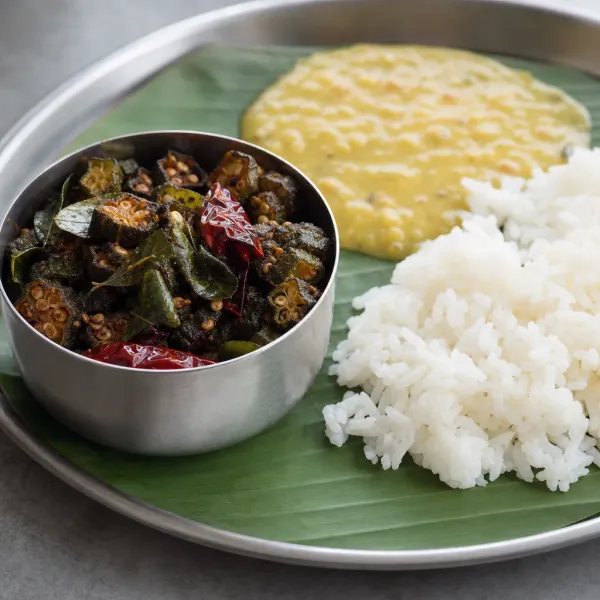
Bendakaya Vepudu
Traditional Andhra bendakaya vepudu: dry okra fry with groundnut oil, dried red chillies and besan. Crisp, spiced, and completely slime-free.
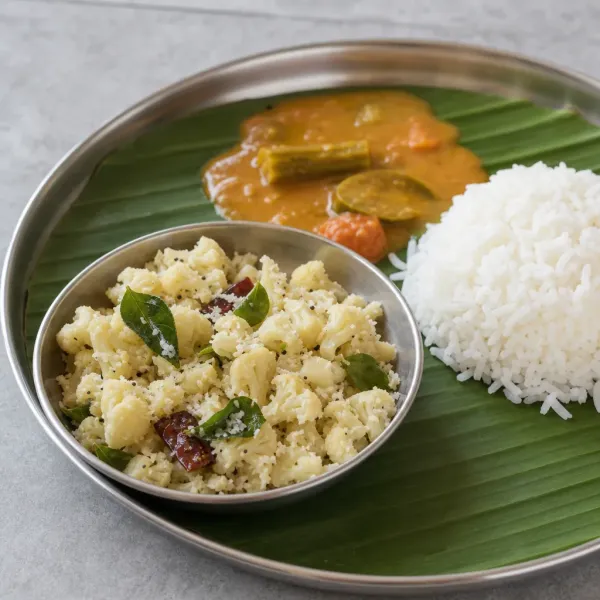
Cauliflower Poriyal
Traditional Tamil Brahmin cauliflower poriyal with mustard, curry leaves and fresh coconut. Dry, well-seasoned, cooked without water. Step-by-step me…
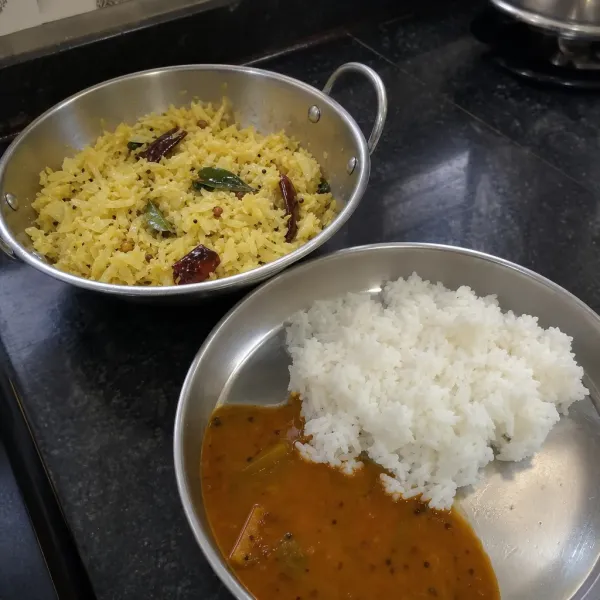
Cabbage Palya
Traditional Karnataka cabbage palya with mustard, curry leaves, toasted chana and urad dal. Dry, quick, and made without water. Everyday home recipe.
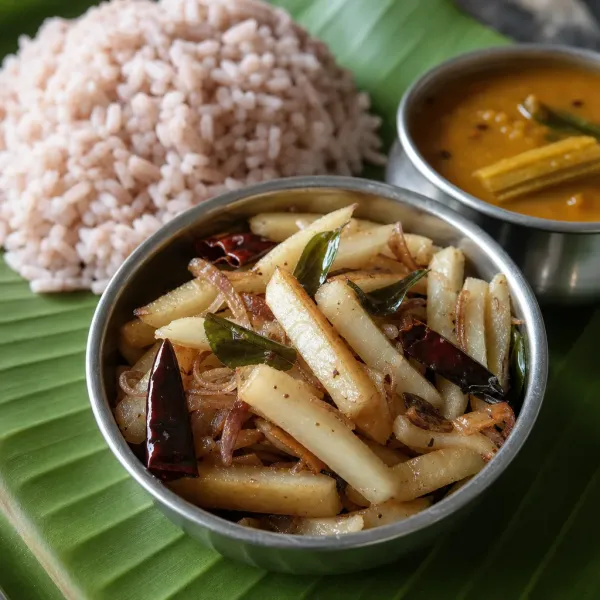
Yam Mezhukkupuratti (Chena Mezhukkupuratti)
Traditional Kerala chena mezhukkupuratti: elephant foot yam stir-fried in coconut oil with shallots, dried red chillies and curry leaves. Everyday Tr…
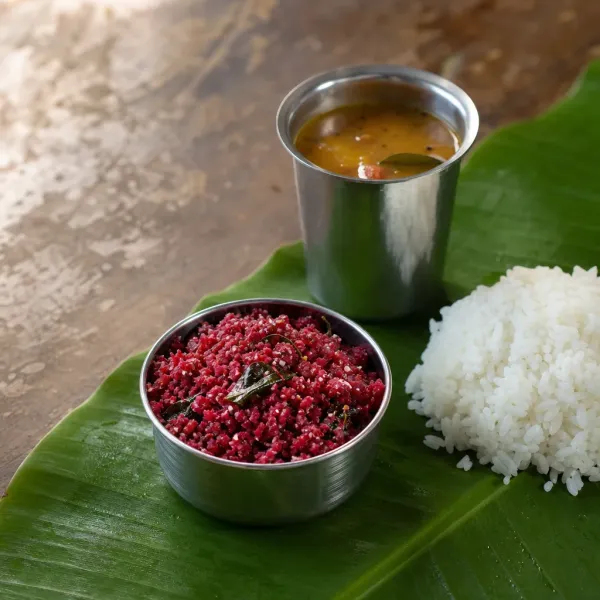
Beetroot Poriyal
Traditional Tamil Brahmin beetroot poriyal with fresh coconut, gingelly oil tempering and curry leaves. A dry, quick weekday vegetable dish.