

Vazhakka Thoran (Raw Banana Stir-Fry with Coconut) Recipe
Malayalam വാഴക്ക തോരൻTamil வாழைக்காய் துவரன்Kannada ಬಾಳೆಕಾಯಿ ತೊರನ್Telugu అరటికాయ థోరన్
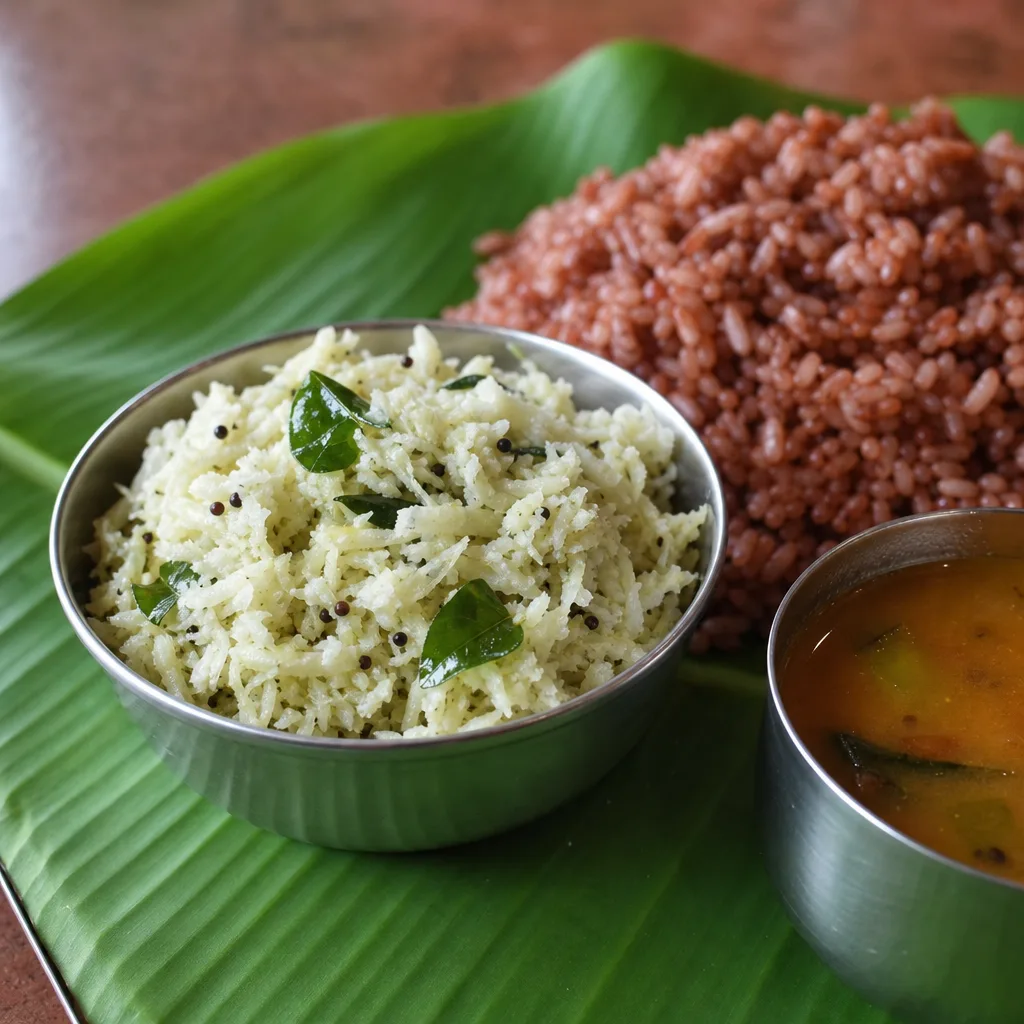
- Prep15 min
- Cook15 min
- Serves4
- DifficultyEasy
- DietVegan
Vazhakka thoran is a daily side dish in most Kerala homes, cooked as routinely as rice is boiled. It belongs to the category of dry coconut stir-fries that appear at the left edge of a sadya plate or alongside plain rice and sambar on an ordinary weekday. The raw banana is grated or cut fine, cooked just enough to lose its raw starch, and finished with a fresh coconut mixture that keeps everything dry and fragrant.
The dish works because raw banana has almost no water of its own. If you cook it covered with too much moisture, it turns paste-like and loses the slight bite that makes it worth eating. The coconut goes in at the very end and stays uncooked, which is what gives thoran its texture contrast.
Households differ mainly on how they cut the banana. Some grate it on a hand grater for a finer, more cohesive result; others chop it into small cubes or thin half-moons for a chunkier bite. Both are correct. The coconut mixture is constant: fresh grated coconut, cumin, green chilli, turmeric, and a little garlic, all crushed together lightly by hand or in a small stone grinder.
Ingredients (serves 4)
Main
For tempering
Method
Peel and prepare the banana
Cut off both ends of each banana. Score the skin lengthwise and peel it away; the skin grips tightly on a firm raw banana, so use a knife rather than pulling. Drop the peeled bananas into a bowl of water with a pinch of turmeric stirred in. This stops them darkening while you prepare the rest. Drain just before cooking.
Grate or chop the banana
Grate the drained bananas on the coarse side of a box grater, or chop them into very small cubes no larger than 1 cm. Work quickly; even with the turmeric water, cut banana oxidises fast. Keep the prepared banana in the same turmeric water until you are ready to put it in the pan.
Make the coconut mixture
Combine the grated coconut, green chillies, cumin seeds, crushed garlic, and turmeric powder in a small bowl. Crush everything together with your fingers or the back of a spoon until the garlic and cumin are worked into the coconut and the mixture holds together loosely. You are not grinding it smooth; it should stay coarse and slightly moist. Set aside.
Temper the spices
Heat the coconut oil in a wide, heavy pan or cheena chatti over medium heat. When the oil is hot, add the mustard seeds and wait for them to pop fully. Add the dried red chillies and curry leaves; they will crackle immediately. Add the sliced shallots and cook, stirring, for about two minutes until they soften and just begin to colour at the edges.
Add the banana
Drain the banana well and add it to the pan. Sprinkle salt over it. Stir everything together so the oil and shallots coat the banana evenly. Spread the mixture out in the pan.
Cook covered on low heat
Reduce the heat to low, cover the pan with a tight lid, and cook for 6 to 8 minutes. The banana will steam in its own very slight moisture and the coconut oil. Check once halfway through and stir gently. The banana is ready when it has lost its raw, chalky look and feels just tender when pressed, but is not soft or mushy. Do not add water; if the pan looks dry, the heat is too high.
Fold in the coconut mixture
Add the coconut mixture to the pan and fold it through the banana gently. Keep the heat on low. Stir and cook for just 2 minutes more, enough for the coconut to warm through and the raw smell of garlic to soften. The coconut should not fry or brown; it stays pale and moist. Taste for salt and remove from heat.
Rest briefly and serve
Let the thoran sit uncovered for a minute before serving. It will dry out slightly as it rests, which is correct. A thoran should be dry enough that it holds its shape when spooned onto a plate, not wet or oily.
How to serve
Plain boiled matta rice, sambar, and a simple parippu (moong or toor dal cooked with turmeric and finished with ghee). On a sadya plate it sits alongside other thorans, olan, and avial.
Served with: Plain boiled matta rice, sambar, and a simple parippu (moong or toor dal cooked with turmeric and finished with ghee). On a sadya plate it sits alongside other thorans, olan, and avial.
Cook's tips
Choosing the banana
Use bananas that are completely green and feel hard when pressed. Any hint of yellow means the starch has begun converting to sugar and the thoran will taste slightly sweet and go soft too quickly. Nendran vazhakka is the most commonly used variety and gives a slightly starchy, firm result.
Grated versus chopped
Grated banana cooks faster and gives a finer, more cohesive texture. Chopped banana gives distinct pieces with a bit of chew. Both are traditional; choose based on what you prefer. If grating, work fast and keep the banana in turmeric water until the last moment.
The coconut must be fresh
Desiccated or frozen-and-thawed coconut does not work here. The fresh coconut provides real moisture and sweetness that balances the starchy banana. If fresh coconut is unavailable, this dish is best postponed.
Do not overcook the coconut
The most common mistake is leaving the pan on heat too long after adding the coconut. Two minutes is enough. Overcooked coconut turns grainy and dry and loses the fresh flavour that makes thoran taste the way it should.
Storage
Thoran is best eaten the day it is made. It can be kept at room temperature for a few hours and briefly reheated in the pan with a few drops of coconut oil. Refrigeration makes the banana dense and changes the texture noticeably.
Regional variations
Malabar households sometimes add a small piece of green mango for sourness; some Nasrani kitchens skip the turmeric and add a pinch of black pepper instead.
Glossary
- Vazhakka വാഴക്ക
- Raw, unripe banana; the cooking banana used before it ripens.
- Thoran തോരൻ
- A dry Kerala stir-fry finished with fresh grated coconut; a standard side dish at any meal.
- Chuvannulli ചുവന്നുള്ളി
- Small red shallots; the standard allium in Kerala cooking, sharper and more aromatic than large onions.
- Jeerakam ജീരകം
- Cumin seeds.
- Kaduku കടുക്
- Black mustard seeds; always tempered in hot oil until they pop before other ingredients are added.
- Cheena chatti ചീനച്ചട്ടി
- A wide, shallow clay or iron pan used in Kerala kitchens; good heat distribution for dry stir-fries.
- Manjal podi മഞ്ഞൾ പൊടി
- Turmeric powder; used here both to prevent browning and to season the dish.
Two things decide this dish: the banana must be fully raw and firm so it holds its shape through cooking, and the coconut mixture must go in only at the end and stay on heat for no more than two minutes. Get those two right and the rest takes care of itself.
More Dry Vegetable Sides recipes
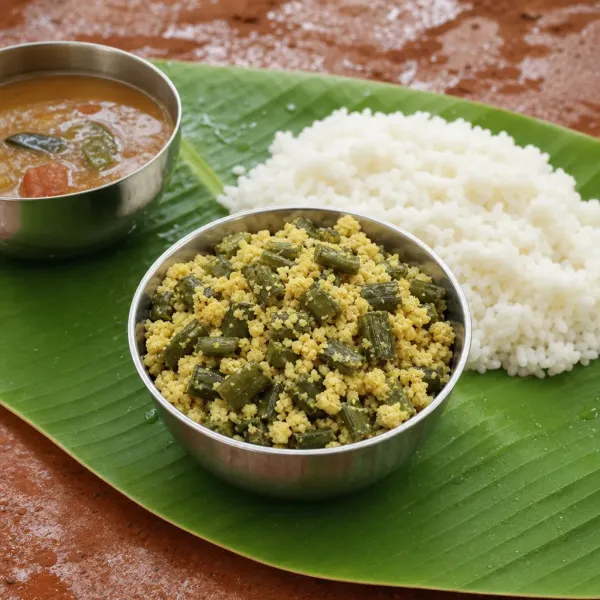
Paruppu Usili
Traditional Iyer-style paruppu usili with cluster beans: coarse dal paste steamed, crumbled, and fried in gingelly oil. Full method with tips.
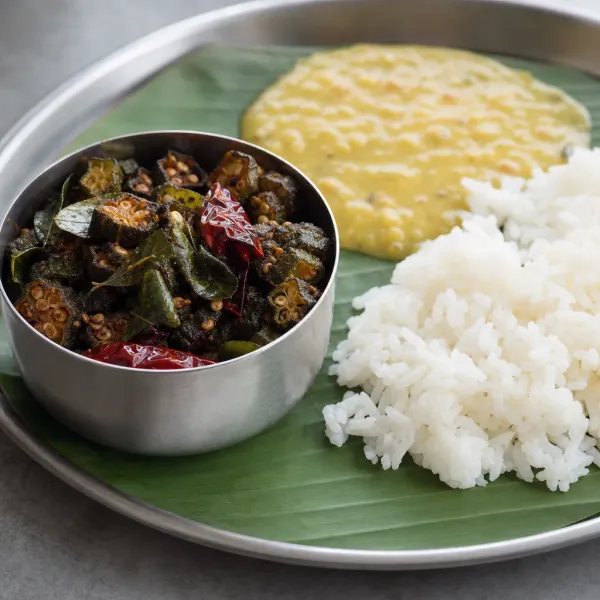
Bendakaya Vepudu
Traditional Andhra bendakaya vepudu: dry okra fry with groundnut oil, dried red chillies and besan. Crisp, spiced, and completely slime-free.
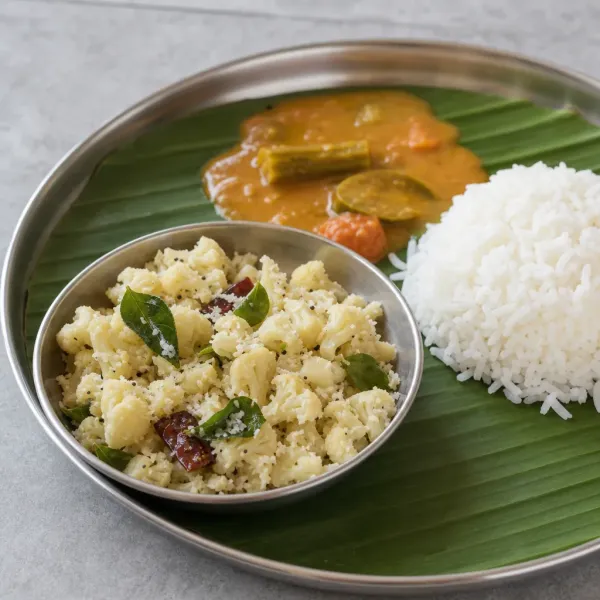
Cauliflower Poriyal
Traditional Tamil Brahmin cauliflower poriyal with mustard, curry leaves and fresh coconut. Dry, well-seasoned, cooked without water. Step-by-step me…
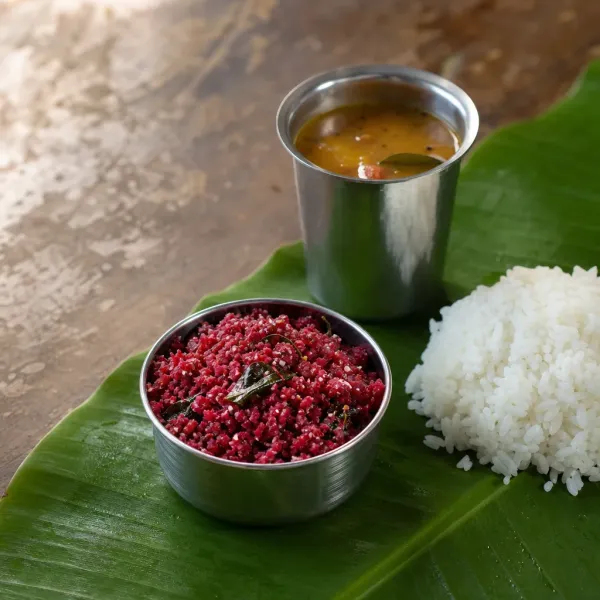
Beetroot Poriyal
Traditional Tamil Brahmin beetroot poriyal with fresh coconut, gingelly oil tempering and curry leaves. A dry, quick weekday vegetable dish.
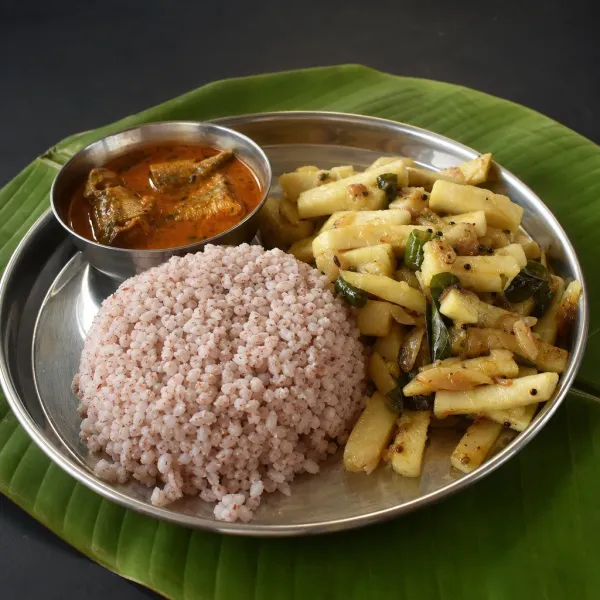
Kadachakka Mezhukkupuratti (Breadfruit Stir-Fry)
Traditional Kerala breadfruit stir-fry with coconut oil, shallots, and curry leaves. A dry, everyday mezhukkupuratti served with matta rice and fish…
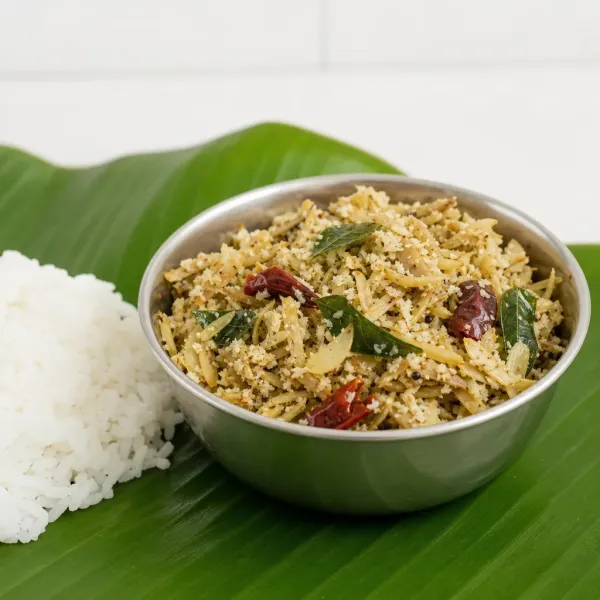
Vazhaipoo Poriyal
Traditional Tamil Brahmin vazhaipoo poriyal: banana blossom stir-fried with gingelly oil, shallots, urad dal and fresh coconut. Step-by-step cleaning…