

Kanchipuram Idli Recipe
Malayalam കാഞ്ചീപുരം ഇഡ്ഡലിTamil காஞ்சீபுரம் இட்லிKannada ಕಾಂಚೀಪುರಂ ಇಡ್ಲಿTelugu కాంచీపురం ఇడ్లీ
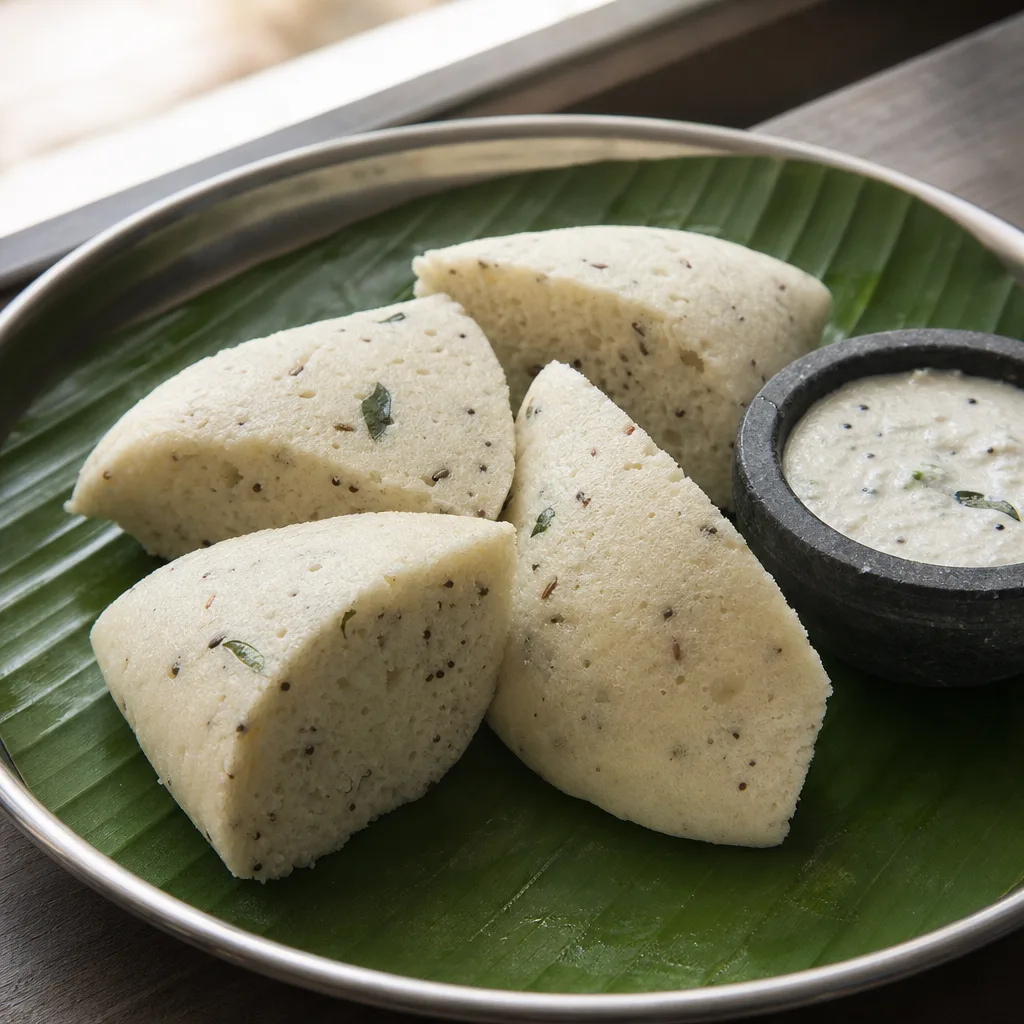
- Prep30 min
- Soak / ferment12 hr
- Cook40 min
- Serves4
- DifficultyMedium
- DietVegetarian
Kanchipuram idli comes from the Varadharaja Perumal temple town of Kanchipuram in Tamil Nadu, and it belongs firmly to the Iyer Brahmin kitchen. Unlike the soft, neutral idli made for everyday breakfast, this one is dense, peppery and fragrant with cumin and ginger. It is seasoned before steaming, not after, so the whole cake carries the spice through every bite. The batter is fermented overnight, and the idlis are steamed in a single large round or in a cloth-lined vessel rather than the small individual moulds most households use today.
At home, these are made on festival mornings or for temple visits. They travel well because they are firmer than regular idli and do not turn soggy. The pepper and cumin are tempered in ghee and folded into the batter just before steaming, which is what gives the finished cake its characteristic speckled appearance and warm, slightly coarse texture.
Household versions differ mainly in the pepper level and in whether whole peppercorns or coarsely crushed pepper is used. Some families add a small piece of fresh ginger; others use dry ginger powder. The version here uses fresh ginger and coarsely crushed black pepper, which is the more common household approach.
Ingredients (serves 4)
For the batter
For the tempering
Method
Soak the rice and dal
Soak the raw rice and par-boiled rice together in one vessel and the urad dal and fenugreek seeds together in a separate vessel, each covered generously with water. Soak for 4 to 5 hours. The dal will swell visibly and the rice grains will soften enough that you can break one between your fingers without much resistance.
Grind the dal
Drain the dal and fenugreek. Grind in a wet grinder or stone grinder, adding cold water in small additions, until the batter is very smooth, light and airy, almost like a thick foam. This takes about 20 minutes in a wet grinder. Do not rush this stage; the air beaten in here is what gives the idli its lift despite its density.
Grind the rice
Drain the rice and grind separately to a slightly coarse batter, coarser than the dal batter. A little texture in the rice batter is correct for this idli; it should not be as smooth as you would grind for regular idli. Add water sparingly.
Combine and ferment
Mix the dal batter and rice batter together with salt in a large vessel, stirring well with your hand to incorporate air. The combined batter should be thick enough to hold a ribbon for a second before it falls back. Cover with a plate and leave to ferment in a warm corner of the kitchen for 8 to 10 hours, or overnight. In a warm climate the batter will rise noticeably and smell pleasantly sour. If your kitchen is cool, place the vessel inside a switched-off oven with just the light on. The batter is ready when it has increased in volume by roughly a third and small bubbles are visible on the surface.
Prepare the tempering
Heat the ghee in a small pan over medium heat. Add the cashew halves if using and fry until pale gold, about 1 minute, then remove and set aside. Add the cumin seeds to the same ghee and let them splutter for 20 seconds. Add the coarsely crushed pepper and grated ginger and stir for 30 seconds. Add the torn curry leaves, stand back as they will spatter, and remove the pan from the heat immediately.
Fold the tempering into the batter
Pour the hot ghee and spices into the fermented batter along with the fried cashews. Fold gently but thoroughly so the spices are evenly distributed. Do not beat or stir vigorously; you want to keep the air in the batter.
Prepare the steamer and moulds
Fill a large steamer or idli pot with water and bring it to a rolling boil. Grease the idli moulds generously with ghee. Kanchipuram idli is traditionally steamed in a large round vessel lined with a wet cloth, which gives a single thick cake cut into pieces; greased idli moulds are the practical household substitute and work well.
Fill the moulds
Ladle the batter into the greased moulds, filling each one about three-quarters full. The batter will rise a little during steaming. Do not overfill or the idlis will merge into each other.
Steam
Place the moulds in the steamer over the boiling water, cover tightly and steam on medium-high heat for 20 to 25 minutes. Do not lift the lid before 20 minutes. The idli is done when a skewer or thin knife inserted into the centre comes out clean and the surface looks set and pale throughout, with no wet sheen. These will be firmer and slightly denser than regular idli; that is correct.
Rest and unmould
Remove the mould from the steamer and rest for 3 to 4 minutes before unmoulding. Run a wet spoon around the edge of each idli and lift gently. If you have used a cloth-lined vessel, the whole cake will slide out and you cut it into thick wedges or squares with a sharp knife.
How to serve
Coconut chutney and sambar. In the temple tradition it is often eaten with only coconut chutney or as prasadam without any accompaniment.
Served with: Coconut chutney and sambar. In the temple tradition it is often eaten with only coconut chutney or as prasadam without any accompaniment.
Cook's tips
The traditional vessel
In Kanchipuram households and in the temple, the batter is poured into a vessel lined with a wet muslin cloth and steamed as a single large cake. The cloth prevents sticking and gives the outside a faint texture. If you try this, use a wide flat vessel so the cake is not more than 4 cm thick, or the centre will remain undercooked.
Pepper level
1½ tsp of coarsely crushed pepper gives a noticeable but not aggressive heat. The temple version is traditionally more peppery. Increase to 2 tsp if you want the authentic temple intensity. Do not reduce below 1 tsp or the dish loses its character.
Dry ginger variant
Some Iyer households use ¼ tsp of dry ginger powder (sukku) instead of fresh ginger. Dry ginger gives a slightly more pungent, warming note. Both are traditional; use whichever you have.
Fermentation in cool weather
If the batter has not risen after 10 hours in a cool kitchen, it will still steam into an edible idli, but the texture will be denser and less pleasant. Give it more time rather than less. A batter that has fermented properly will have a clean sour smell, not a sharp or unpleasant one.
Storing leftover idli
Because these are firmer than regular idli, they keep well at room temperature for half a day, which is why they are traditional festival and travel food. Refrigerate if keeping longer and steam briefly to reheat; do not microwave or they toughen.
Regional variations
Some households use only raw rice without parboiled rice; a few accounts include a small measure of chana dal alongside urad dal.
Glossary
- Pachari பச்சரிசி
- Raw, unparboiled white rice used for grinding batters.
- Puzhungal arisi புழுங்கல் அரிசி
- Par-boiled rice; rice that has been partially cooked before milling, giving it a firmer texture and slightly different starch structure.
- Ulutham paruppu உளுத்தம் பருப்பு
- Whole white urad dal, the dehusked black gram used to make idli and dosa batter.
- Vendhayam வெந்தயம்
- Fenugreek seeds; added to the dal soak in small quantities to aid fermentation and add a faint bitterness that balances the batter.
- Jeeragam சீரகம்
- Cumin seeds; one of the two defining spices of this idli alongside black pepper.
- Sukku சுக்கு
- Dry ginger; used in some household versions in place of fresh ginger.
Two things decide whether this works: the dal must be ground long enough to be truly light and airy, and the batter must ferment fully before the tempering goes in. Cut either of those short and the idli will be heavy and flat-tasting rather than the dense-but-yielding, spice-warm cake it should be.
More Breakfast & Tiffin recipes
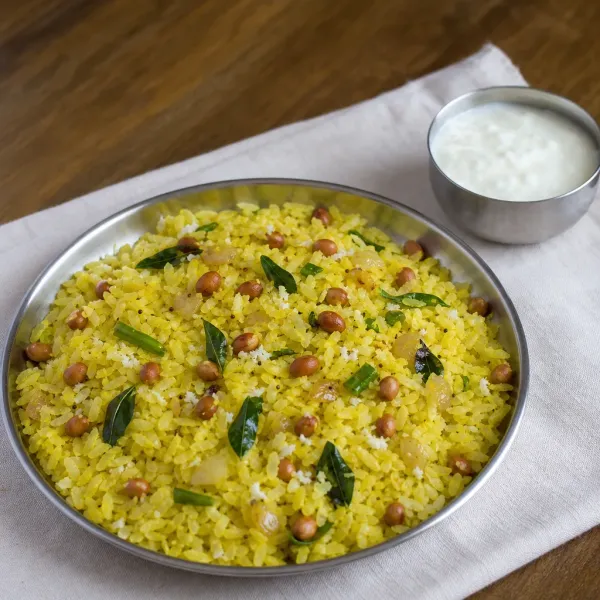
Avalakki Oggarane
Traditional Karnataka avalakki oggarane recipe — medium poha tempered with mustard, shallots, curry leaves and groundnuts. Ready in 20 minutes.
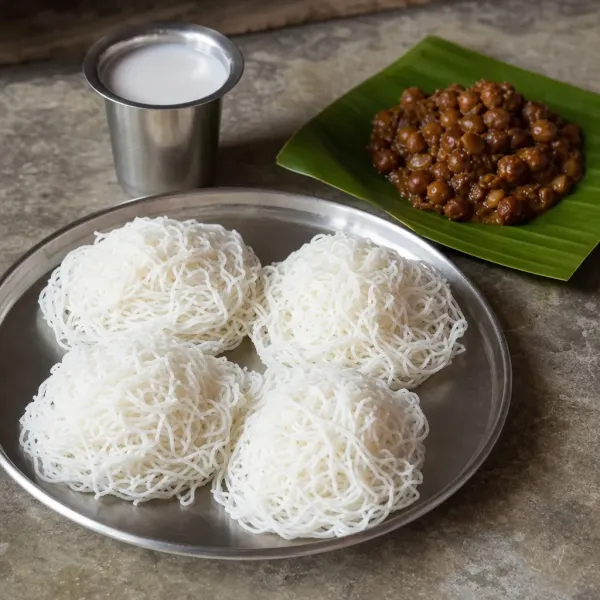
Idiyappam
Soft Kerala string hoppers made with fine rice flour and boiling water, pressed fresh and steamed. Traditional household method with cook's notes.
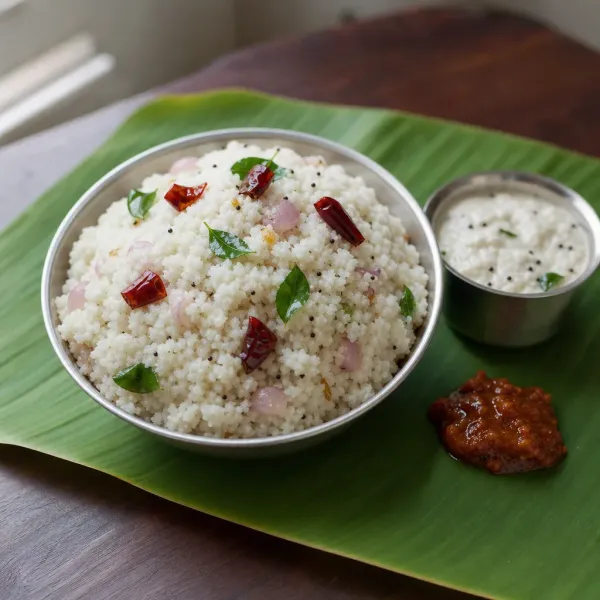
Arisi Upma (Broken Rice Upma)
Traditional Kongunad Iyer arisi upma made with dry-roasted broken raw rice, shallots, peppercorns and ghee. Step-by-step Tamil Nadu tiffin recipe.
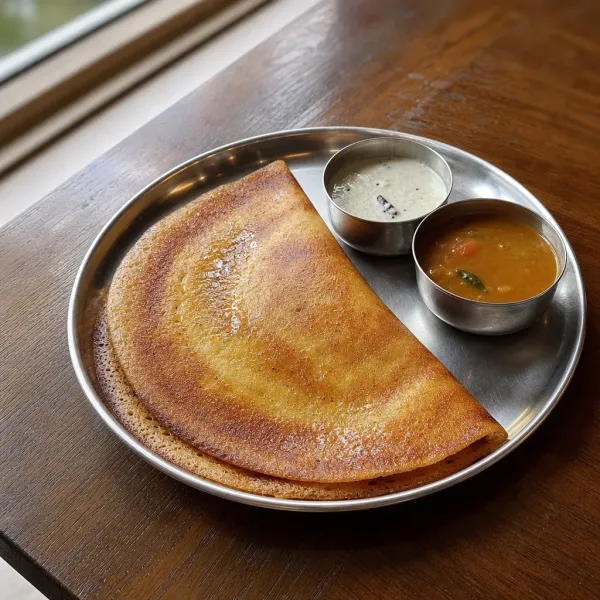
Ghee Roast Dosa
Traditional Udupi ghee roast dosa with fermented rice-urad batter, cooked on one side on a hot iron tawa with generous cow's ghee until deep golden.
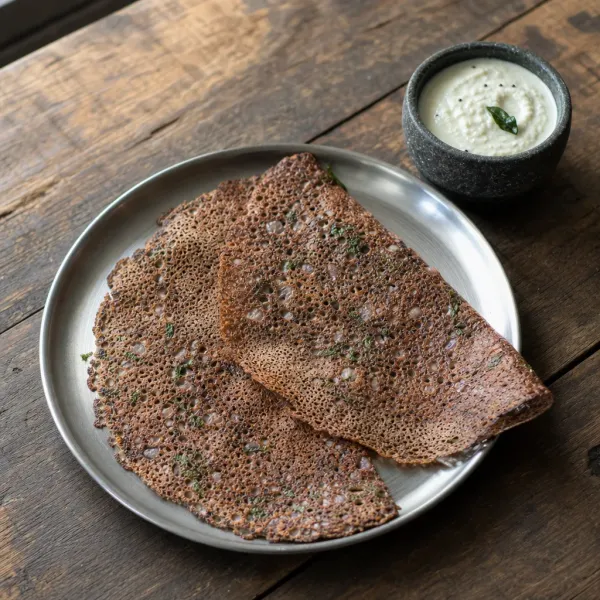
Ragi Dosa (Finger Millet Dosa)
Traditional Karnataka ragi dosa made with finger millet flour, rice flour, shallots and cumin. Quick, no-ferment, weekday breakfast recipe.
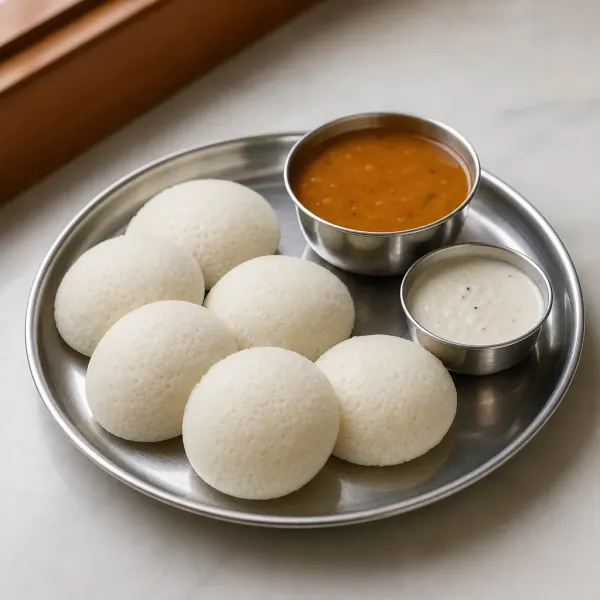
Idli
Authentic Tamil Iyer idli recipe with correct rice-to-urad ratio, wet-grinding method, and full fermentation guide. Soft, pale, and light every time.