

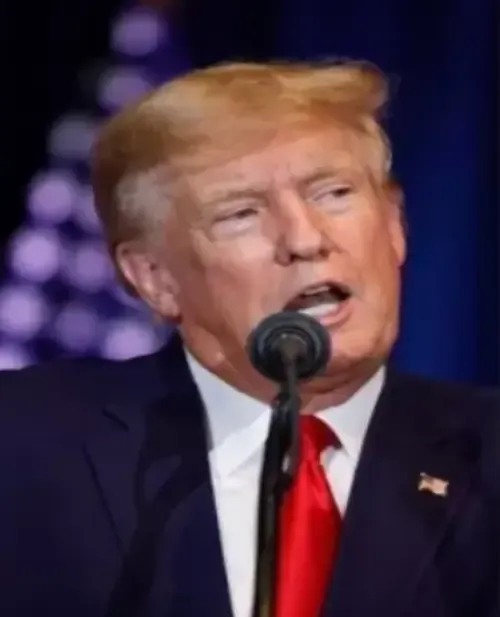
Trump's dealmaking opens Indian market to US goods: Greer
Washington, Feb 7
US President Donald Trump's trade dealmaking is opening India's vast market to American products by lowering tariffs on US industrial and agricultural goods, US Trade Representative Jamieson Greer said.
Greer spoke on Friday after the White House issued a joint statement announcing a framework for an Interim Agreement between the United States and India on reciprocal and mutually beneficial trade.
"President Trump's dealmaking is unlocking one of the largest economies in the world for American workers and producers, lowering tariffs for all US industrial goods and a wide array of agricultural products," Greer said.
"Today's announcement demonstrates the deepening ties between the United States and India as we create new opportunities for farmers and entrepreneurs in both countries," he said.
Greer thanked India's commerce leadership for advancing the negotiations. He expressed appreciation for the role played by Indian Minister of Commerce and Industry Piyush Goyal in pursuing what he described as fair and balanced trade.
The framework reaffirms the commitment of both countries to negotiations on a broader US-India Bilateral Trade Agreement. Those talks were launched by Trump and Prime Minister Narendra Modi on February 13, 2025. Officials said the Interim Agreement is meant to deliver early and concrete results while strengthening supply chains.
"The Interim Agreement between the United States and India will represent a historic milestone in our countries' partnership, demonstrating a common commitment to reciprocal and balanced trade based on mutual interests and concrete outcomes," the joint announcement said.
Under the framework, India will eliminate or reduce tariffs on all US industrial goods. It will also cut duties on a wide range of US food and agricultural products. These include dried distillers' grains, red sorghum for animal feed, tree nuts, fresh and processed fruit, soybean oil, wine and spirits, and other products.
The United States will apply a reciprocal tariff rate of 18 percent on Indian goods under an executive order aimed at addressing large and persistent US goods trade deficits. The tariff will cover products such as textiles and apparel, leather and footwear, plastic and rubber, organic chemicals, home décor, artisanal products, and certain machinery.
If the Interim Agreement is concluded successfully, the United States said it will remove the reciprocal tariff on a range of goods identified for aligned partners. These include generic pharmaceuticals, gems and diamonds, and aircraft parts.
The framework also calls for removing US tariffs on certain aircraft and aircraft parts from India imposed under national security proclamations on aluminum, steel, and copper imports. In line with US national security requirements, India will receive a preferential tariff-rate quota for automotive parts.
India will also receive negotiated outcomes on generic pharmaceuticals and pharmaceutical ingredients. This will depend on the findings of a US Section 232 investigation.
Both countries agreed to provide preferential market access in sectors of interest. They will establish rules of origin to ensure the benefits of the agreement accrue mainly to the United States and India. They also committed to addressing non-tariff barriers affecting bilateral trade.
India agreed to address long-standing barriers affecting US medical devices. It will eliminate restrictive import licensing procedures that delay access for US information and communication technology goods.
India will also decide within six months whether US-developed or international standards are acceptable for exports in identified sectors. It also agreed to address barriers affecting US food and agricultural products.
The framework outlines cooperation on standards, digital trade, and economic security. This includes work on supply chain resilience, investment reviews, and export controls. India said it intends to purchase $500 billion of US energy products, aircraft and aircraft parts, precious metals, technology products, and coking coal over the next five years. It also plans to expand trade in technology products used in data centers.
The United States and India said they will move quickly to implement the framework and work toward finalizing the Interim Agreement. The goal is to conclude a mutually beneficial Bilateral Trade Agreement in line with the agreed roadmap.
The announcement follows months of intensified engagement between trade officials from both countries, as Washington links market access to supply chain security, manufacturing, and technology cooperation.
— IANS
Reader Comments
Need to read the fine print. The US applying an 18% tariff on our textiles, leather, and chemicals is a big concern. Our MSME sector employs millions. The deal must ensure a level playing field, not just open our markets while theirs remain protected.
Finally some movement on medical devices and ICT goods! The restrictive licensing was a nightmare for hospitals and tech companies. If this speeds up access to latest equipment and components, it's a big win for healthcare and digital India.
As someone working in the pharmaceutical industry, the part about generic drugs and ingredients depending on a US investigation is worrying. Our pharma sector is a global leader and provides affordable medicine. Hope our negotiators held a strong line to protect it.
Strategic partnership is good, but "reciprocal and balanced" must be truly reciprocal. The US gets lower tariffs on a wide array of goods, while our key exports face a new 18% wall unless we meet their conditions. Hope the final agreement has more clear benefits for 'Make in India'.
Cooperation on digital trade and supply chains is the future. If this helps Indian startups and tech firms integrate better with global markets and secure resilient supply lines, it will be worth it. The focus should be on long-term strategic gains, not just short-term trade numbers.
We welcome thoughtful discussions from our readers. Please keep comments respectful and on-topic.