

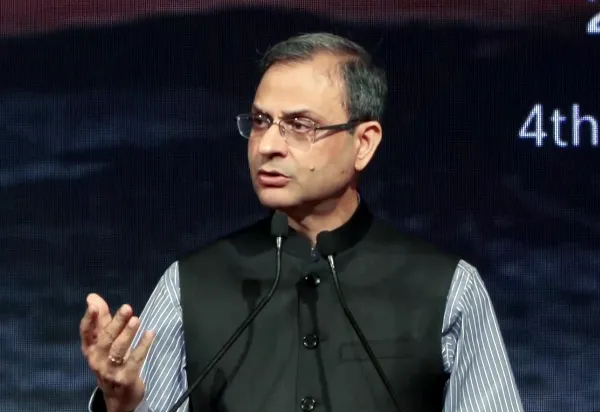
RBI permits direct bank lending to REITs; Industry applauds move to ease funding and stability
New Delhi, February 6
The Reserve Bank of India Governor Sanjay Malhotra announced on Friday that banks are now allowed to lend directly to Real Estate Investment Trusts.
Anshuman Magazine, Chairman & CEO for India, South-East Asia, Middle East & Africa at CBRE, welcomed the move, stating it will provide a "major boost" to these investment tools. He noted that the change will "make it easier for the trusts to raise funds at relatively cheaper rates." By opening up bank loans, REITs can now move away from their reliance on more expensive ways of borrowing. Magazine added that with this new access, REITs will have a "diversified funding base, making them less vulnerable to capital market volatility."
This policy change is designed to improve how the real estate sector gets its money. Previously, banks were mostly restricted from lending directly to these trusts, forcing them to use complicated structures or rely solely on the stock and bond markets for funds.
Industry experts believe this shift will allow REITs to manage their money better. According to Magazine, they can now "easily refinance existing higher-cost debt with more stable bank loans, improving their distributable cash flows."
Shishir Baijal, Chairman and Managing Director of Knight Frank India, shared this view, calling it a "positive step considering it will ease their credit access and facilitate access to lower cost funds."
In addition to the news on REITs, the RBI Governor announced that the Monetary Policy Committee has decided to keep the repo rate unchanged at 5.25 per cent. This means the interest rate at which the RBI lends money to banks stays the same. The central bank has also kept a "neutral" stance, meaning they are watching the economy closely before making any further changes.
Shekhar G Patel, President of CREDAI, said that keeping the rate at 5.25 per cent "provides policy stability amid global currency volatility." He mentioned that for the real estate world, "predictability in financing costs is essential for sustaining demand and investment sentiment."
Dr. Samantak Das of JLL India added that this decision "preserves stability in borrowing costs" and helps keep consumer confidence high.
Talking about the growth in tier 2 and tier 3 cities, Parveen Jain, President of NAREDCO says, "At a time when the government has placed special emphasis on the development of cities with a population of 5 lakh and above in its Union Budget, stable interest rates can provide a significant boost to Tier 2 and Tier 3 cities."
However, the decision to keep rates the same received a mixed reaction regarding affordable housing. Anuj Puri, Chairman of ANAROCK Group, pointed out that while existing borrowers won't see their EMIs jump, the move "does nothing to lift demand further and does nothing to make housing more affordable." He noted that many people are waiting for lower rates to buy a home, saying a "rate cut would have potentially brought at least some fence-sitters back to the market."
Looking ahead, the industry is hoping that banks will pass on the benefits of previous rate cuts to the public. Shishir Baijal mentioned that while a fresh cut would have helped homebuyer sentiment, "we expect banks to pass on a greater share of the existing rate benefits to consumers in the coming months." For now, the focus remains on the growth of REITs, which Anshuman Magazine believes is "poised to witness high growth in coming months" due to these new rules.
— ANI
Reader Comments
Good news overall, but I'm with Mr. Puri on the affordable housing point. Keeping the repo rate unchanged is a missed opportunity. So many middle-class families in cities like Pune and Ahmedabad are waiting for EMI relief to buy their first home. Stability is good, but growth needs a push too.
As someone who invests in REITs, this is fantastic! Cheaper borrowing costs for the trusts should mean better dividends for us unit holders. The diversification away from volatile capital markets is a huge plus for long-term stability. Accha hai!
Interesting development. The focus on Tier 2 & 3 cities is crucial. If stable rates and better funding for REITs can spur commercial development in emerging cities, it could create a lot of jobs and improve infrastructure. Hope the benefits trickle down effectively.
The real test will be if banks actually pass on the benefits of previous cuts to home loan customers. They've been slow before. For the common man, the unchanged repo rate is a relief, but a cut would have been a festival gift! Let's see what happens in the coming months.
This policy change shows RBI is thinking about institutional investors and market depth, not just retail. A mature move. It should attract more foreign investment into Indian real estate as well, as REITs become more robust and liquid instruments. Positive for the economy.
We welcome thoughtful discussions from our readers. Please keep comments respectful and on-topic.