

"New opportunities for farmers, entrepreneur in both countries": US Ambassador Greer hails India-US trade deal
Washington DC, February 7
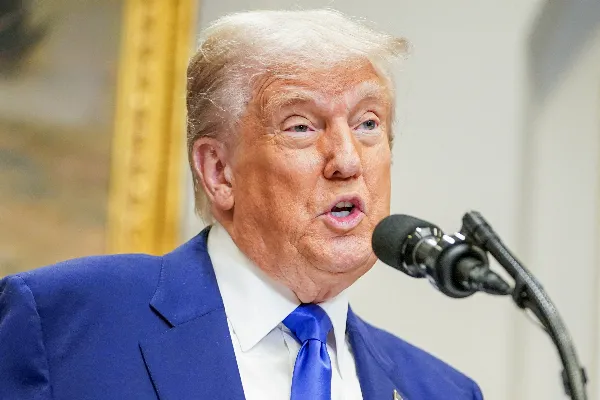
US Trade Representative Ambassador Greer on Friday welcomed President Donald Trump's announcement of a joint statement outlining a trade deal with India, saying it would remove tariff and non-tariff barriers and open India's vast market to American products.
In a statement issued after the announcement, Greer said the agreement would significantly benefit US workers, farmers and producers by lowering tariffs across all US industrial goods and a broad range of agricultural products.
"President Trump's dealmaking is unlocking one of the largest economies in the world for American workers and producers, lowering tariffs for all U.S. industrial goods and a wide array of agricultural products," Greer said.
He said the announcement reflected deepening ties between Washington and New Delhi and would create new opportunities for farmers and entrepreneurs in both countries.
"Today's announcement demonstrates the deepening ties between the United States and India as we create new opportunities for farmers and entrepreneurs in both countries," Greer said, while also thanking Indian Minister of Commerce and Industry Piyush Goyal for his leadership and commitment to achieve fair and balanced trade with the United States."
The joint statement follows President Trump's announcement of a framework to expand market access, reduce trade barriers, and advance fair and reciprocal trade between the two countries, as part of broader efforts to strengthen US-India economic relations.
The United States and India have announced a framework for an Interim Agreement on reciprocal and mutually beneficial trade, marking a significant step toward advancing the broader US-India Bilateral Trade Agreement (BTA) negotiations launched by President Donald Trump and Prime Minister Narendra Modi in February 2025, a joint statement released by the White House and Commerce Ministry stated.
The Interim Agreement between the United States and India will represent a historic milestone in our countries' partnership, demonstrating a shared commitment to reciprocal, balanced trade based on mutual interests and concrete outcomes, the statement said.
As part of the framework, India will eliminate or reduce tariffs on all US industrial goods and a wide range of US food and agricultural products, including dried distillers' grains, red sorghum for animal feed, tree nuts, fresh and processed fruits, soybean oil, wine and spirits, among others.
According to the Joint Statement, the United States will, in turn, apply a reciprocal tariff of 18 per cent on Indian-origin goods under the relevant executive order, covering sectors such as textiles and apparel, leather and footwear, plastics and rubber, organic chemicals, home decor, artisanal products, and certain machinery. "Subject to the successful conclusion of the Interim Agreement, the US will remove reciprocal tariffs on a wide range of goods, including generic pharmaceuticals, gems and diamonds, and aircraft parts."
The framework also provides for the removal of US tariffs on certain Indian aircraft and aircraft parts imposed under national security-related proclamations on aluminium, steel and copper. India will receive a preferential tariff rate quota for automotive parts, consistent with US national security requirements. Depending on the outcome of a US Section 232 investigation, India is also set to receive negotiated outcomes for generic pharmaceuticals and pharmaceutical ingredients, the statement mentioned.
Both countries committed to providing each other with preferential market access in sectors of mutual interest on a sustained basis and to establishing rules of origin to ensure that the benefits of the agreement accrue primarily to the United States and India, it added.
The United States and India further committed to addressing barriers to digital trade and to establishing a pathway for robust, mutually beneficial digital trade rules under the BTA.
— ANI
Reader Comments
Lowering tariffs on US wine and spirits? Our domestic producers will face stiff competition. While trade is good, we must be careful not to let our markets be dominated by foreign goods. The deal seems more beneficial to American farmers right now.
Finally some clarity on the digital trade rules! As a tech entrepreneur in Bengaluru, easier access to the US digital market and clear regulations can help Indian startups scale globally. This is the most promising part of the framework for me.
Interesting to see the focus on "reciprocal" tariffs. An 18% tariff on Indian goods initially seems high, but the promise to remove them later on key items like pharmaceuticals and aircraft parts is crucial. The devil will be in the implementation details.
My father is a soybean farmer in MP. He's worried about cheaper US soybean oil coming in. The government must ensure proper safeguards and support for our annadata. Trade deals should not come at the cost of our agricultural community's livelihood.
Strengthening ties with the US is strategically vital. The interim agreement is a good confidence-building measure. Hope it leads to the full BTA and reduces our dependency on other volatile trade partners. The geopolitical angle is as important as the economic one.
We welcome thoughtful discussions from our readers. Please keep comments respectful and on-topic.