

Area sown under rabi crop reaches 644.29 lakh hectare
New Delhi, Jan 12
The total area sown under rabi crops in the ongoing winter season has increased by 17.65 lakh hectares to 644.29 lakh hectares, from 626.64 lakh hectares in the same period last year, data released by the Ministry of Agriculture and Farmers Welfare showed on Monday.
The increase in sown area is expected to lead to higher production, which, in turn, would increase the incomes of farmers and help keep food inflation in check.
While pulse area rose by 3.74 lakh hectare, gram sowing recorded a significant increase of 4.66 lakh hectare.
The official figures show that the area under wheat has risen to 334.17 lakh hectares from 328.04 lakh hectares during the same period last year.
The area under pulses such as urad, lentils (masur), gram, and moong has gone up by 3.74 lakh hectares to 136.36 lakh hectares from 132.61 lakh hectares during the same period last year.
The area covered under coarse cereals or millets such as jowar, bajra and ragi has increased to 55.20 lakh hectares during the current season so far, compared to 53.17 lakh hectares in the same period of the previous year.
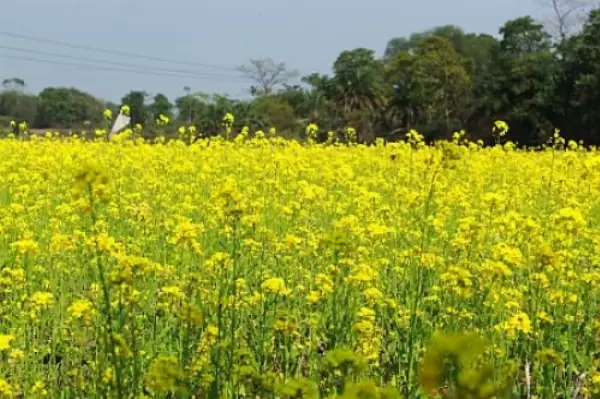
The area under oilseeds such as rapeseed and mustard has increased to 96.86 lakh hectares from 93.33 lakh hectares in the same period last year.
The Cabinet Committee on Economic Affairs (CCEA), on October 1, 2025, approved an increase in the minimum support prices (MSP) for all mandated rabi crops for the 2026-27 marketing season to ensure remunerative prices to the growers for their produce. The minimum support prices are announced well ahead of the sowing season as farmers can accordingly draw up their cropping plans to maximise their earnings.
The sown area has gone up in the current season as better monsoon rains have facilitated the sowing in unirrigated areas, which account for close to 50 per cent of the country's farmland.
— IANS
Reader Comments
Hope this translates to actual higher income for farmers and not just more produce that gets sold below MSP. The data on gram and mustard is encouraging. We need to be self-sufficient in pulses and oilseeds to reduce imports.
More area under millets like jowar and bajra is the best part of this report! 🎉 Promoting Shree Anna is crucial for nutrition and climate-resilient farming. Hope the procurement for millets is also strengthened alongside wheat and rice.
As someone who follows agricultural economics, the link between better monsoon in unirrigated areas and this increase is clear. Infrastructure for water conservation remains key. The 50% unirrigated land stat is something to ponder.
Good numbers on paper. But the real test is harvest time and whether farmers get the promised MSP. Also, with more production, the government must ensure proper storage to avoid wastage. FCI godowns need to be in better shape.
This should help keep prices of atta, dal, and cooking oil in check. As a homemaker managing the kitchen budget, this news is a relief. Hope the benefits reach us consumers too and not just stop at wholesale markets.
We welcome thoughtful discussions from our readers. Please keep comments respectful and on-topic.